Discipline is mindset

People say I have tremendous discipline. Not to toot my own horn, but I moderate my portions – even spaghetti. Exercise 4 or 5 times a week. Wrote and published 3 books in my spare time. And I usually don’t get sucked in by the usual clickbait. How? Discipline. Discipline is mindset. It’s hard – kind of like putting on jeans fresh out of the dryer. Sitting is awkward, and you may not be able to do the button. But if it’s important enough, and the steps toward that ultimate goal are small enough, it happens without you even realizing it.

The benefits that come with discipline

Discipline comes with its own set of benefits, not least of which is achieving goals. But you’ll also be improving your resilience – knowing that life takes potshots at us, trying to throw us off our game. But with discipline, we get right back to the task at hand. And with the discipline of creating good habits, we’re influencing our healthy aging. When you’re disciplined, you’re happier too. You know that you’re doing what it takes to get to where you want to be.

We’re wired to be couch potatoes, though

So, how do you make discipline easy? First, recognize that our brains are wired for us to be couch potatoes. There’s nothing we all like more than bingeing our current Netflix series. Our tendency is to conserve energy. But we know that the science is just the opposite. Expending energy produces more energy.
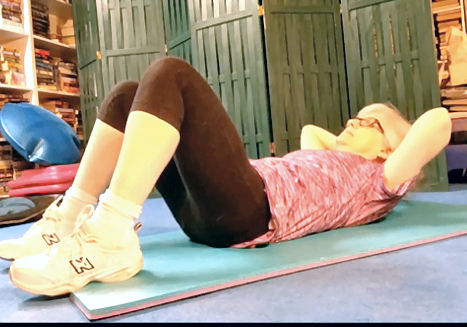
Second, we expect that our motivation will kick in at some point and magically lift us off the couch. It doesn’t work that way, unfortunately. If we want the results of exercise, we have to do it ourselves. Getting strong takes work. And no one is going to do it for us.

It’s hard and the writing was trash…

Third, you probably have the belief that if you’re disciplined, it will feel like everything in your brain will click into place. Again, not how it works. When I was working on my second novel, it was a struggle to get up early and write the hundreds of words I set as my goal. Some days it didn’t happen because the words were trash. But when you have something really important at the back of your brain that you want to achieve, you do the work. Toward the end of that book, the writing did get easier and I was able to finish – and some say this book was even better than the first novel.

Everything all at once is a recipe for disaster

And fourth, when you’re trying to be more disciplined, you’re probably trying to do everything all at once. Again, that’s just setting yourself up for failure. Discipline is mindset, but it only works when you take small steps. Train your brain to take those small steps every day. Because they lead up to the big ones.
Develop mental strength

Get strong, mentally

You may have noticed that we’ve been focusing on our heads a lot lately. Or, rather, what’s in our head. As the writer, I write about stuff that’s top of my mind. And lately that’s mental strength. The news is horrible every day and I’ve been having a hard time sleeping with it all. On top of that our aging AC gave up the ghost in the middle of this major heatwave. So we’ve retreated to the basement where it’s cooler – dogs and all. My brain keeps going to the “What if” place and I keep telling it to stop. I’m succeeding for the most part. Does that qualify as mental strength? Anyway, I’ll take it. Really, though, how do you build up your mental strength?

Is consistency key?

First off, what makes someone mentally strong? James Clear believes that it comes down to consistency. Athletes who are mentally strong don’t miss workouts. Mentally strong leaders work toward a goal consistently, a bit every day. They don’t let short-term setbacks deter them. And mentally strong writers, artists and employees show up every day and do what’s needed.

Others seem to agree that consistency is important, but they also have other tips for gaining mental strength.

Why is it important?

But why is having mental strength important? First off, you’ll stay committed to your goals, what’s important to you. You’ll have more resilience and be able to adapt more quickly when things go sideways. Also, you’ll be able to deal with stress better. When you have to make an important decision, being mentally strong gives you an edge.

Tips for building mental strength

So about those other tips for building up your mental strength: First off, practice mindfulness. Be present and fully engaged, or focused, on yourself and your surroundings. Meditation can help ground you, or take a mindful walk, observing your surroundings. Calm.com says that this can “enhance your focus, reduce stress, and improve emotional regulation.” All these enhance your mental fortitude.

Second, be kind to yourself. Acknowledge your mistakes but go easy on yourself. Self-compassion goes a long way toward being strong mentally. Also be aware of your feelings. Try journaling them. The more you know yourself, you’ll know what you’re capable of.

Third, try new things. Step out of your comfort zone. Start a new hobby that you’re intrigued by. This will also enhance your resilience. You’ll have new experiences, perhaps meet new people.

Develop a positive mindset. Challenge your negative thoughts. This will cultivate an optimistic but realistic outlook. Practice this frequently and don’t be surprised if your problem-solving ability is also enhanced.

Learn from your failures. We’ve talked about failing goals recently. By acknowledging those failures, you can learn valuable lessons about yourself. 

So, make it a priority to develop mental strength. You’re already doing most of the work. You set goals and are learning about yourself in studying the failures. You’re practicing mindfulness and cultivating a positive mindset.

When something’s a habit, you don’t need motivation

You don’t need motivation

What do you do that’s a habit? Something you do every day, most likely without thinking twice about it? Make coffee, brush your teeth, take the dog for a walk, tie your shoes, put your seatbelt on. You don’t even think about it and it gets done. It turns out that when something’s a habit you don’t need motivation!

No motivation to exercise

I’ve mentioned that exercise is one of my habits. Monday and Thursday when I’m done with work or errands I change and hop on the treadmill. Tuesday is yoga and flexibility, Wednesday is Pilates and Saturday is my combo day – aerobics and strength. I don’t even have to think about it. The workout’s done and I get to enjoy a nice relaxing shower. Exercise has become a habit for me through the years. I’ve tweaked that habit a number of times over the years, but it remains. It’s part of my healthy aging, part of my resilience. I exercise to support my fitness so that I can do what I want to do when I want to do it.

It’s not just me

Psychology Today recently published an article that supports this. Long-term fitness success is built on small, sustainable actions. And fitness habits are sustained “when they reflect the person you want to become, not just what you want to do.” 

So think about the person you want to be. Picture yourself six months from now. What are you doing? What hobbies do you see yourself enjoying? Are you travelling? Working in your garden? Training your dog? How are you moving while you’re doing all that?

Are those dream pictures the real you?

Ask yourself if this is the real you – if it’s the you that you want to become in those pictures. Now ask yourself if these are just pie-in-the-sky dreams or if you can actually see yourself making the changes needed to make them happen. For changes to happen, the motivation is built in. We’ve all tried a lot of stuff that didn’t work for us in the past. For me it was blow-drying my hair. I did it for work and hated it. As soon as I could, I stopped and am just air-drying my hair now. (In all honesty, I probably should dry it, as long as my hair is now, but I just can’t…) So in order for you to stick with something, it has to be something you don’t mind doing in the first place.

Or, associate something with it that you enjoy – like for me, listening to an action-packed novel while I run. Elevate the thing you’re not thrilled with somehow. And then make it a habit. Do what it takes so that you don’t have to think about doing it consistently.

At first, work the process to make it a habit

Make exercise a habit.

You know what that takes – schedule it on your calendar, put your clothes out, and keep that appointment with yourself. Take a deep breath and do it. Your motivation to do the thing is there – you’ve pictured yourself as the end result of it. Your motivation is built into your actions. You know what it takes to get there. You’ve committed to it. And you’re making it a habit you can live with. When something’s a habit you don’t need motivation. The motivation underlies everything, but it’s not a giant gold medal at the Olympics thing. 

Make exercise a habit. Your fitness journey lies on a path that you take steps on every day.

Not wanting to exercise is normal

It’s really not you – not wanting to exercise is normal.

It turns out that not wanting to exercise is normal. It turns out that as we get older, lots of systems in our body decline. You knew that – eyesight, hearing, cognition, memory. And we don’t want to exercise. That’s because of declining systems in our brain. Namely, our dopamine synthesis and dopamine receptors. That means that cognitive control, emotion and mood, motor function, positive reward, and motivation are also naturally declining. That means our natural enjoyment of life, our happiness and our motivation to exercise really does decrease as we get older.

It’s just not the same as before

So it is normal that we don’t feel like doing anything but mindlessly binge a series on Netflix. Or that we lack ambition to do anything but sit around. A recent article in Psychology Today notes that since our dopamine levels decline, we don’t get the satisfaction out of doing anything like we did in years past.

That’s depressing. I get that we all may not care that not wanting to exercise is normal, but how about the enjoyment that we get from other activities? I certainly want to experience the happiness of a good meal with friends or the enjoyment of reading a good book or listening to an amazing musical performance.

So how can we get back to feeling all these things?

First off, know that what helps one person feel things or become  motivated may not work for another. We all feel things differently – we’re not wired the same. 

Future to present – focus on the now

Find the joy in the little things if you prefer toexercise alone.

In looking at what made older people happy, one theory suggests that people’s motivation shifts from considering the future to being anchored in the present. And for motivation to exercise, older people are more likely to join a group to exercise rather than doing it alone. I guess I’m the weirdo here (preferring my solo exercise). So focusing on relationships can help you get fit as well as make you happy. Be with people you enjoy spending time with and encourage them to join you in exercise. It will help your body, your mind, your resilience and your healthy aging.

For those of us who prefer to go it alone, then continue to make exercise a habit. And find the joy in the little things – one more push-up. One more tenth of a mile. I listened to a great book while running.

Quit the goals that don’t work for you

When is it okay to quit a goal? I’ve written a lot about setting and achieving goals. Fitness goals that can take you from winded walking down the street to running a 10K. Life goals that take you from a disorganized sad person to a Marie Kondo wannabe. But how about when you want to quit a goal? When is that okay?

Look back and assess

At the beginning of a calendar quarter or year I like to look back and then forward and try to decide on the things I want to achieve in the next few weeks or months. Those goals can be big ones, or little, some of each. When I achieve those goals, they should bring some kind of happiness and fulfillment to my life. 

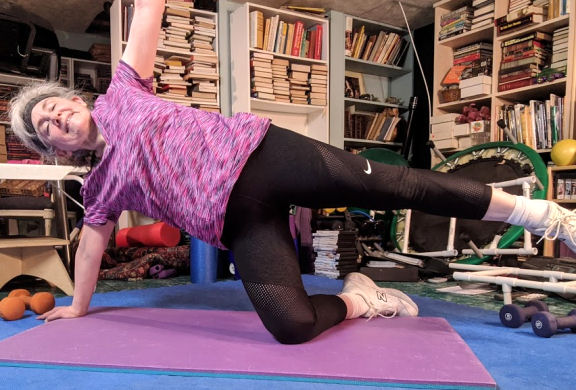
If trying to achieve a full Side Plank Star makes you frustrated, rethink that goal.

But what happens if you’ve been working toward a goal that you set and it’s just not happening. Every time you think about doing that work, you get sad or find something else to do. You’re thinking about just not following through on that one. You’re thinking that you’re ready to quit a goal.

If a goal isn’t working for you

But, is that so horrible? If you find that a goal is no longer important to you, or if you’re just frustrated, then it ‘s time to rethink that goal. Ryan, from Point to Point Strength and Performance says, “Although quitting is usually associated with failure and a lack of grit and perseverance, it isn’t always a bad thing.” 

Look back, then, and determine if you’re getting closer to that goal. If you are, you may want to push just a little more and then reassess at the end of the week or quarter. You could just be at what Seth Godin, marketing expert and entrepreneur, calls “the dip.” If you’re closer than you were before and you believe that the goal is worth pursuing, keep at it. Your resilience is growing regardless. And if it’s a fitness goal, you’re reaching for that ultimate goal of healthy aging.

Our lives may not align with the goal

But elements of our lives change. What we thought would be important to us may no longer be important. Or training for the race just leaves us drained and weak. Time to reassess or even toss that goal. If you’re constantly frustrated when you’re working toward a goal, it could be that the goal wasn’t formulated well. Reassess. And be honest with yourself. Redo the worksheet in your Get It Done Guide. There’s no shame when you quit a goal, but make sure that it no longer matters to you.

It’s okay when you don’t know something

How to push on with your push-ups when you don’t know how

Let’s say you’ve set a fitness goal – like doing 10 regular push-ups in 6 weeks, and you currently can do 6 from your knees. That’s a great goal. It’s specific and probably achievable. You’ve set your intermediate goals, scheduled your workouts and got started. (If you’ve got visions of where you want to be but no idea of how to get there, download the Get It Done Guide for tips on setting your own goals!) Week 2 you can do 20 push-ups from your knees but can’t seem to progress to even one on your toes. What’s going wrong? How do you know when to ask for help? And realize that it’s okay when you don’t know something?

No shame in asking for help

There’s no shame in looking for additional help. When a goal is meaningful to you and you think that you’ve set all your benchmarks in place, but you feel like you’re swimming in place, it may be time to look for help. You can have all the motivation in the world – you really want to be strong enough to do those push-ups, but if it’s not happening and you’re getting frustrated, it’s time to seek outside answers.

Different ways to figure things out

It’s important to know, too, that asking for help or seeking outside answers is beneficial as well. When you shift your mindset from, “I’ve got to get this done!” to “I have to figure out a way to get this done!” then the challenges you face become opportunities and not roadblocks. When you learn about new ways of doing things, you enhance your own evolution. Continuing to learn will increase your resilience, and improve your outlook. What you saw as a failure previously, you can now see as additional motivation.

Pros have help all the time

None of us knows everything about anything. It’s okay when you don’t know something. And asking for help is a sign of strength. You’re smart enough to recognize that you don’t know something and humble enough to find the answers to your problem. And every professional athlete has a coach, a trainer, and other professionals helping them on their journey.

Intermediate push-ups steps

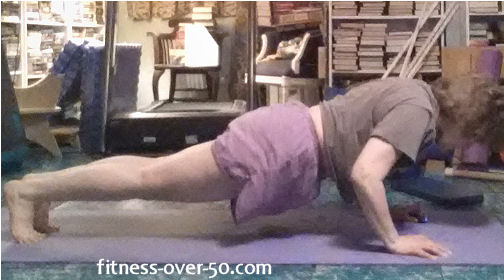
But back to our push-ups. From my own research, I learned some great ways to progress from knees to toes. They include push-ups on one knee, one straight leg. Also, doing push-ups leaning against a wall helps develop the upper body strength we need. And the plank exercise – from either the forearms or hands also increases our upper body strength. Remember to keep your core tight – always! – and your back straight. Don’t try to bend your elbows too much, either, especially at first!

Why set goals?

At this point in our lives, we’ve probably reached the point where we know pretty much how our day will unfold. We all have routines. We like routine. There aren’t many people in the world who thrive on chaos. Of course, there are some, but the majority of people find comfort in knowing how their days will progress. If that’s the case, then, why set goals at all? If we’re happy in a rut, why not just stay in that rut? Do the same things day in and day out. I certainly love my own rut, but I’m constantly setting goals, wanting to improve, grow stronger, and share my message with more people.

Last week, my topic was about goals needing specificity to be achievable, and cited a study about goal-setting among seniors. The study found that most of us do, in fact, set goals of all sorts. Some are lifestyle goals, others are fitness goals, and others relate to social connections.

Why do we set goals?

An easy answer could be that, for those who don’t have pets or jobs, our goals are our reasons to get up in the morning. Goals give us purpose and optimism. I have dogs who make me get up in the morning. But I have goals involving my dogs, too. Goals help us be resilient. Because if we’re looking to the future, then we’re assured to have a future. And that goes hand-in-hand with healthy aging. In order to be there for our future, we need to be healthy. With no goals, we’re just sitting there and letting the world go by, not being a part of it. And, even worse, it won’t be status quo for us.

Use it or lose it

Unfortunately that old saying is true. If we don’t use what we’ve got then we run the risk of losing it. Our balance is a good example. It’s been shown that as we age, our balance deteriorates unles we actively work to maintain or improve it. That’s what the private Facebook group, Balance for Fitness Balance for Life is all about. Trying to help people improve their balance. 

We should set goals for things that are important to us. We could set goals for anything we think of. For example, I could set the goal to learn how to make noodles. The problem with that, though, is that I already like lots of noodles that are easily available at reasonable prices. So I have absolutely no interest in achieving that particular goal.

On the other hand, I have set the goal to run twice a week for 20 minutes. Why? I want to stay fit and mobile, and independent. 

Why set goals? Existentially speaking, setting goals are for happiness and independence.

Be specific, but not too specific

The first quarter of the year is mostly done. It’s true – time flies! Time to take stock, reassess and reimagine your future. The first step is to look at the goals you set for yourself at the end of last year. Are they still working for you? I’m kind of stuck. I set a pretty ambitious fitness goal of running at 7.5 mph at 2.5 percent incline for a full 2 minutes. I’m not there yet. I can do one minute and that’s about it. The rule is to be specific, but not too specific, with your goals. And I think that’s where I’m falling short.

The Goal-Setting Process

First off, we’re old. Why even bother with setting goals? According to a study that included people over 65 in English-speaking countries, goal-setting is quite common. The topics of goals that people set were wide-ranging – and included health and well-being, social connections and engagement, finances, activities and experiences, activities and experiences, home and lifestyle, and attitude toward life. Setting goals helps us to look to the future and remain optimistic. When we set goals, we’re increasing our optimism and resilience since we’re planning on sticking around to see those goals to fruition.

When I set my running goal, I thought about where I wanted to be in three months. I create quarterly goals because that length of time seems to be enough to get something done, but not so long that I feel I can push it off. You know that the human condition is sincerely prone to procrastination. Why do something today when you can do it tomorrow, right? But three months, or twelve weeks, is a good amount of time to achieve something meaningful but not so long that there’s time to waste.

I can already run 7.5 mph at 2.5 percent incline on the treadmill. It’s the endurance that I have problems with. I get tired. I get bored. The motivation just isn’t there. In addition, I’m distracted.

Check my own posts

I guess I need to get my head fixed to achieve this particular goal – read my own articles, maybe? Do more meditation and affirmations? I’ll get on that.

In the meantime, for the other goals that I’ve let slide, like keeping my desk clean by putting papers away every day. Perhaps I should reconsider the next part of goal-setting.

Be specific, but not too specific. This one seems to be a case of over-specificity. Things happen. Crises occur. Sudden projects can take over and cause chaos on my desk when I want things to be organized. So I’ll keep the goal of having a clean desk, but limit the filing to Friday afternoon. Every day is too much, but once a week should be about right. Time will tell. I’ll check back in three months.

Affirmations work for self-doubt

I tried pushing it, and then I had doubts

So, you know that my goal this year is to be able to run at 7.8 miles per hour for three minutes straight at 2.5 percent incline on the treadmill. I’ve been doing almost that speed but just for one minute alternating with walking at 4 mph for another minute. And the speed? Just one or two intervals at 7.5 during my workout time. The other day I decided to do 2 minutes straight at speed and incline. I could do it, right? After all, I’ve been doing this for some time. And I’ve been increasing speed and incline regularly. No problem, right? And then I started having doubts. Just one minute is hard. How much harder is 2? Could I do it? Was I crazy? But then I told myself that I could always back off the speed if I needed to. I can go as fast as I can go. But I can do it. This was a test of whether affirmations work for self-doubt.

The perfect pair

Affirmations and self-doubt are a match made in psychological heaven, as it turns out. The knowledge that I could back off the speed whenever I wanted helped me think that it was actually possible to maintain it. The fact that I was at an exciting part of the book I was listening to helped!

How affirmations work

Affirmations work for self-doubt

Angele Close, PhD, a licensed clinical psychologist, says that affirmations work by “shifting our mental attention towards our intentions.” And that “has the potential to help us steer away from negative thinking patterns and create a positive change in mood, mindset, and energy.” It’s natural to doubt ourselves. On that run, I was thinking that I couldn’t possibly maintain the speed for the duration. An affirmation turned it around and gave me the boost that I needed to try.

That positive change in my mindset gave me energy. I could keep on running, even though I was tired and sweaty. And that’s what we all need to keep us going, That boost of positive mental energy. It increases our resilience and our optimism, and makes for a great workout, too.

When should you use affirmations

Dr. Close says that affirmations are best used to evoke experiences. So, for me, I thought of how it feels for me to run. It’s not comfortable, and it’s not easy. So I thought about pushing that speed and maintaining it, feeling what I feel, and knowing that I would make it through. And I did. That affirmation helped me keep going. I didn’t quit, and I know that’s good for my own healthy aging.. 

Dr. Close also advises us beginners not to go crazy with too many affirmations. Our brain will be overwhelmed and the affirmations, positive though they may be, won’t do us any good. Keep it simple. If you’re troubled, though, try one. I speak from experience – affirmations work for self-doubt.

Is it possible to lose weight without drugs

Last week’s post defining fitness, struck a chord with many. But people ask if they can get fit while still overweight. And if so, is it possible to lose weight without drugs? I maintain that it’s not only possible, but many people are succeeding, even at our age. 

A word about weight-loss drugs

Many researchers, physicians and prescribers consider the newer weight-loss drugs long-term solutions. They see obesity as a chronic disease. Their patients will always have the disease because there’s no cure. The drugs address the symptoms, not the underlying cause. So people can, conceivably, stay on these drugs forever.

Do people have to stay on drugs forever?

Walking is a great way to introduce exercise.

But many people, including those over 50, choose another path. I did some looking around, and found out about a lady, let’s call her Angie, who’s been successful without drugs. “I’m 62. Over the last 2 years, I have lost 130 pounds by basically reducing portion sizes to ‘kid’s meal’ at a restaurant and taking my little black cat for walks around the trailer park. First time I’ve been less than 200 pounds at 5’7″ since I was 18.”

And another lady, let’s call her Patricia, who said, “I’m 5’7” and 55 yrs old and am in the process of losing 163 lbs. I have now lost 33 lbs -watching portions and stopping when I’m actually full…. Losing about 1-2 lbs a week (soooo slow but I will take it)….and have 130 lbs to go.”

So, eating right and exercise are the keys to getting fit. Even just taking walks around the trailer park counts as exercise – in a major way! And Angie’s cat is getting the benefits too. This is how you lose weight without drugs. Neither method is good or bad. One is not better than the other. But many people prefer not to take drugs unless it’s absolutely necessary.

A commitment

If you have a lot of weight to lose, the prospect of losing only 1-2 pounds a week is daunting. You see a future of unhappiness and dreary days with boring food. Food is a pleasure we all look forward to every day. We humans need to eat. And adding variety to our meals is one way to add happiness. There are a zillion healthy options when it comes to mealtime. If you’re bored with your usual diet, check out other countries’ cuisines.

That’s not to say that you have to deny yourself. In fact, you know that I’m a proponent of never saying no to a craving

There’s also a commitment to exercise. There’s nothing I’d like more than to be a sedentary hermit, but all the experts agree that movement is vital. If you’re like me, but have gone the sedentary hermit route for a while, I’ll bet you hurt when you do get up from your comfy armchair. Stairs are probably an issue, too. Get moving! It really does help. And it’s important for your healthy aging. Those experts have that title for a reason.

So, drugs are not required for weight loss. But a positive mindset is. We’ll talk about that next time.