Is joy possible

Life is not just about to-do lists. It’s more than hustling from one task to another. Life is made even more stressful with multiple screens yelling at us. One thing we must keep in mind, when asking “Is joy possible?” Joy is where we find it. We can make our own happiness.

Granted, I love my to-do lists. There’s nothing better than being able to cross off a juicy task that took a hefty chunk of time to complete. But that doesn’t always bring joy because I’m too busy with the next job

And, if you’re like me, when you’re between tasks, or sentences, you’ll pick up your phone and find out what’s going on. More often than not, that causes stress. These days all the news seems to be stressful. All the social media applications are so jam-packed full of AI images that it’s hard to tell what’s real. (Why do folks make up stuff about celebrities and generate images that fit their fake stories? It’s annoying, isn’t it?)

The best thing for me, when all of that gets overwhelming, is to turn off the phone or the TV. Take the dogs for a little walk. Enjoy a bit of nature. Tracy Brower, a sociologist and author, says that’s one way to infuse your life with a dose of micro joy.

It’s these little moments you create that bring happiness into your life every day. From the short walks around the block breathing fresh air, to the little dance parties you have with yourself to celebrate crossing something off that list, these are moments of micro joy.

Brower says that when you answer in the negative to the question “Is joy possible?” you’re not giving yourself enough credit. Create your own joy in the power you have over your actions and reactions. You control how you react to others’ actions. Panic and distress is one reaction, but measured breath and thought may be a better route. There are few situations that require an immediate response. Take advantage of the moment of silence and think about the possibilities. Even if you can’t control the situation, you can control your thinking. 
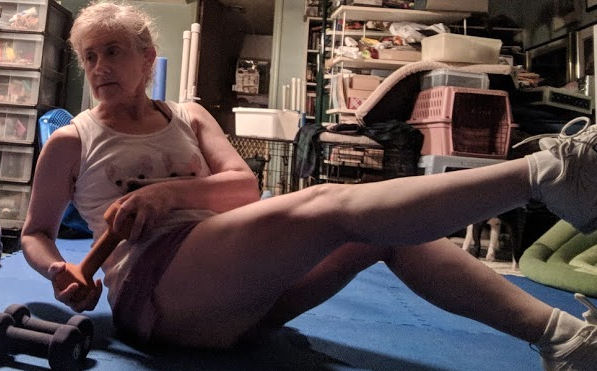
That moment of silence can bring clarity and a more positive response. And if the situation becomes more common, you can figure out a way to turn it to your advantage. Create habits that serve you better. Grow your resilience and your mental strength. Consider them muscles that demand more flexing.

Is joy possible? Of course it is. Create your own moments of joy.
Small steps to great joy

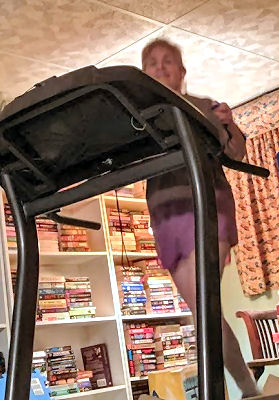
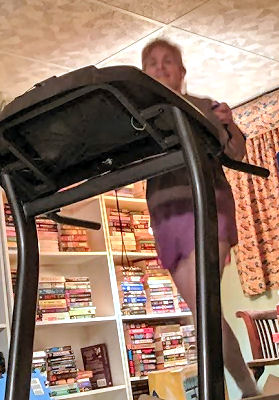
When I don’t feel like running on my treadmill days, I walk instead. So that I don’t feel guilty about taking it easy, I push the incline to the maximum, 10 percent. At 4 miles per hour, it’s still a great workout. But I’ve been doing that for a while, so I’m thinking that I should push something else a little more. So, my goal will be 4.5 mph. Still walking, but more intense. Am I crazy? Maybe. We’ll see. But I can’t do that all at once. I’ve started to push the speed just a bit. And I’m feeling happy about it. Small steps to great joy.

I listened to a webinar from a fitness guru who I’ve been following for a lot of years last week. She’s going through perimenopause and not having an easy time. But she finally came to the revelation that she doesn’t have to kill herself during her workouts for them to be even more effective. The key is progressive overload for strength training and longer-duration moderate aerobic exercise. This resonated with me because, as I’ve gotten older, while I can still do the high-impact moves and the insane step routines, I don’t enjoy them as much as I used to. The old knees remind me that I really am old. So I feel more justified in slowing my pace.

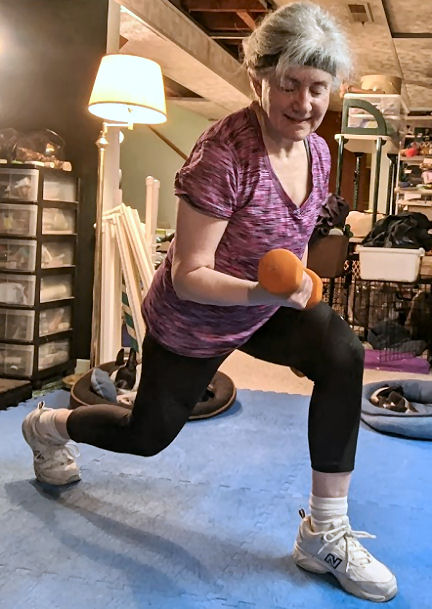
I can still create goals to grow my fitness – I’ll never stop, no matter how old I am. Being fit, and creating goals to grow my fitness, will certainly promote my healthy aging. But it will also create a positive mindset and increase my resilience. I know that I’ll be able to be independent. And that I’ll be able to do the things I want to do. That 4.5 mph workout speed is out of reach right now. But I’ll grow the goal incrementally. Perhaps lower the incline for the higher speed for a while. Perhaps go faster for a shorter period of time while I’m working up to the full duration of my workout. These are some of the possible milestones to work toward on the way to a bigger goal.

And I’ll continue to check in with myself as part of the goal to make sure it’s really something that will bring me joy and enhance my well-being. Doing a periodic brief sanity check is always a good idea. If working toward a goal is not making you happy, and if the achievement of that goal won’t cause you to pump your fist and say, “Yes! I did it!” then you need to find a new goal.

The achievement, even the anticipation of the achievement, of a big goal should bring you great joy. Every big goal should be broken down into manageable chunks. And those small steps should also bring you great joy.

You’re doing okay

You’re doing okay. You just don’t realize it.

Did you get everything done last week?

Take a minute. Think about the stuff you did last week. Was it all that you wanted to do? If you’re like most people, probably not. But it was a lot. And I’m sure that a lot of that was amazing. You’re doing okay. You’re probably doing more than okay. But you’re not giving yourself the credit that you deserve. Now’s the time to change that.

My to-do list is long. And getting longer. I’ve got plans. Books, courses, videos. Even cleaning up my desk. (Which probably won’t happen.) Some stuff got scratched off last week. You probably drew a big check mark next to stuff on your list last week as well. But did you take a minute and appreciate yourself? I’m thinking no. If you were able to take one thing off that never-ending list, good for you! You’re doing okay.

Take a breath when you check something off

Checking something off on your list deserves a moment. Maybe more than a moment. Today, when the news is blaring at you 24-7 from multiple screens, it’s hard to hold yourself together, much less focus on any task that needs to get done. You’re trying to focus on your healthy aging. Your motivation takes a nose-dive when bad news is continually coming at you.

And when we do actually finish something, when we should give ourselves a moment, it’s usually just on to the next thing. Author Anna Codrea-Rado calls this “productivity dysmorphia.” When you feel like you haven’t done enough despite working relentlessly but still fruitfully. Like getting in a really good workout, but then just showering and moving on to the next task. I’m guilty of it, and I’ll bet you are too.

Now’s the time to get out your Amazing Box

A while ago, I promoted the idea of the Amazing Box – write down something you did that you feel good about, and put that slip of paper in a box. Well, it’s time to reintroduce the concept. Keep on adding to the box. But then, at the same time you add something to your Amazing Box, dig deep in there and pull out a slip of paper, read it, and feel good about the things that you did a while ago. You’re doing okay. Now is the time to realize it.

Try a smaller goal for the win

February goal

We think of resolutions as a New Year thing – because that’s the biggest new start of the year. But, here’s another way of looking at goals. We’re given a new start every month, every week, even every day. So, don’t look at your failure from the week, month, or year before as a complete flop, because you get another chance. If you like resolutions, start a February resolution now. If you prefer goals, start working on a February goal. You’ll be more likely to achieve a smaller goal anyway. And those small goals lead to bigger ones.

Those smaller goals count

Sure, you can have a big goal in mind when you create your smaller monthly goals. But those big goals are daunting. If a goal is too big, I’m frozen into paralysis and unable to accomplish anything. The overwhelming challenge of that big project or goal makes it impossible to continue. But smaller goals are more achievable. They’ll keep the momentum going. And they’re easier to attach milestones to. Plus, we have to remember that celebrating every milestone is even more likely to keep us on the path to that bigger goal.

There’s an old Chinese proverb that says that a long journey starts with a single step. You’ve got to start somewhere. And starting on the road makes you more likely to continue.

Breaking big projects into smaller goals also helps to reduce the fear – that paralysis we face when encountering something massive – and can also help to clarify the direction that the final project will take.

An example

Exercise shouldn't hurt, but if the reward for doing it isn't motivating, make it hurt not to.

Say your goal is to work out 4 times a week for a year. That’s 52 weeks, 4 times. Or 208 workouts. That’s a lot of workouts. Very daunting. But, break that up. Your goal for February is 16 workouts. 4 short weeks. That’s much more doable. And you can break that up even further. One week is only 4 workouts. A power walk on Sunday with the family, intense cardio on Monday, strength on Wednesday, and yoga on Friday. Celebrate afterward. Perhaps a new playlist? And you’re pumped for next week. You’re focused, you’re locked in. Your self-confidence is soaring. You’re resilient – you can tackle anything.

And that’s what smaller goals can do.