Type 2 Fun – What is It, and Why Bother?

Type 2 Fun is actually not fun. Not fun at all. Well, maybe, thinking about it was a little fun. 

The fun that you think about later

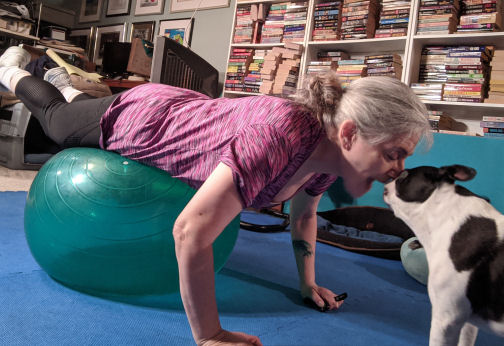
What kinds of things do you do for fun? Go on. Okay, I’ll go first. Reading a good book. Cooking. Needle work. Puzzles. Training my dog. I train my dog in competition venues like obedience, rally and agility. I find the training loads of fun. My dog learns fun stuff, and our bond is stronger than ever. Competing with my dog, though? Putting all those hard lessons to the test? Not fun. Until later, when I go back and think about all the great moments we had. We may not have qualified for a ribbon, but there were lots of great and fun moments. Experts call that Type 2 Fun.

What ever possessed me?

Type 2 fun is the kind of thing that you wonder as you’re doing it, “Whatever possessed me to try this?” It’s the kind of thing that may not be fun at all in the moment, but then when you think back, the experience stands out and you relive the shining moments. Like when my dog was able to hold a 1-minute sit when I was across the competition ring. And he could hear my sister (his aunt who he loves) in the ring next to ours, with her dog. Not fun at the time. Lots of fun thinking back on it.

Not necessarily physical activities

Tori-Lyn Mills, a licensed clinical professional counselor with Thriveworks in Columbia, Maryland, clarifies that Type 2 fun can be physical, like hiking, skiing, competing in a 5k race, or it can be a mental challenge, like learning a new language or skill.

Rebecca Moravec, a licensed professional counselor, trauma therapist and founder of Full Bloom Counseling, says that we all need more Type 2 fun in our lives. It has all sorts of benefits for our bodies and our minds.

Sense of accomplishment when we meet the challenge

Type 2 fun offers a challenge, and when we meet that challenge, it’s deeply satisfying and gives us a sense of accomplishment. And that’s a boost for our resilience. She says, “Our brains are ‘prediction machines’ with a primary job of survival, not happiness. We’re constantly asking, ‘Is this safe, is this familiar, is this worth the energy?’ And type 2 fun doesn’t check any of those boxes.” 

A boost to our self-confidence

It’s novel and exciting, and sometimes a little scary. Not dangerous, but challenging. Trying something new gives us a shot of self-confidence as well as dopamine. And type 2 fun is integral in achieving big goals. 

So, when faced with a challenge, just remember – it’s type 2 fun.

Uncertainty can provide opportunity

We humans hate uncertainty. When I’m faced with uncertainty, my brain kind of jitters. I know I’m not alone. If a repair person gives me a four-hour window, it’s frustrating. If my website goes down and the hosting provider doesn’t have a clear-cut answer as to when it’ll be fixed, it’s scary. At least one neuroscientist, though, says that uncertainty can provide great opportunity.

A shocking result (literally)

There’s a study out that shows that people are more stressed when faced with a 50% chance of getting an electric shock than when faced with a 100% chance. The certainty lets you prepare for what you know is coming. We don’t want to face the ambiguity of not knowing. And how can you prepare for something you’re not sure will come? 

Easier to pick up the pieces?

In some ways, it’s easier to pick up the pieces after a calamity. The worst has happened and we can deal with it. We can form a plan and move on to putting that plan in motion. That’s what our resilience can do for us. And to make our resilience even stronger, neuroscientist Maya Shankar says rather than define ourselves by the things we can do, we should define ourselves by figuring out why we do those things. Your why can help you get through those tough times. Shankar delved deep after a hand injury ended her concert violin dreams and discovered that a love of human connection was at the root of that dream. She was able to shift successfully into an avenue that let her keep those human connections.

Embrace your shiny object syndrome!

And Shankar also tells us to embrace the distractions we come across in our lives. They can give us the break we need to let the uncertainty or chaos settle. We humans can get used to just about anything. And by giving ourselves some time, we can let our brains figure out how to deal with it. We’re usually told that confronting the bad stuff right away is the way to get through it. And that works for some of us. But if you’ve tried that and it just scares you more, set it aside for a bit. Let yourself be distracted. Go follow that shiny object. When you come back to face the hard stuff, you might be more ready.

The sneaky reason we seniors feel the heat more

It’s not just you. We seniors feel the heat more now than we used to. Yet another thing we lose as we age (besides our hair, our eyesight, our hearing, and our sense of balance) is the ability of our sweat glands to regulate our internal thermostat. Our sweat glands become less efficient, so we feel the heat more. And some prescriptions we take can also affect our body’s ability to cool itself. In extreme heat, we can become warm without even realizing it, and that could be dangerous.

But before you vow to not leave air conditioning for the foreseeable future, know that you don’t have to stop doing the things you love to do. You may have to modify them a bit and make some accommodations to your physical reality, but don’t stop.

You’ve all heard the advice to drink more fluids when it’s hotter, and that’s good advice. It’s always wise to stay hydrated. But when it’s hot, you may not realize that you need to take a drink of water before you’re thirsty. And ask your doctor if any of your prescriptions can affect how you feel the heat. 

You’ll see more folks out walking really early when it’s hot, and that’s sensible. Do your walking before it gets too hot. And you may also want to take it a little easy on extreme heat days. The Centers for Disease Control has a Heat Risk Tracker that you can check just by entering your zip code to see how your area may be affected.

The clothes you choose to wear can make you more comfortable, too. Fabrics that breathe, like cotton, help keep you cool. And clothes that fit you more loosely help as well.

So, don’t let the heat scare you. We feel the heat more, but if we’re prepared we can still enjoy the summer months.

Not wanting to do something is not a good excuse

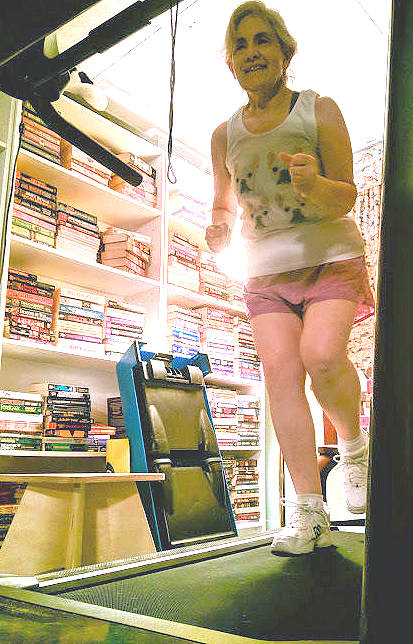
I never want to exercise. Honestly. I’ve said it before, and I’ll keep saying it because it’s true. I was working at a dog obedience trial all day on Sunday – if you’ve never been to one, it’s amazing watching the amazing teams. Anyway, I was on my feet all day, and the last thing I wanted to do on Monday was get on the treadmill. But not wanting to do something is not a good excuse for not doing it. So I did it.

Of course, there are plenty of reasons that you don’t exercise on any given day. You might be sick with a chest cold. Or you have an important appointment that you can’t miss at the time you originally scheduled to work out. Or you have to take the dog to the vet. Those are certainly valid reasons to not exercise.

Take a walk. Create a healthy habit.

But on normal days – what’s the motivation to get you exercising when you don’t feel like it? How do you talk yourself into doing something when you don’t want to? I thought about how I’d feel when I was done. It was a slog, and I probably didn’t give it my all the way I usually do, but I did it. Over a mile at 10 percent incline, over 4 miles per hour. And I was so grateful when the time was up. But I felt completely virtuous.

I also was at an exciting part of the book I’m listening to. The one thing that keeps me getting back on the treadmill is listening to audiobooks. No self-help or non-fiction for me, either. It’s got to be something that holds my attention. It’s great escape so I don’t think about how much I dislike what I’m doing.

I also think about how doing the treadmill thing works into my overall fitness goal. Maintaining my endurance keeps me getting back on. I want to be able to play with my dogs for many years to come. Having that endurance also ensures my independence. So I keep getting on the treadmill and working out..

The site, “Time For Your Life” also suggests breaking down the thing you don’t want to do into “laughably small steps” so that it’s completely painless. Like setting a timer for 5 minutes to get started on something you don’t want to do. I completely agree. I tell people to just start to exercise when they don’t want to. If you still don’t want to exercise after 5 minutes, then it’s okay to think about quitting.

But just not wanting to do something is not a good excuse.

We can be as flexible as we want to be

As flexible as we want to be

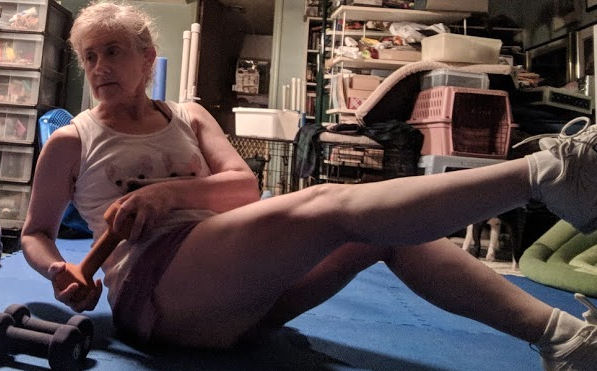
Do you look back fondly on the days you could tie your shoes without sitting down? Don’t accept as a fact that you’ll never be as flexible as that again. It might take some time, thought, and care, but we folks over 50 can be as flexible as we want to be. In fact, when done with focus, stretching can help us avoid pain. As an example, if the muscles in the front of your legs are too tight, it can lead to movement limitation in our pelvis and hips which can lead to lower back pain. 

Becoming flexible can help prevent muscle and disk strains, shoulder strains, and backaches, according to WebMD. Working on your flexibility is also good for improving your balance. But don’t try to touch your toes the first time you try a stretching routine unless you’ve been doing that for a while. Start slowly and work your way up to the big stuff. 

Static stretches first

You may want to start with static stretches – that is, holding a position for up to 30 seconds and then relaxing. And repeat a couple more times. But don’t bounce into the position – this can lead to injury.

Isometric Stretches

Isometric stretches are similar, but when you’re in the position, contract the muscle you’re stretching. Contract and release a few times while you’re holding. This can be hard, since we’re not always aware of the specific muscles we’re working. I know I’m not.

Dynamic Stretches

Dynamic stretches incorporate movement. Things like head rolls, leg swings, hip circles, and walking lunges are examples of dynamic stretches. Repeat for a certain number of repetitions, say 10 or 12.

If you decide that you want to incorporate stretches into your daily routine, decide when you want to do them and stick to a plan. 

We’ve talked about goals and plans before – make sure that your plan is reasonable and achievable. Decide on the specific stretches you want to do, and reassess after a few weeks to make sure that you’re still getting benefits from your new routine. If you want to delve deeper, you can check out classes that focus on stretching and flexibility like Pilates, Yoga, and Tai Chi.

Does your morning routine help or hinder you?

I’ve been reading a lot lately about morning routines. How do you start your day? Do you have the same routine every day? Just the weekdays? If you search for “successful morning routine,” you’ll find about a bazillion answers. That’s because what works for one person is probably not going to work for everyone. People are individuals, our brains are all wired differently. So it makes sense that my morning routine will be different from yours. The important thing is that your morning routine helps to make you as happy as possible.

My morning routine is nothing special. I wake up, get dressed, take the dogs out, feed the dogs breakfast, eat my own breakfast, wash, make my bed, train the dogs, take the dogs out again, and go to work. Lots there. One thing there makes me especially happy. And that’s “train the dogs.” I can see progress almost every day, depending on if we’re working on something specific, but my dogs always make me smile.

And that’s crucial. At least one thing in your morning routine should make you smile and be happy. Whether it’s breathing some fresh air or writing in your journal or training your dogs, something should put a smile on your face.

I read an article about the top morning routines of successful people and it’s got the usual things: wake up early, grab a good breakfast, hydrate, move your body, meditate, write in a journal, read a book, make a to-do-list. But the one thing that kind of surprised me in that list was to practice gratitude. I’ve written about it before, and I do it myself every day, but didn’t really expect to see that Marie Kondo also has a daily gratitude practice. 

Being grateful helps me to be happier – it ties me to my family, friends and the world. And it’s part of every day’s routine.

How to know if the work you’re doing matters

How often do we think about whether the work we’re doing really matters? You’re plugging along and then think to yourself, “Why am I even doing this?” Does it matter to your life? Your kids’ lives? The community? That’s really the point of setting goals, isn’t it? To do work that matters. To set us up for success, the way we define it. And to leave a lasting impression.

But, before we start working on a goal, or before the work goes on too long, how do we know? For example, if I’m working on a goal, creating a report that I initially believe folks who read my work will find valuable, how do I really know that people will find value in it? Am I just writing to put words on a page (or white screen)?

Here are 5 signs that the work you’re doing is valuable from Kathy Oneto, entrepreneur and founder of Sustainable Ambition.

First, you can link your work to a valuable outcome. I’ll know my report is valuable when I can prove that if my readers follow advice given, they’ll be happier or healthier. Shouldn’t that be the purpose of a fitness blog? 

Next, if people tell me that they get something out of my work, I’ve fulfilled a goal. I mostly write for myself, because there’s no assurance that anyone else will read my articles. But when people tell me that they’ve followed a point and been successful, that’s really rewarding.

If I’m making progress on my own goals, then I know my work is valuable. Much of my work is for others to see, so if more people see it and get benefits from it, I’m succeeding. And that’s motivation to move forward.

If my work aligns with my core values, then I’ll keep going. When I’m training my dog, it’s not always easy. But if the methods I use align with my values, and I see even slight improvements, then I’m encouraged and I know my work matters.

And if I’m growing, learning, and being challenged by my work, then that’s a good thing. If I’m growing and learning, then my work is probably getting better. More people will get value from it. And I’ll know it matters.

If you’re working on a fitness goal – yay! Good for you – not only does the work you do benefit your health, your healthy aging, but it also benefits your family. Haven’t you noticed that you’re in a better mood more of the time? You’ll be around to play with the dog and the grandkids. And you’ll have more fun doing it.

Flexibility is your fitness superpower

The Secret to Longevity: Why Flexibility is Your Fitness Superpower Over 50

When we think about “getting fit” in our 50s and 60s, our minds often jump straight to cardiovascular health or building muscle. While walking and strength training are vital, there is a “missing piece” to the wellness puzzle that often gets sidelined: flexibility. Improving your flexibility isn’t just about being able to touch your toes. It’s a fundamental pillar of healthy aging and a primary driver of how we feel—both physically and mentally—every single day.

The Longevity Link

Recent science has highlighted just how critical flexibility is for our long-term health. A landmark 2024 study published in the Scandinavian Journal of Medicine & Science in Sports followed middle-aged participants for over a decade. The researchers, led by Dr. Claudio Gil S. Araújo, discovered that individuals with greater flexibility had a significantly lower risk of premature death. Interestingly, this association was particularly strong in women, suggesting that maintaining a wide range of motion is a literal lifesaver as we age.

Physical Freedom and Healthy Aging

As we age, our tendons naturally lose some elasticity and our joints can become stiff. Feeling creaky when we get up from a chair should be our signal to take a short walk or do some squats. By prioritizing flexibility, we maintain the range of motion necessary for things we do every day—things like reaching for a high shelf, tying shoes, or playing on the floor with grandkids. Improved flexibility also reduces the risk of falls by enhancing balance and stride mechanics, allowing us to maintain our independence for years to come. So the more flexible we are, the more able we are to do the balance exercises I recommend every day.

The Mindset Shift

Increase your balance in just a couple of minutes a day

The benefits of stretching extend far beyond the physical. Flexibility training, especially through mind-body practices like Yoga or Tai Chi, acts as a bridge to a better mindset. A 2024 study in Frontiers in Public Health found that mind-body exercises significantly improve psychological resilience and quality of life in older adults.

As an added bonus, when you stretch, you aren’t just lengthening muscle fibers; you are signaling to your nervous system that it is safe to relax. This reduces cortisol levels and helps alleviate the “brain fog” or anxiety that can sometimes accompany this stage of life. A flexible body often leads to a flexible mind—one that is more resilient to stress and more open to the joys of aging.

Your Path Forward

You don’t need to spend hours on a mat to see results. Just 10 to 15 minutes of dedicated stretching or a gentle yoga flow three times a week can transform your mobility. Spend a few minutes walking or biking first to warm up. The Mayo Clinic emphasizes that you can hurt yourself if you overly stretch cold muscles. Start where you are, honor your body’s limits, and remember: staying limber is one of the greatest gifts you can give your future self.

The Productivity Trap: Why Doing Less Can Be Your New Secret Weapon 

You know that I’m a strong advocate for thinking, planning, and getting things done. Some people just see the last part – getting things done – and think that equates to always being busy.  Nothing could be further from the truth. It’s actually a productivity trap. Tweaking spreadsheets and checking a thesaurus does not equal productivity. In fact, it’s burnout that happens when we’re always going, going, going. And that burnout leads to decreased productivity and even health issues. 

Burnout is a “systematic depletion that manifests as cynicism, detachment, and plummeting professional efficacy,” according to Natalie Nixon, PhD, and author and creativity strategist. When all this happens, failure ensues. We have so many commitments – from family responsibilities to work emergencies, that burnout can happen in any arena. Dr. Nixon has developed a framework to counter professional burnout, and I believe that it can help outside the workplace as well.

Move, think, rest

Dr. Nixon has coined the phrase “Move, Think, Rest” as a grounded approach to emotional recovery. I align it with “Work hard, then recover harder.” This approach recognizes that our bodies and minds work together to make our lives happier and more meaningful. Physical movement combined with deep thought and then recovery make us even more productive and resilient.

We know that physical movement increases endorphins in our systems and gives us more energy. But that’s not limited to a devoted workout session. A 15-minute walk while you’re thinking about the next step of your project not only maintains your mobility, but it helps your brain to reset.

And when we reflect on our work and are mindful of our surroundings, we’re setting the stage for deeper recovery.

Your brain is connecting the dots

And actual rest – when we’re doing nothing – is really not doing nothing. It’s letting our brains connect all the pieces of our being, our plans, and our work. It helps us connect the dots. Rest is more beneficial, sometimes, than the work itself. Dr. Nixon calls it “essential maintenance.”

So, work hard, exercise, and rest. Don’t neglect any of these elements. Your body and your brain will thank you.

A goal that’s just right

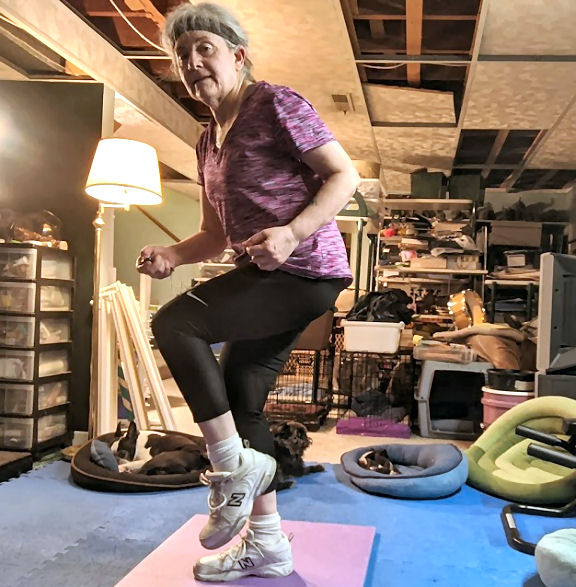
Sometimes I choose stupid goals. Like cleaning off my desk. That’s stupid because I know it’ll never happen. It just doesn’t matter to me. Or being successful at the Side Plank Star pose. It’s stupid because – why? Another stupid goal was getting an agility championship for my dog. I didn’t take into consideration my dog’s desires. He doesn’t care about agility all that much. Sure, I could train him for it, but if he’s not having fun, then I’m not having fun, and it takes a really long time and a lot of weekends competing in trials for it to happen. But I also chose a goal that’s just right.

Not too hard, not too easy

What’s a goal that’s just right? It’s not too hard, and it’s not too easy. As opposed to an agility championship for my dog – a goal that’s just right is one that is doable. One that I can see a path forward to the end.

As an example. I wanted to write a cozy mystery novel. But my days are pretty full, with dogs and the business. So, when would I be able to write the thousands of words that a novel requires? I spent some time thinking about that, and realized that I woke up about an hour before my alarm most days. And couldn’t go back to sleep. So – lightbulb – I figured I could use that time for writing.

Testing tells

I tested my theory for a few days. I sort of wrote an outline. (I realized that while I don’t ordinarily do outlines, a mystery story required one.) I set a second alarm for 50 minutes before my real one, created a Google doc, tested my Bluetooth keyboard on my phone, and started writing. Once I knew how many words I averaged writing each day, I was able to create a schedule for finishing my first mystery novel.

I created a goal that was just right. I drew up a plan and established a schedule. And now I have two published cozy mystery novels. Working toward a goal feels great. When you put work in toward a goal, you feel unstoppable. No matter what happens, you work through it. When you have an important goal, you’re optimistic, you’re resilient, and you feel healthy and strong.  (To help you find a goal that’s just right for you, the Get It Done Blueprint lays it all out step-by-step and has a great worksheet. You can download it today for nothing.)

You can do anything you want to when you have a goal that’s just right.