The simplest can be the best

Why walking is a game changer for your healthy aging

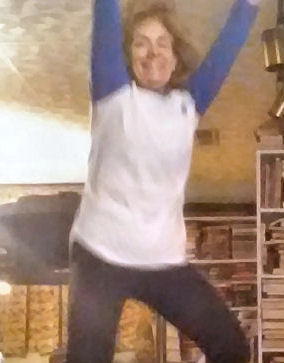
Aging is different for us than for our parents. It seemed like our parents and grandparents welcomed the aging process. I remember my grandmother being terribly vain about her appearance, but not really doing much for her physical well-being other than visiting the doctor regularly. Exercise was not a priority for that generation. I think my grandmother would have laughed me into next week if I suggested she just take a walk with me. Walking is a game changer, though. The simplest exercise can be the best.

Movement of any kind is good

Movement of any kind can help us live longer and be happier. The World Health Organization says that inactivity can lead to an increased risk of chronic diseases such as diabetes, cardiovascular disease and certain cancers. And adding walking to your day is as easy as lacing up your sneakers. Park a little further away from the grocery store. You’ve got a cart for the groceries you buy, so walk the extra distance. And if it’s one of those deals where you rent the cart for a quarter, you’re getting double the benefit when you have to walk it back for your quarter. 

The simplest exercise can be the best

Walking is easy. You don’t have to think about it – walking is just something we’ve done since babyhood. But it turns out that the simplest exercise can be the best – because you’re doing it.
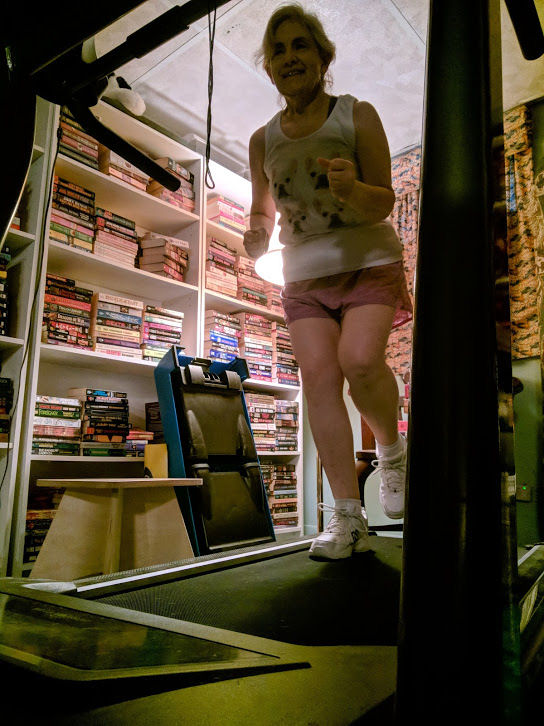
walking, the simplest exercise, can be the best

Walking adds “repeated resistance” to our leg muscles and bones, making them stronger. Our hip, knee, and ankle joints’ mobility benefit from walking, too. And walking increases our endurance, too. If we want to continue participating in activities, then endurance is crucial. We want to be able to outlast those dogs or grandkids.

The number of steps you take can be a fun number to track, and that’s important, but the time and intensity of your exercise is the thing that matters most. If you’re taking a leisurely stroll, then you’ll have to do it for longer. But if you’re power-walking, then you’re working those legs at a higher intensity and the minimum 20 to 30 minutes three days a week should be sufficient. The latest guidance is that participants in a study who walked 8,000 steps twice a week had lower mortality from any cause than those who were sedentary.

So, go ahead. Lace up your sneakers and take a walk.
The distraction trap is real

The other day I was totally unmotivated to do anything. It’s not that I didn’t have stuff to do. I just didn’t feel like doing any of it. The distraction trap is real.

So I read some of my own articles. I wasted a lot of time trying to get motivated. I told myself I was looking for inspiration on social media. Nope. Those posts on upcycling furniture, people making their own cosplay outfits, tips for going to Disney World (I wish), Alex Guarnaschelli making her favorite salad dressing, and the cute little baby pygmy hippo in Kansas drew me in.

The algorithms are stacked against productivity

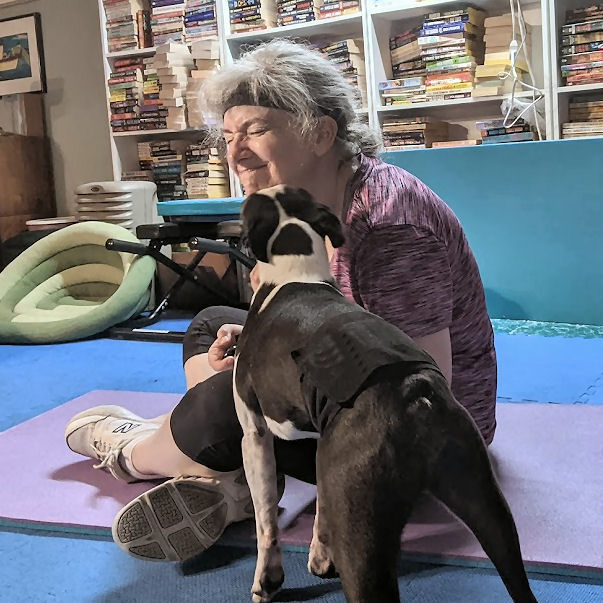
Puppies are distracting. Get back on track.

The algorithms know me. And they know you, too. They’ll destroy any semblance of time management you have. They’ll send post after post, video after video, specially designed to keep you on the platform. The puppies are cute, the food looks good enough to eat – or more horrible than you can possibly imagine, so you can’t look away. The social media distraction trap is real.

My problem was that I didn’t set a timer. Or look at my Get Stuff Done Funtime Menu

Easy methods to get back on track

These are easy methods to get back on track. If you know what you have to do but don’t want to get to it right away, set your timer for 5 or 10 minutes. Your phone timer will do, but a kitchen timer is better. Allow yourself a few minutes to waste time scrolling. The problem with a phone timer is that, on your way to find the right app, you run the risk of going down another distraction rabbit hole. But if you trust yourself, then by all means, use your phone.

Your Get Stuff Done Funtime Menu can be a valuable tool in keeping yourself on track. You’ll be listing tasks of varying lengths of time so that when you lack motivation, you can find something that’ll spark your interest, change your mindset and get productive again. Be sure to include a variety of tasks in your Menu – physically challenging, easier, writing tasks, lists to make, so you’ll find an activity you’ll want to do.

If you don’t try you can’t fail

Failure happens. Get used to it.

We’ve talked about failure before. We have high hopes, set lofty goals, take some steps toward that goal, and then … it’s not working. Or you know steps that you need to take if something’s going to happen (like making a call that could possibly open doors for you), but you don’t do it. Why? You think the person on the other end will say no. No one wants to fail. We’ll do pretty much anything we can to avoid it. But the more we can recognize the fact that failure happens, the better our chances are that we can move past it.

Our minds skip over the possibility

We don’t want to think about failure. Our minds just kind of skip over the fact that failure is a possibility in our endeavors. So not thinking about failure can be a way to avoid failure itself. The problem with that is that if we don’t try, we’re not successful in our endeavors, either.

A paper a few years ago showed that even motivated people don’t try out their ideas because they’re afraid of failing. Fear of failure does hold us back. Society has told us to stay positive, so we do – and don’t even think of failure as an option. But it’s always there, niggling in the back of our minds. We’re afraid to fail, so we don’t try.

On the other hand, if we accept the fact that failure is an option, it might happen, then we’ll put ourselves out there. Sure, once we do, we can still fail. And another study says that the fear of failure may return.

That’s why we have to rehearse failure. Prepare for the contingencies. Josh Davis, Ph.D., says that just a few shifts in our mindset can have us trying the things we used to wait on. Instead of justifying not doing something – it’s not ready, or I’m not ready for people to say no – prepare reasons for doing it anyway. 

And if it’s something inherently personal, like starting an exercise program, if you’re scared of what people will say, the same shift helps as well. Expect your family to give you resistance and pooh-pooh the idea. They may say, “Oh, you look great as you are!” And you can say, “Thank you, but I expect I’ll feel even better doing it.”

Feel exhilaration in the process

Instead of feeling let down, prepare to feel exhilaration in the process.

And instead of fearing the “no’s,” prepare to hear “no” and find out the “why’s” so that you can make it better. The more you put yourself out there, the more you can change with the new information you learn. You’re more resilient. And you’re learning. All that contributes to your healthy aging process.

So the sooner that you realize that failure happens, the sooner you can get on the road to success.

Who knew I was ahead of the times?

The motivation secret I told you about a year ago

Enter dopamine anchoring. Do you like to fold laundry? It’s not my favorite job, either. Do you like compiling a big report on Friday afternoon? Nope – I’m thinking about the weekend. It’s no surprise that we tend to procrastinate over jobs that we don’t care for. And then it’s a mad rush to get them done right before a deadline. But I told you about something I do that makes a task I don’t like a whole lot easier. It’s that little treat that keeps me going on the treadmill. Experts are now calling it dopamine anchoring

Make work seem less like work

The theory is that when you pair a task with something that you enjoy, then the task feels less like work. “The term draws on the neurotransmitter dopamine, which is linked to pleasure, anticipation and motivation,” said Lauren Mastroni, a career expert at CV Genius. “The ‘anchoring’ part refers to creating a consistent link between that positive emotional payoff and the task you’ve associated with it.”

So if you consistently pair the same reward, say listening to your favorite music, with the same task, say compiling weekly reports that are due, then eventually your brain automatically associates compiling that report with a pleasurable activity, listening to your music. I have a favorite channel on Pandora, and listening to that helps me with the bookkeeping. Yes, I know, I have an accounting degree. But that doesn’t mean that I enjoy the work any longer. But I get to listen to my favorite tunes.

I’ve been using dopamine anchoring for months

Add mindfulness to your step tracker.

You know that I’m not a running fan. But in the months that I’ve been listening to an exciting audiobook during my time on the treadmill, I’ve (kind of) turned my opinion about running on its side. Running is still hard and I don’t really look forward to it, but it’s the only time I get to listen to that book, so I keep on doing it. 

Productivity expert Ryan Zhang says, “Over time, you stop dreading these tasks because your brain knows something good is coming.” And that’s why I keep putting on my running shoes. I want to find out what happens next in my book.

So I’ve anchored something I enjoy (escaping with an exciting book) with something I used to dread doing (running). Psychotherapist Meg Gitlin says this is powerful medicine. “Pairing a dull or difficult task with something pleasurable ― like listening to music while cleaning or enjoying a favorite snack while studying ― can help reframe the task as tolerable or even enjoyable. Over time, your brain learns to associate the task itself with positive reinforcement. This can improve consistency, motivation and even mood regulation.”

Instead of procrastinating, enjoy the chore

Instead of procrastinating over your least favorite chore, you’ll be looking forward to doing it because you’ll also be doing something you really enjoy.

So if you have a few laundry baskets piled with clothes or sheets that need folding, perhaps you should pop in your earbuds and listen to a podcast or music, or stream your favorite TV drama. You’ll save time that you used to waste procrastinating, and you’ll feel so productive having completed a chore that you dreaded. But what are you going to do with all those laundry baskets?

Sometimes you need to take a breath

Just take a breath

The world is moving at a faster pace than ever. News keeps coming at us all day, every day. From every direction, on every screen. And it’s hardly ever good. We’re being bombarded with messages from all over. Our “productivity culture” urges us to get more done faster, to do more, see more, go more places. But sometimes you need to take a breath. Just stop. Turn off the screens and get your hands dirty. 

Time out for me

More experts are advocating “adult time-outs.” And it’s a great idea. Best-selling author and entrepreneur Chris Guillebeau in his book Time Anxiety promotes the idea of a “reverse bucket list.” You actually celebrate things that you’ve done. “The reverse bucket list is just like it sounds—what have I done that is interesting or notable, whether to other people or not? I think it’s helpful to just celebrate or even observe some of those things. You can do it as a big picture, like a life bucket list, or you can just be like, what’s your list of things that you’ve gotten done today? For those of us who tend to be thinking more about the future, perhaps reflecting on what we’ve been able to do thus far can actually bring us to a centering point.”

Take a look back

I’ve found that looking back on your day can be especially helpful on those days you feel like you haven’t accomplished anything. You know, those days when you’re busy all day and don’t have much that’s tangible to show for it. I call it the “Amazing Box” that you use to just note highlights of your day – good stuff that you did or that made you feel good. Your Amazing Box can be physical or digital – you can actually drop slips of paper that you’ve written on into a physical box. And it can be fun to pull slips out at random when you’re feeling low. But, yes, sometimes a digital box is easier – if you write notes on a digital platform then you always have it with you.

Looking at your notes about good things you’ve done is a great way to calm your brain. It lets you step back from all the tumult and say, “Yes, I did that. I’m really okay.” Or, “I’m really good at that.” Sometimes you need to take a breath and step away from the crazy now and look back a little.

Take up a granny hobby

Guillebeau and other experts are embracing “granny hobbies” for calming anxiety also. Getting your hands moving prevents you from doomscrolling and getting caught up in that swirling chaos. Folks have been nurturing their sourdough starters since the pandemic. Others are turning to crafts like knitting and crochet for their calming effects. Still others are getting their hands dirty and gardening. I do love to knit, but my personal favorite is needlework. Nothing like pushing a needle in and out of material for calming your brain. The activity is deeply satisfying, plus at the end you’re left with something beautiful or good to eat. 

Sometimes you need to take a breath. Step back and calm your brain. Put the anxiety on hold, if only for a little while. Look back at your day. Or work with your hands and get some peace of mind.