The distraction trap is real

The other day I was totally unmotivated to do anything. It’s not that I didn’t have stuff to do. I just didn’t feel like doing any of it. The distraction trap is real.

So I read some of my own articles. I wasted a lot of time trying to get motivated. I told myself I was looking for inspiration on social media. Nope. Those posts on upcycling furniture, people making their own cosplay outfits, tips for going to Disney World (I wish), Alex Guarnaschelli making her favorite salad dressing, and the cute little baby pygmy hippo in Kansas drew me in.

The algorithms are stacked against productivity

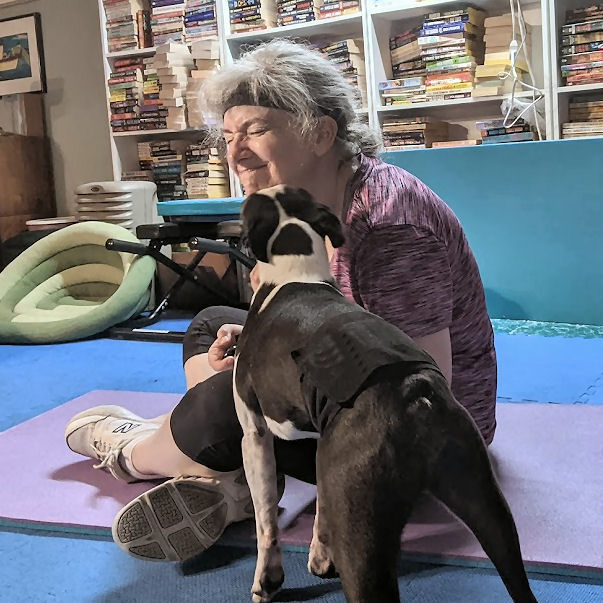
Puppies are distracting. Get back on track.

The algorithms know me. And they know you, too. They’ll destroy any semblance of time management you have. They’ll send post after post, video after video, specially designed to keep you on the platform. The puppies are cute, the food looks good enough to eat – or more horrible than you can possibly imagine, so you can’t look away. The social media distraction trap is real.

My problem was that I didn’t set a timer. Or look at my Get Stuff Done Funtime Menu

Easy methods to get back on track

These are easy methods to get back on track. If you know what you have to do but don’t want to get to it right away, set your timer for 5 or 10 minutes. Your phone timer will do, but a kitchen timer is better. Allow yourself a few minutes to waste time scrolling. The problem with a phone timer is that, on your way to find the right app, you run the risk of going down another distraction rabbit hole. But if you trust yourself, then by all means, use your phone.

Your Get Stuff Done Funtime Menu can be a valuable tool in keeping yourself on track. You’ll be listing tasks of varying lengths of time so that when you lack motivation, you can find something that’ll spark your interest, change your mindset and get productive again. Be sure to include a variety of tasks in your Menu – physically challenging, easier, writing tasks, lists to make, so you’ll find an activity you’ll want to do.

If you don’t try you can’t fail

Failure happens. Get used to it.

We’ve talked about failure before. We have high hopes, set lofty goals, take some steps toward that goal, and then … it’s not working. Or you know steps that you need to take if something’s going to happen (like making a call that could possibly open doors for you), but you don’t do it. Why? You think the person on the other end will say no. No one wants to fail. We’ll do pretty much anything we can to avoid it. But the more we can recognize the fact that failure happens, the better our chances are that we can move past it.

Our minds skip over the possibility

We don’t want to think about failure. Our minds just kind of skip over the fact that failure is a possibility in our endeavors. So not thinking about failure can be a way to avoid failure itself. The problem with that is that if we don’t try, we’re not successful in our endeavors, either.

A paper a few years ago showed that even motivated people don’t try out their ideas because they’re afraid of failing. Fear of failure does hold us back. Society has told us to stay positive, so we do – and don’t even think of failure as an option. But it’s always there, niggling in the back of our minds. We’re afraid to fail, so we don’t try.

On the other hand, if we accept the fact that failure is an option, it might happen, then we’ll put ourselves out there. Sure, once we do, we can still fail. And another study says that the fear of failure may return.

That’s why we have to rehearse failure. Prepare for the contingencies. Josh Davis, Ph.D., says that just a few shifts in our mindset can have us trying the things we used to wait on. Instead of justifying not doing something – it’s not ready, or I’m not ready for people to say no – prepare reasons for doing it anyway. 

And if it’s something inherently personal, like starting an exercise program, if you’re scared of what people will say, the same shift helps as well. Expect your family to give you resistance and pooh-pooh the idea. They may say, “Oh, you look great as you are!” And you can say, “Thank you, but I expect I’ll feel even better doing it.”

Feel exhilaration in the process

Instead of feeling let down, prepare to feel exhilaration in the process.

And instead of fearing the “no’s,” prepare to hear “no” and find out the “why’s” so that you can make it better. The more you put yourself out there, the more you can change with the new information you learn. You’re more resilient. And you’re learning. All that contributes to your healthy aging process.

So the sooner that you realize that failure happens, the sooner you can get on the road to success.

Who knew I was ahead of the times?

The motivation secret I told you about a year ago

Enter dopamine anchoring. Do you like to fold laundry? It’s not my favorite job, either. Do you like compiling a big report on Friday afternoon? Nope – I’m thinking about the weekend. It’s no surprise that we tend to procrastinate over jobs that we don’t care for. And then it’s a mad rush to get them done right before a deadline. But I told you about something I do that makes a task I don’t like a whole lot easier. It’s that little treat that keeps me going on the treadmill. Experts are now calling it dopamine anchoring

Make work seem less like work

The theory is that when you pair a task with something that you enjoy, then the task feels less like work. “The term draws on the neurotransmitter dopamine, which is linked to pleasure, anticipation and motivation,” said Lauren Mastroni, a career expert at CV Genius. “The ‘anchoring’ part refers to creating a consistent link between that positive emotional payoff and the task you’ve associated with it.”

So if you consistently pair the same reward, say listening to your favorite music, with the same task, say compiling weekly reports that are due, then eventually your brain automatically associates compiling that report with a pleasurable activity, listening to your music. I have a favorite channel on Pandora, and listening to that helps me with the bookkeeping. Yes, I know, I have an accounting degree. But that doesn’t mean that I enjoy the work any longer. But I get to listen to my favorite tunes.

I’ve been using dopamine anchoring for months

Add mindfulness to your step tracker.

You know that I’m not a running fan. But in the months that I’ve been listening to an exciting audiobook during my time on the treadmill, I’ve (kind of) turned my opinion about running on its side. Running is still hard and I don’t really look forward to it, but it’s the only time I get to listen to that book, so I keep on doing it. 

Productivity expert Ryan Zhang says, “Over time, you stop dreading these tasks because your brain knows something good is coming.” And that’s why I keep putting on my running shoes. I want to find out what happens next in my book.

So I’ve anchored something I enjoy (escaping with an exciting book) with something I used to dread doing (running). Psychotherapist Meg Gitlin says this is powerful medicine. “Pairing a dull or difficult task with something pleasurable ― like listening to music while cleaning or enjoying a favorite snack while studying ― can help reframe the task as tolerable or even enjoyable. Over time, your brain learns to associate the task itself with positive reinforcement. This can improve consistency, motivation and even mood regulation.”

Instead of procrastinating, enjoy the chore

Instead of procrastinating over your least favorite chore, you’ll be looking forward to doing it because you’ll also be doing something you really enjoy.

So if you have a few laundry baskets piled with clothes or sheets that need folding, perhaps you should pop in your earbuds and listen to a podcast or music, or stream your favorite TV drama. You’ll save time that you used to waste procrastinating, and you’ll feel so productive having completed a chore that you dreaded. But what are you going to do with all those laundry baskets?

Positivity is overrated

Don’t develop a positive mindset, develop a belief mindset

Positivity is overrated. It’s really not a good thing to be a Pollyanna. It’s not enough to be positive. Pollyanna was just a book (also the main character. Pollyanna is a novel by Eleanor H. Porter, published in 1913). These days, a “Pollyanna” is someone who finds the positive in everything and finds something in every situation to be glad about. The last few weeks I’ve been talking about mindset, and how you can change your own to help you become more resilient and even achieve your goals. So you might think that all you need is a positive mindset and you’re on your way to rainbows and unicorns.

No unicorns yet

But getting to the finish line takes more. Yes, you need a positive mindset, but you also need a deep-seated belief in yourself and in what you’re attempting to achieve. Your mindset is more than stating that you’re being positive. Or even that you believe in what you’re doing. It’s your taking action every day toward your goal, in keeping with that mindset.

If you have a goal to be active every day, then saying to yourself, “I know I can move every day!” doesn’t really accomplish a whole lot. But, if every morning you wake up and walk for 20 minutes, that’s not a huge investment in time, but it lays a solid foundation for success in achieving your goal. It also goes a long way toward your healthy aging – putting your health first – and toward improving your resilience. You’re demonstrating that you do what’s needed every day to achieve your goal.

Positivity had no place when Tango was young.

My dog Tango started out as a reactive, biting, snarling, shark of a puppy. He was 11 months old and hostile to everyone and everything except me. Tango let me do anything to him. When I first met Tango at his breeder’s home, I had no idea of his real personality. It was a controlled environment and so I didn’t realize until I brought him home what a challenge he would be. I had plans for Tango – we would train and compete in Agility and he would be fantastic. 

So I brought Tango home, full of positivity and dreams. And then reality hit. No Agility training for Tango – at least not until he was able to go out in public without trying to lunge at and bite everything in sight. I had to shift my beliefs. Tone down that positivity.

Deep-seated belief leads to work

I still believed that I could turn Tango around. So we trained. And trained. For months. I went out with him, getting him used to the world, or my corner of it. I shifted my mindset from blind optimism and positivity to belief that it was in my little dog to be a great partner. I paired that belief with a realistic plan of individual training and then group classes. That plan was ever-changing, depending on what Tango and I needed for the next few weeks.

And with that shift came new challenges. I was able to try new things and introduce new places to Tango. The group classes were always challenging since I had to be ever-watchful. But I believed that we could still be successful and so we persisted.

Reality now.

Positivity is overrated, but belief and working at it every day brought the goals to fruition.

Flash forward to today. Tango competed in both Agility and Rally (a slightly slower dog sport) through the Master Classes. The photo is of Tango competing in Agility. He got more ribbons than I want to count, and more titles than any other dog I’ve owned. He’s sixteen now, and spends most of his days snoozing in a comfy bed.

But if I hadn’t had the deep-down belief that we could actually do it, Tango might not have made it past his first year.

Positivity is overrated on its own. But pair positivity and belief, and a willingness to work at the goal every day, and there’s no telling what you can achieve. It worked for Tango’s reactivity and it will work for your fitness goals.

Discipline is mindset

People say I have tremendous discipline. Not to toot my own horn, but I moderate my portions – even spaghetti. Exercise 4 or 5 times a week. Wrote and published 3 books in my spare time. And I usually don’t get sucked in by the usual clickbait. How? Discipline. Discipline is mindset. It’s hard – kind of like putting on jeans fresh out of the dryer. Sitting is awkward, and you may not be able to do the button. But if it’s important enough, and the steps toward that ultimate goal are small enough, it happens without you even realizing it.

The benefits that come with discipline

Discipline comes with its own set of benefits, not least of which is achieving goals. But you’ll also be improving your resilience – knowing that life takes potshots at us, trying to throw us off our game. But with discipline, we get right back to the task at hand. And with the discipline of creating good habits, we’re influencing our healthy aging. When you’re disciplined, you’re happier too. You know that you’re doing what it takes to get to where you want to be.

We’re wired to be couch potatoes, though

So, how do you make discipline easy? First, recognize that our brains are wired for us to be couch potatoes. There’s nothing we all like more than bingeing our current Netflix series. Our tendency is to conserve energy. But we know that the science is just the opposite. Expending energy produces more energy.

Second, we expect that our motivation will kick in at some point and magically lift us off the couch. It doesn’t work that way, unfortunately. If we want the results of exercise, we have to do it ourselves. Getting strong takes work. And no one is going to do it for us.

It’s hard and the writing was trash…

Third, you probably have the belief that if you’re disciplined, it will feel like everything in your brain will click into place. Again, not how it works. When I was working on my second novel, it was a struggle to get up early and write the hundreds of words I set as my goal. Some days it didn’t happen because the words were trash. But when you have something really important at the back of your brain that you want to achieve, you do the work. Toward the end of that book, the writing did get easier and I was able to finish – and some say this book was even better than the first novel.

Everything all at once is a recipe for disaster

And fourth, when you’re trying to be more disciplined, you’re probably trying to do everything all at once. Again, that’s just setting yourself up for failure. Discipline is mindset, but it only works when you take small steps. Train your brain to take those small steps every day. Because they lead up to the big ones.

Develop mental strength

Get strong, mentally

You may have noticed that we’ve been focusing on our heads a lot lately. Or, rather, what’s in our head. As the writer, I write about stuff that’s top of my mind. And lately that’s mental strength. The news is horrible every day and I’ve been having a hard time sleeping with it all. On top of that our aging AC gave up the ghost in the middle of this major heatwave. So we’ve retreated to the basement where it’s cooler – dogs and all. My brain keeps going to the “What if” place and I keep telling it to stop. I’m succeeding for the most part. Does that qualify as mental strength? Anyway, I’ll take it. Really, though, how do you build up your mental strength?

Is consistency key?

First off, what makes someone mentally strong? James Clear believes that it comes down to consistency. Athletes who are mentally strong don’t miss workouts. Mentally strong leaders work toward a goal consistently, a bit every day. They don’t let short-term setbacks deter them. And mentally strong writers, artists and employees show up every day and do what’s needed.

Others seem to agree that consistency is important, but they also have other tips for gaining mental strength.

Why is it important?

But why is having mental strength important? First off, you’ll stay committed to your goals, what’s important to you. You’ll have more resilience and be able to adapt more quickly when things go sideways. Also, you’ll be able to deal with stress better. When you have to make an important decision, being mentally strong gives you an edge.

Tips for building mental strength

So about those other tips for building up your mental strength: First off, practice mindfulness. Be present and fully engaged, or focused, on yourself and your surroundings. Meditation can help ground you, or take a mindful walk, observing your surroundings. Calm.com says that this can “enhance your focus, reduce stress, and improve emotional regulation.” All these enhance your mental fortitude.

Second, be kind to yourself. Acknowledge your mistakes but go easy on yourself. Self-compassion goes a long way toward being strong mentally. Also be aware of your feelings. Try journaling them. The more you know yourself, you’ll know what you’re capable of.

Third, try new things. Step out of your comfort zone. Start a new hobby that you’re intrigued by. This will also enhance your resilience. You’ll have new experiences, perhaps meet new people.

Develop a positive mindset. Challenge your negative thoughts. This will cultivate an optimistic but realistic outlook. Practice this frequently and don’t be surprised if your problem-solving ability is also enhanced.

Learn from your failures. We’ve talked about failing goals recently. By acknowledging those failures, you can learn valuable lessons about yourself. 

So, make it a priority to develop mental strength. You’re already doing most of the work. You set goals and are learning about yourself in studying the failures. You’re practicing mindfulness and cultivating a positive mindset.

When something’s a habit, you don’t need motivation

You don’t need motivation

What do you do that’s a habit? Something you do every day, most likely without thinking twice about it? Make coffee, brush your teeth, take the dog for a walk, tie your shoes, put your seatbelt on. You don’t even think about it and it gets done. It turns out that when something’s a habit you don’t need motivation!

No motivation to exercise

I’ve mentioned that exercise is one of my habits. Monday and Thursday when I’m done with work or errands I change and hop on the treadmill. Tuesday is yoga and flexibility, Wednesday is Pilates and Saturday is my combo day – aerobics and strength. I don’t even have to think about it. The workout’s done and I get to enjoy a nice relaxing shower. Exercise has become a habit for me through the years. I’ve tweaked that habit a number of times over the years, but it remains. It’s part of my healthy aging, part of my resilience. I exercise to support my fitness so that I can do what I want to do when I want to do it.

It’s not just me

Psychology Today recently published an article that supports this. Long-term fitness success is built on small, sustainable actions. And fitness habits are sustained “when they reflect the person you want to become, not just what you want to do.” 

So think about the person you want to be. Picture yourself six months from now. What are you doing? What hobbies do you see yourself enjoying? Are you travelling? Working in your garden? Training your dog? How are you moving while you’re doing all that?

Are those dream pictures the real you?

Ask yourself if this is the real you – if it’s the you that you want to become in those pictures. Now ask yourself if these are just pie-in-the-sky dreams or if you can actually see yourself making the changes needed to make them happen. For changes to happen, the motivation is built in. We’ve all tried a lot of stuff that didn’t work for us in the past. For me it was blow-drying my hair. I did it for work and hated it. As soon as I could, I stopped and am just air-drying my hair now. (In all honesty, I probably should dry it, as long as my hair is now, but I just can’t…) So in order for you to stick with something, it has to be something you don’t mind doing in the first place.

Or, associate something with it that you enjoy – like for me, listening to an action-packed novel while I run. Elevate the thing you’re not thrilled with somehow. And then make it a habit. Do what it takes so that you don’t have to think about doing it consistently.

At first, work the process to make it a habit

Make exercise a habit.

You know what that takes – schedule it on your calendar, put your clothes out, and keep that appointment with yourself. Take a deep breath and do it. Your motivation to do the thing is there – you’ve pictured yourself as the end result of it. Your motivation is built into your actions. You know what it takes to get there. You’ve committed to it. And you’re making it a habit you can live with. When something’s a habit you don’t need motivation. The motivation underlies everything, but it’s not a giant gold medal at the Olympics thing. 

Make exercise a habit. Your fitness journey lies on a path that you take steps on every day.

Not wanting to exercise is normal

It’s really not you – not wanting to exercise is normal.

It turns out that not wanting to exercise is normal. It turns out that as we get older, lots of systems in our body decline. You knew that – eyesight, hearing, cognition, memory. And we don’t want to exercise. That’s because of declining systems in our brain. Namely, our dopamine synthesis and dopamine receptors. That means that cognitive control, emotion and mood, motor function, positive reward, and motivation are also naturally declining. That means our natural enjoyment of life, our happiness and our motivation to exercise really does decrease as we get older.

It’s just not the same as before

So it is normal that we don’t feel like doing anything but mindlessly binge a series on Netflix. Or that we lack ambition to do anything but sit around. A recent article in Psychology Today notes that since our dopamine levels decline, we don’t get the satisfaction out of doing anything like we did in years past.

That’s depressing. I get that we all may not care that not wanting to exercise is normal, but how about the enjoyment that we get from other activities? I certainly want to experience the happiness of a good meal with friends or the enjoyment of reading a good book or listening to an amazing musical performance.

So how can we get back to feeling all these things?

First off, know that what helps one person feel things or become  motivated may not work for another. We all feel things differently – we’re not wired the same. 

Future to present – focus on the now

Find the joy in the little things if you prefer toexercise alone.

In looking at what made older people happy, one theory suggests that people’s motivation shifts from considering the future to being anchored in the present. And for motivation to exercise, older people are more likely to join a group to exercise rather than doing it alone. I guess I’m the weirdo here (preferring my solo exercise). So focusing on relationships can help you get fit as well as make you happy. Be with people you enjoy spending time with and encourage them to join you in exercise. It will help your body, your mind, your resilience and your healthy aging.

For those of us who prefer to go it alone, then continue to make exercise a habit. And find the joy in the little things – one more push-up. One more tenth of a mile. I listened to a great book while running.

Quit the goals that don’t work for you

When is it okay to quit a goal? I’ve written a lot about setting and achieving goals. Fitness goals that can take you from winded walking down the street to running a 10K. Life goals that take you from a disorganized sad person to a Marie Kondo wannabe. But how about when you want to quit a goal? When is that okay?

Look back and assess

At the beginning of a calendar quarter or year I like to look back and then forward and try to decide on the things I want to achieve in the next few weeks or months. Those goals can be big ones, or little, some of each. When I achieve those goals, they should bring some kind of happiness and fulfillment to my life. 

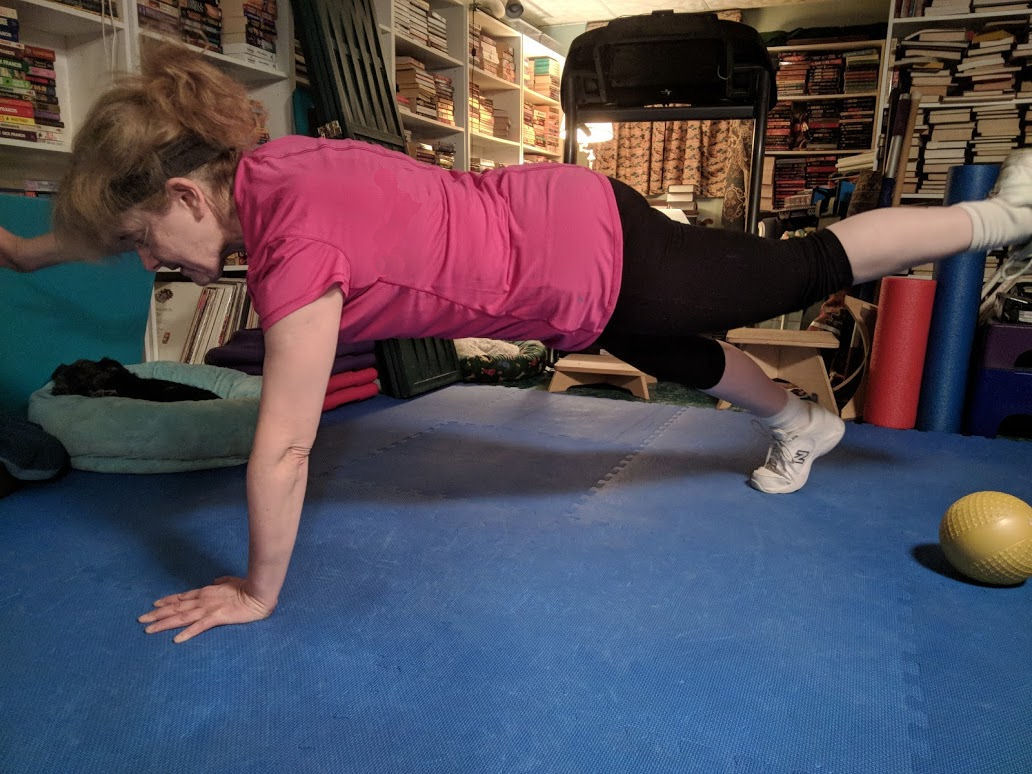
If trying to achieve a full Side Plank Star makes you frustrated, rethink that goal.

But what happens if you’ve been working toward a goal that you set and it’s just not happening. Every time you think about doing that work, you get sad or find something else to do. You’re thinking about just not following through on that one. You’re thinking that you’re ready to quit a goal.

If a goal isn’t working for you

But, is that so horrible? If you find that a goal is no longer important to you, or if you’re just frustrated, then it ‘s time to rethink that goal. Ryan, from Point to Point Strength and Performance says, “Although quitting is usually associated with failure and a lack of grit and perseverance, it isn’t always a bad thing.” 

Look back, then, and determine if you’re getting closer to that goal. If you are, you may want to push just a little more and then reassess at the end of the week or quarter. You could just be at what Seth Godin, marketing expert and entrepreneur, calls “the dip.” If you’re closer than you were before and you believe that the goal is worth pursuing, keep at it. Your resilience is growing regardless. And if it’s a fitness goal, you’re reaching for that ultimate goal of healthy aging.

Our lives may not align with the goal

But elements of our lives change. What we thought would be important to us may no longer be important. Or training for the race just leaves us drained and weak. Time to reassess or even toss that goal. If you’re constantly frustrated when you’re working toward a goal, it could be that the goal wasn’t formulated well. Reassess. And be honest with yourself. Redo the worksheet in your Get It Done Guide. There’s no shame when you quit a goal, but make sure that it no longer matters to you.

It’s okay when you don’t know something

How to push on with your push-ups when you don’t know how

Let’s say you’ve set a fitness goal – like doing 10 regular push-ups in 6 weeks, and you currently can do 6 from your knees. That’s a great goal. It’s specific and probably achievable. You’ve set your intermediate goals, scheduled your workouts and got started. (If you’ve got visions of where you want to be but no idea of how to get there, download the Get It Done Guide for tips on setting your own goals!) Week 2 you can do 20 push-ups from your knees but can’t seem to progress to even one on your toes. What’s going wrong? How do you know when to ask for help? And realize that it’s okay when you don’t know something?

No shame in asking for help

There’s no shame in looking for additional help. When a goal is meaningful to you and you think that you’ve set all your benchmarks in place, but you feel like you’re swimming in place, it may be time to look for help. You can have all the motivation in the world – you really want to be strong enough to do those push-ups, but if it’s not happening and you’re getting frustrated, it’s time to seek outside answers.

Different ways to figure things out

It’s important to know, too, that asking for help or seeking outside answers is beneficial as well. When you shift your mindset from, “I’ve got to get this done!” to “I have to figure out a way to get this done!” then the challenges you face become opportunities and not roadblocks. When you learn about new ways of doing things, you enhance your own evolution. Continuing to learn will increase your resilience, and improve your outlook. What you saw as a failure previously, you can now see as additional motivation.

Pros have help all the time

None of us knows everything about anything. It’s okay when you don’t know something. And asking for help is a sign of strength. You’re smart enough to recognize that you don’t know something and humble enough to find the answers to your problem. And every professional athlete has a coach, a trainer, and other professionals helping them on their journey.

Intermediate push-ups steps

But back to our push-ups. From my own research, I learned some great ways to progress from knees to toes. They include push-ups on one knee, one straight leg. Also, doing push-ups leaning against a wall helps develop the upper body strength we need. And the plank exercise – from either the forearms or hands also increases our upper body strength. Remember to keep your core tight – always! – and your back straight. Don’t try to bend your elbows too much, either, especially at first!