Is joy possible

Life is not just about to-do lists. It’s more than hustling from one task to another. Life is made even more stressful with multiple screens yelling at us. One thing we must keep in mind, when asking “Is joy possible?” Joy is where we find it. We can make our own happiness.

Granted, I love my to-do lists. There’s nothing better than being able to cross off a juicy task that took a hefty chunk of time to complete. But that doesn’t always bring joy because I’m too busy with the next job

And, if you’re like me, when you’re between tasks, or sentences, you’ll pick up your phone and find out what’s going on. More often than not, that causes stress. These days all the news seems to be stressful. All the social media applications are so jam-packed full of AI images that it’s hard to tell what’s real. (Why do folks make up stuff about celebrities and generate images that fit their fake stories? It’s annoying, isn’t it?)

The best thing for me, when all of that gets overwhelming, is to turn off the phone or the TV. Take the dogs for a little walk. Enjoy a bit of nature. Tracy Brower, a sociologist and author, says that’s one way to infuse your life with a dose of micro joy.

It’s these little moments you create that bring happiness into your life every day. From the short walks around the block breathing fresh air, to the little dance parties you have with yourself to celebrate crossing something off that list, these are moments of micro joy.

Brower says that when you answer in the negative to the question “Is joy possible?” you’re not giving yourself enough credit. Create your own joy in the power you have over your actions and reactions. You control how you react to others’ actions. Panic and distress is one reaction, but measured breath and thought may be a better route. There are few situations that require an immediate response. Take advantage of the moment of silence and think about the possibilities. Even if you can’t control the situation, you can control your thinking. 
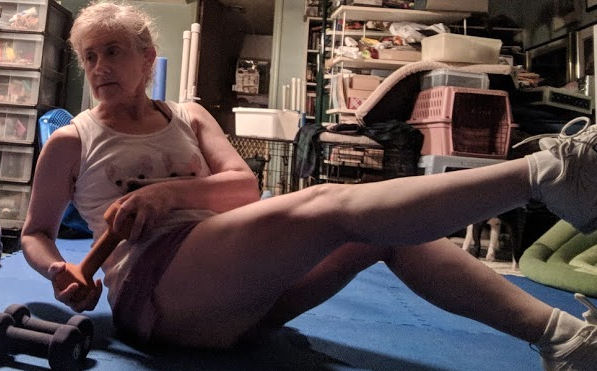
That moment of silence can bring clarity and a more positive response. And if the situation becomes more common, you can figure out a way to turn it to your advantage. Create habits that serve you better. Grow your resilience and your mental strength. Consider them muscles that demand more flexing.

Is joy possible? Of course it is. Create your own moments of joy.

You’re doing okay

You’re doing okay. You just don’t realize it.

Did you get everything done last week?

Take a minute. Think about the stuff you did last week. Was it all that you wanted to do? If you’re like most people, probably not. But it was a lot. And I’m sure that a lot of that was amazing. You’re doing okay. You’re probably doing more than okay. But you’re not giving yourself the credit that you deserve. Now’s the time to change that.

My to-do list is long. And getting longer. I’ve got plans. Books, courses, videos. Even cleaning up my desk. (Which probably won’t happen.) Some stuff got scratched off last week. You probably drew a big check mark next to stuff on your list last week as well. But did you take a minute and appreciate yourself? I’m thinking no. If you were able to take one thing off that never-ending list, good for you! You’re doing okay.

Take a breath when you check something off

Checking something off on your list deserves a moment. Maybe more than a moment. Today, when the news is blaring at you 24-7 from multiple screens, it’s hard to hold yourself together, much less focus on any task that needs to get done. You’re trying to focus on your healthy aging. Your motivation takes a nose-dive when bad news is continually coming at you.

And when we do actually finish something, when we should give ourselves a moment, it’s usually just on to the next thing. Author Anna Codrea-Rado calls this “productivity dysmorphia.” When you feel like you haven’t done enough despite working relentlessly but still fruitfully. Like getting in a really good workout, but then just showering and moving on to the next task. I’m guilty of it, and I’ll bet you are too.

Now’s the time to get out your Amazing Box

A while ago, I promoted the idea of the Amazing Box – write down something you did that you feel good about, and put that slip of paper in a box. Well, it’s time to reintroduce the concept. Keep on adding to the box. But then, at the same time you add something to your Amazing Box, dig deep in there and pull out a slip of paper, read it, and feel good about the things that you did a while ago. You’re doing okay. Now is the time to realize it.

Motivate yourself by doing

That couch is calling. Along with the heated throw. The last thing I want to do is get started on a big project that will keep me at my desk for hours and days. But it’s an important project, and one that’s needed. But I really can’t face such a big project without some motivation. Ever feel like that? You’ve got a worthwhile project, but it feels overwhelming, so you put it off. There is a way to get yourself out from under that heated blanket. Get started. Motivate yourself by doing.

And for those of a certain age, it’s even harder to get off the couch. But it’s possible, and we’ll look at some ways of getting started. Remember that planning is for the strong.

How to get up off the couch

First, consider the rewards of that big project. Like planning a trip to Greece for next year. Think of the bright blue skies, the dazzling white houses, the picturesque villages, the deep aqua sea. Makes me want to go, myself. Okay, I want to go. I can’t wait to bask in the glorious sunshine. 

So, the big reward is worthwhile. But the project is still overwhelming and you can’t see a finish line. But that’s not important now. You’re creating more intrinsic motivation by understanding all the rewards of the process. You’re making yourself want to continue with the project by seeing the benefits along the way.

Steps to make your dream a reality

User comments

The next step will require paper and pen. Think of the steps that you’ll need to take to make this dream a reality. Don’t worry about how to make it all happen yet. That comes later. So, you’ll need to nail down dates with the family, get visas, figure out what cities to see, what clothes to bring, and make sure that you’ll be able to do all the walking.

The juices are flowing. You’re witnessing how to motivate yourself by doing. You can’t wait for the next step.

Now for the details

Now is the time for the nitty gritty. The details. As before, visualize all the benefits of each step. That visa application will get you to the Greek islands. Today’s walking workout with increased incline will get you up those rocky hills. Now you understand that you motivate yourself by doing.

Change your brain to bring joy

There’s not a lot we can do overnight to change our life situation. We can’t lose thirty pounds. Or change our finances in a day. But we can change our thinking. That we can definitely start overnight. But why would we want to do that? Change your brain to bring joy.

We’re all thinking about goals to set, where we want to be in three months, a year, or five years. First, though, let’s start a little smaller and bring ourselves a little joy. With that little joy can come more optimism, more happiness, more resilience, and a real chance to set goals that will matter to us.

Take some action

The first thing to do is to take some action. Remind yourself that you have power over your actions. You also have the power to adjust how you react to outside forces. You can see what might be considered a problem, instead as an opportunity. Change how you view things and learn. And when faced with that opportunity, know that even though you might be uncomfortable with it at first, remember that discomfort means growth.

Take a small step first

Don’t scare yourself so much that you’re paralyzed, though. Take the small step first. Learn and understand the challenge. Find out about the opportunities you’re presented with. Take a walk and don’t immediately respond. Let the idea swim around in your brain. Decide what that first step might be. 

Then you’ll be a little more comfortable with taking the step. And then you’ll find out more, get a little uncomfortable, think about things, and become more comfortable. Learning and growing are all part of achieving the big things that you want. You’ll change your brain to bring joy, one small step at a time. You’re growing your resilience, opening yourself up to new things. And you’ll be able to weather the storms you know are coming.

Big step for an introvert

For me, I’m on a journey to find more young readers for the children’s books I wrote. I’ll be contacting schools and public libraries, perhaps to do in-person story time events. You think that’s not scary? For me, a dedicated introvert, it’s terrifying. But I’m changing my brain one small step at a time. And by changing my brain, I’m seeing that I’m capable of stepping outside my comfort zone. And that brings me joy.

If you’re quest involves becoming more fit, you know that the most important thing is to get your nutrition right. Play around with flavors. Try some new veggies. It’s easy to find recipes on the internet for vegetables you’re not familiar with. Stroll down the produce aisle and find something exciting. Your small experiment may find a lasting spot in your recipe repertoire. That new recipe can change your brain and bring joy when you weren’t expecting it.

2 weeks left – stay calm

Are you feeling just the slightest bit panicked about all the stuff you have left to do before the end of the year? Here are some strategies to stay calm and at least get some stuff done before it’s time to ring in the New Year. There are about 2 weeks left – stay calm.

Stay in control

Easier said than done, right? Be more free with the “No’s.” If you’re typically a person who says Yes to everything, stop it. Right now. Unless it’s something you really want. Saying no to adding more things on your plate will help your peace of mind, help your resilience, and keep you healthier. You won’t be worried about extra stuff you have to get done. You’ll be able to stay more focused on the things that really matter.

Prioritize

Make sure the stuff that’s most important gets done. Once you’ve cleared those, then you can worry about the smaller stuff. But be sure you’re able to prioritize your tasks with a clear mind and really understand the value of finishing the tasks you set the highest priority to.

Spend time with the people you care about most

Too often the holidays are lonely for people our age. Don’t let that happen. Reach out to your community and make sure you’re sharing your time with people who are important to you.

Manage your habits

Now is not the time to neglect the healthy habits you’ve worked so hard to gain. Eat a healthy snack before you go to a party where you know there will be lots of yummy stuff that you’ll pay for later. (That’s not to say you have to forego that yummy stuff – be discerning.) If you don’t have time for your usual workout, take a walk with a friend. You’re still moving and catching up. And don’t neglect your sleep.

Focus on gratitude

Every day, focus on gratitude. Recognize things and people you’re grateful for. Your happiness and optimism grow, and so does your ability to look to the future.

Focus on these 5 strategies to stay calm, and you’ll head into next year with a bright outlook.

AI is great – to a point

Artificial intelligence (AI) is everywhere, all the time. And it definitely has its uses. It can spark thoughts and ideas, schedule meetings, even write things for you. But take AI’s contributions with multiple grains of salt. AI is great – to a point. I even had input from AI to illustrate my children’s book. Be aware, though, that AI has limitations. At the bottom of AI generation screens, there’s even a statement telling the user to, basically, beware. AI has been known to make mistakes even when the output seems like fact.

But I wondered if AI could design a workout plan. Personal trainer Cori Ritchey wondered the same thing for himself and wrote in Men’s Health how the plan it came up with worked. He entered some basic information about himself, his experience, and his goals. And the bot came back with an extensive month-long workout plan. Ritchey followed it, complimenting the bot on some things as well as noting where it was deficient. 

Know your body if you rely on a bot to design your workout plan.

Ritchey’s conclusion was that if the user was a trainer themselves, and understood how exercises work together, a workout plan developed by AI could work. But he also warned that the user must know their own body. I know that I can’t do a lot of shoulder work due to dislocations years ago. (Yes, ouch.) So, if a workout plan recommends shoulder work, I’d have to modify it to suit my body. And AI may not correlate workout time and the effort needed. If you tell the bot that you only have 15 minutes, it may suggest something ridiculously difficult. 

He also warned that an AI-generated workout plan is not a great motivator. If you can self-motivate, then you might be able to follow through on a month-long plan successfully. But, if you’re more tempted by the living room couch or the latest trend streaming online, you’d probably do better with something else.

I’ve talked about ways to start an exercise program, and if you decide walking or dancing as a great way to move your body, AI can probably suggest a great playlist.

Alternatively, there are now AI-supported applications that act as personal trainers. I admit, I didn’t check the cost, but found it interesting that they exist now. In fact, I just read about one personal trainer AI app that was actually built on AI. Its creator became a certified trainer to ensure authenticity and insert some of the human motivational element. But, as always, caveat emptor. Remember that AI is great – to a point. And also remember that AI is the first to admit that it can make mistakes.

No need to panic – yet

Have you been seeing ads and posts about Black Friday the last few days? Isn’t it a little early? There are still 2 weeks until Thanksgiving here in the U.S., for Pete’s sake! There’s no need to panic – yet. Let’s take a breath and think about the current push. Retailers are seeing that no one is spending anything now. People are clutching their wallets to them and are reluctant to part with their hard-earned cash. Those retailers want to be top-of-mind when people start laying out the holiday moolah. And all the influencers want their recommendations to be what followers think of, so that they can earn their affiliate bucks. 

Think about what’s worthwhile

Similarly, there’s pressure to start working – and make significant progress – on your New Year’s goals. I’ve started talking about that lately, so I guess I’m guilty of pushing too. But I want you to start thinking about – not rushing into – what you might find worthwhile in the next few months. But there’s no need to panic and rush into anything you’ll regret later.

List everything

The first step, as we talked about last week, is to set down everything you’ve been thinking of. Everything you want in the next year, or quarter, or month, or week. Prioritize them. And then break them down and put them on your calendar. You’ll be a step ahead, and not have to worry about fitting everything into your schedule. And that will give you peace of mind, boost your confidence, and increase your resilience. If you can master your wish list, you can tackle anything.

This means all the things from every aspect of your life. Fitness, definitely – if you think you could be eating a more nutritious diet and cut out some supplements, do your research. If you think you could be getting stronger or gain more endurance, figure out the kind of movement you like to do the most. Think about your relationships with friends and family. Is there work to be done there? And how about your home – are you happy there? If something strikes you as important, even just a little, add it to the list. Now’s the time to include everything. You can week out the unimportant stuff later. 

Set priorities

Even celebrities like Megan Thee Stallion takes the time to set her priorities. “Right now, I’m just focused on staying disciplined in the gym, continuing to eat healthy, spending time with my loved ones, working on new music, and setting time for myself to reset and recharge.”

While we’re talking about the future, there’s no reason to abandon your current goals. If your goals still serve you, if you’re almost to the finish line, or even partway there, keep going. Incorporate them into your future thoughts too. And don’t forget to make regular contributions to your Amazing Box! You’re still doing great things.

Now is not the time to panic. But it is time to think.

Clarify your priorities

An old tool, but a good one for clarifying priorities

We’re getting close to that time of year when everyone seems to be talking about resolutions and goals for next year. I do this all year, because life doesn’t automatically change on December 31 and I have a whole new set of priorities. But many people stand by the New Year’s Resolution thing. Regardless, this is an exercise that everyone does at some point.

Here’s an old tool, but a good one, for clarifying priorities. Steven Covey, author of The 7 Habits of Highly Effective People, coined the term for the process from a speech given by Dwight D. Eisenhower. The Eisenhower Decision Matrix, or Urgent-Important Box, helps clarify priorities and determine the order tasks should be performed. I like this because it shows at a glance how we view problems. I’ve changed the matrix a little to suit the task of goal-setting.

First step – list the tasks that need doing. In order to prioritize our tasks we have to know what they are. Spend a couple of days on this – writing the tasks down as you think of them. I’ll be brushing my teeth at night and I’ll think of something that needs to get done. That’s why I always keep my trusty notebook with me. The next morning I’m usually able to decipher my cryptic notes. So spend a couple of days thinking before you start to set your priorities

Urgent or Important? 

Top-left, or front and center, are the things that are most important – the things that have consequences if they’re not completed. For us, if the doctor tells us to lose 50 pounds or we’ll die, that’s most urgent and imporant. These usually come to mind right away. We schedule everything else around these urgent and important tasks.

Important but not urgent tasks are those you still want to complete. These are the tasks or goals that you believe will set you up for success or happiness. So schedule your intermediate steps for these. If mastering the side plank will make you feel incredibly strong, schedule those mini-goals right on your calendar. Modify for a week on elbow and knee with your foot on the floor. Then lift the foot. When you’re ready lift onto your elbow and stagger your feet for the side plank. Then stack your feet, then lift onto your hand – you get the idea. You’re building your arm and core strength, and you’ll be making strides if you follow your schedule. And, by the way, this is an empowering pose. You’ll feel unbeatable.

Those urgent but unimportant tasks – like dusting – can be avoided or delegated. If you want your house cleaned before the holidays, hire a service. 

And the tasks that are not urgent and unimportant can be put on your list for when you have an extra five or ten minutes between other tasks. Or if they’re fun tasks, like reading a chapter in that library book, you can fit that in as your little reward for achieving a mini-goal.

It may seem like an overwhelming job to prioritize all the tasks you have to do. But clarifying your priorities is an important step. So, don’t panic and set yourself a reasonable time to get it done. The Eisenhower Matrix can be a valuable tool. And then starts the really fun job of achieving your biggest goals.

Nurture your motivation

Setting goals is an inspiring activity. You’re fired up in anticipation of what you’ll accomplish. But then time goes by and you’re less motivated than you were. You still may want to achieve that goal but it’s not exciting. Your motivation just isn’t what it used to be. Professor of Behavioral Science Ayelet Fishbach says, “to be motivated, you either change the situation or the way you think about the situation. This is the science in one sentence.” Your goal is still there, but if you’re not still enthused about it, you have to nurture your motivation.

Change your mindset

You have to change the circumstances or the way you think about it. If you can’t change the situation, change your mindset. Professor Fishbach gives her own example. She wanted to be more active. But instead of telling herself to walk more, she got a puppy. While that shouldn’t be the only reason to get a puppy, the puppy has certainly increased the professor’s activity. Telling yourself to do something you don’t really want to do is a recipe for failing that goal. I used to have the goal of keeping an orderly desk. That didn’t work – I failed miserably. I just don’t see the point, and having a messy desk doesn’t bother me enough to change. So I dropped that goal. My motivation to achieve it did not deserve nurturing.

Goals are abandoned because the pursuit is not enjoyable

On the other hand, Fishbach’s research found that most goals are abandoned because people don’t enjoy pursuing them. If you set the goal of losing 10 pounds by the end of the year but don’t have a good enough reason to find motivation for it, you’ll probably abandon that goal. But if you receive an invitation for a party you really want to go to, and know the outfit you want to wear, and that there will be a great band to dance to, you have a better chance at maintaining your momentum.

Sustain your momentum when you nurture your motivation

But you’ll only sustain your momentum if you nurture your motivation. Fishbach found that the reason people don’t enjoy pursuing their goals is because they take too long. People are excited when they set goals and closer to the end, they can see the finish line and are excited to get there. But in the middle, their motivation is lacking. 

Sustain your momentum when you nurture your motivation

In our example, you’ve got 2 months to get party-ready. And if you call your goal “party-ready,” that sounds more fun than “lose weight.” 2 months isn’t a lot of time in the long term, but it’s 8 weeks. 60 days. A long stretch of chocolate withdrawal. So, here’s how to nurture your motivation: set those intermediate goals. Make sure you have a goal for every week that makes sense. For the first week, eat an extra serving of veggies every day for a week. Or walk 10 more minutes every day. And at the end of the week, perhaps a slice of cheese on the veggies. Or read an extra chapter in the book you want to devour.

Nurturing your motivation helps you to achieve important goals. I’ve said it before, but it bears repeating. When you achieve goals that are important to you, you’ll feel like you can take on the world. You did it! 

By understanding yourself, you can understand how to achieve the goals that are important to you. You’ll be able to nurture your motivation from the start to the finish of a project.

Try the Grow-in Instead of the Lock-in

Great Lock-in Too Restricted? Try the Grow

A while back I wrote about the Great Lock-in. There are just a couple months left of the year, and this would be the time to get ready to take down all comers in the New Year. Make sure you slay those dragons in the first quarter and achieve your goals in a flash. But that might seem too harsh and restrictive. Many folks are trying a different TikTok challenge – the 75 Grow. There aren’t quite 75 days left this year, but that shouldn’t dissuade you from trying this. The goal here is to move, do something you’d ordinarily avoid, and be creative every day. Basically, to grow three habits before the end of the year.

So before you say that this is dumb, let’s take a closer look at what happens when you grow 3 healthy habits before next year.

Movement

move every day

This part you’re probably already on board with. I’ve written about the importance of exercise, and if you exercise three or four days a week, you’re probably not sitting around all day on the other days. Even a brief walk counts to grow this habit.

Do something brave

Doing something you’d prefer to avoid every day counts as being brave, in my mind. I was brave last week and called a new dentist’s office (the dentist I’d been seeing for many years retired this last summer). I could have put it off for a few more weeks, but I knew the tooth that was giving me problems would not get better on its own. And the day after I visited my new dentist I was brave again and showed up for the No Kings rally in a neighboring town. Being brave like this increases our optimism – I was proud of myself even for making that phone call. And it also increases our resilience. We’re able to face challenges and meet them head on.

Be creative

This is the fun part of the challenge for me. Increasing our creativity opens our mind to other new things. Even if it’s doing something you’re done before, this will open new passageways in your brain and, again, increase your optimism, happiness, and resilience.

If we grow 3 healthy habits before the end of the year, we’ll be moving more, we’ll be happier and more optimistic. We’ll also be able to meet more challenges and confront more obstacles without sending us into a declining spiral. And we’ll be healthier, having moved our bodies every day.