

Little rituals keep us grounded

The other morning I was feeling out of sorts. Until I was making my coffee. And then it occurred to me that it’s the little rituals that keep us grounded.

A normal morning, but…

It was a normal morning, nothing out of the ordinary. After I took the dogs out, I prepared their breakfast and I even remembered the flax and psyllium powders. Booker gets the lion’s share of one homemade food container, Torque the rest of that one, some of the next, and Simon gets the rest of the half from that container. Then even it up with the kibble, except for Booker. I still felt out of sorts, even though it’s the same dog food routine every day. I fed them and started preparing my own. Same routine every day. Fill up the electric kettle. Measure the coffee. And that’s when it hit me.

Comfort comes first, then the grounding

It felt comforting, that little ritual of making the coffee. It keeps me grounded. The act of pushing the lever on the kettle, measuring the coffee, pouring the water. The smell of the coffee steeping. And the rest of the breakfast preparation. It sets me up for the day. I know what to expect. It settles me. Grounds me.

Then I can take all the unexpected happenings more in stride. Or, as in stride as I ever do. Which is to think, “OMG! What’s happening!” at first. And then settle down. “Okay. We got this. We can handle it.”

Those rituals add to our resilience

But the little rituals help us get there. They help us to accept minor irritations as just that. And they help us deal with the major ones a little better. Those little rituals set us up to grow more. If we’re settled first, then we can grow. And we can become more resilient. If we start in a comfortable place, then we can get uncomfortable for a bit.

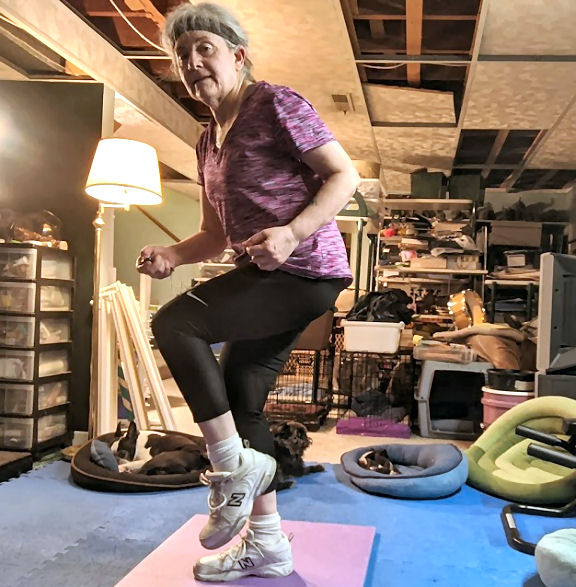
How to resist the temptation of the couch

My sister said it the other day. “I understand how people just don’t get up.” It was one of those days when the knees, hips, and back were creaky. After a certain age we all have those days. You know your knees and hips are going to hurt when you start to get up. And then when you’re most of the way standing, your back feels like it’s going to give. It’s certainly tempting to just sit. Read a book. Drink a beverage. And not get up. But at some point, you’ve got to. And you know that the more you sit, the worse the pain and creakiness will be. And yet, you still sit. Here’s how to resist the temptation, get up, and be productive.

I’m not going to give you platitudes. Yes, you’re going to be creaky. That lessens, but it never disappears. But the more you move, the easier it is to move. And Newton’s first law of physics should also be our first law of getting older. A body in motion stays in motion. The more you move, the easier it will be to move. And the easier it is to resist the temptation of the couch.

And, the more active we are, the more resilient we are as well. When we think nothing of getting up and doing something, the better equipped we are to tackle hard projects. And the more we’re willing to take the extra steps to reach our goals.

If you sit at a desk working, set a timer to go off every half hour. Get up. Move around. I tend to sit for way too long at my desk. And then, even though I am quite active throughout the day (think about a 13-year-old dog wandering the house – Where’s Booker?! Is he wearing his pants?!) I still get stiff. Enter the timer.

And drink lots of water if you’re sitting. You’ll have to get up to go to the washroom. Cause, effect. It’s certainly easy to resist the temptation to stay sitting when nature has an urgent call.

And exercise. The Centers for Disease Control recommends we each should do 150 minutes of moderate to intense exercise every week. It keeps our heart healthy, our lungs filled with oxygen, our muscles and joints lubricated. Add to that a couple of days of strength work to keep our muscles and bones strong. It sounds like a lot, but if we incorporate some of that into our daily activities, it will keep us healthy and less creaky.

But, I will say that some days it’s tough to resist the couch.

One change at a time

A few years ago it was all the rage to see how much multi-tasking you could do. Remember? Dust some furniture, have a meaningful phone conversation, train the dog – all simultaneously. But do you remember what happened then? Nothing was done well. The furniture had to be dusted again. You had no recollection of your conversation. And the dog went on their way, not learning anything. The takeaway? Multi-tasking doesn’t work. Focus on one thing at a time.

Keep everything else chugging along

The same goes for achieving big goals. Work on one thing at a time. You’re more assured of success if the rest of your life goes chugging along the same as it has been. So you can focus on the big thing you want to change.

Too much disruption leads to failure

Leo Babauta of zen habits says that trying to change multiple things at once doesn’t work. “Your focus gets spread thin, and in the long run you end up failing to stick to any of the changes.” Haven’t you found that to be the case yourself? You want to eat healthier at the same time you want to get more sleep. Where is the time you should be sleeping, planning your healthy meals, and shopping for the ingredients? While at the same time doing everything else you had been doing before. 

Something’s got to give. You may try it for a week or so, because you have to shop anyway. But then you find that you don’t have time to prep and bake Wednesday’s veggie lasagna, and you stay up until way past midnight on Thursday trying to catch up on the work assignment you need to finish by Friday because you had to take the cat to the vet.

One change at a time leads to success

Something’s got to give. A more sensible solution might have been to switch out one or two meals a week for healthier options for a month, not have a wholesale change. Or going to bed 15 minutes earlier. The change you make for that month will stick. And then you can add another change, once this thing becomes a habit. You’ll be in the mindset of getting more things done, and you’ll feel great about being successful with the change you made.

One thing at a time works. If there’s no deadline, you can make that change stick.

You’re tracking your heart rate – what does it mean?

You’ve got a smart watch and are tracking your heart rate – now what?

I don’t have one. And I don’t really want one. Yeah, some of the things they do are pretty cool, but I’d need glasses to see what it says. Most of the people I know wear one, though. A smart watch. If you’ve got one, you know it tracks lots of things, such as your heart rate. You know your heart rate goes up and it goes down. But what does your heart rate variability really mean? And why is it important to keep track of your heart rate?

If you’re paying attention to your heart rate’s highs and lows, then you should know your average resting heart rate. The American Heart Association says that your resting heart rate should be between 60 and 100 beats per minute for a normal adult. Very active people or athletes can have normal resting heart rates as low as 40 beats per minute. But what does a higher resting heart rate signify? 

Higher resting heart rates mean that your heart is working harder to circulate your blood throughout your body. And it could mean that not enough blood or oxygen is reaching your brain, organs, or tissues. AARP also indicates that a higher resting heart rate is normal with age. 

A great workout eliminates stress.

A higher heart rate is common when we exercise, though. Those heart rate by age graphics about two-thirds of the way through a workout video never seem to go high enough when I’m taking my heart rate. It’s frustrating. I’m not too old to be exercising, and I want to check my status as well.

But it’s an easy formula to figure out the target your heart rate should be when exercising:

Your maximum heart rate is 220 minus your age.

Your target heart rate during exercise according to the AHA should be 50 – 85 percent of your maximum heart rate. 

Easy enough to calculate. Especially with one of those handy-dandy smart watch calculators. So, get up, get sweaty, and hit those targets.

Of course, if you’re concerned about your heart rate, ask your doctor.  Also, before you begin any exercise program, check with your medical provider.