Exercise and the brain, and Lumosity

Yes, I’m a nerd. And I embrace my nerdship. I play Lumosity games every day to exercise my brain. Some of the games are lots of fun, like the train one. I’m really bad at it, but I enjoy it. Other games are not so much fun, but I do them (sigh) because they’re good for me. All beside the point. The other day I earned a card playing brain games on Lumosity: Exercise and the Brain.

Exercise is good for the brain

It’s nothing we didn’t already know, that exercise is good for the brain. Exercise, especially cardio, increases blood flow, including blood flow to the brain. And regular exercise has been linked to slower loss of brain volume as we age. Lumosity cites a study by Luis F. Ciria, et al that seems to confirm this. The researchers note in this review that exercise does not seem to cause improved cognition, but other studies have shown that with exercise our cognitive function is sustained.

Lumosity is quick to point out that a single workout won’t do much for our brain, but regular workouts do seem to give our brains a boost.

Moderate workouts for the win
And they note that the workouts don’t have to be intense. Regular moderate workouts are great for our brain. A 30-minute brisk walk most days of the week is something to shoot for. An amble through a shopping mall won’t cut it, though. If you don’t like to walk, Lumosity, like others, says that a workout you will do is loads better than scheduling a workout that you won’t. 

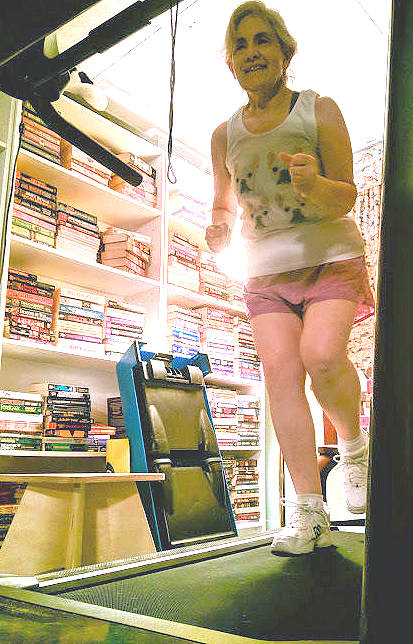
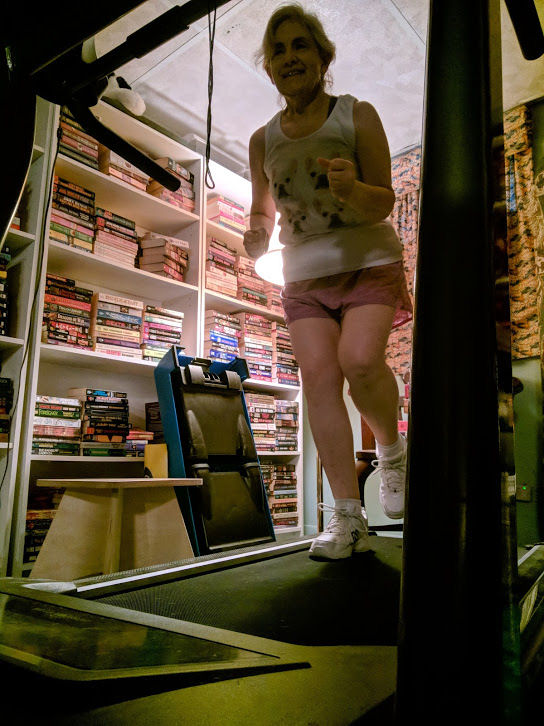
I’m not a huge fan of walking or running on my own, so I’ve implemented the Make It Fun and It Gets Done theory. I listen to an exciting audiobook that lets me forget what I’m doing and takes me into the story. Before I know it, my treadmill time is done, I’m dripping with sweat, and the characters in my book have gotten themselves into another dangerous situation. 

So, get your walk on. It’s good for your brain. Find a way to make exercise at least tolerable. Lumosity says so.
How to Juggle Your Week & Your Fitness Goals to Fit it All In

I’m a big fan of planning the week ahead late on Friday afternoons—it just helps me feel on top of things before the weekend hits. Usually, my schedule is a bit of a jigsaw puzzle. For instance, my Tuesday and Wednesday nights are always blocked off for teaching Rally classes to some amazing pups and their humans. I usually see a private client early on Saturday, and three afternoons a week I have errands for my sister’s and my online business. Here’s how to juggle your week and your fitness goals to fit it all in. It’s how I do it, and, yes, I get them all in.

Enter monkey wrench

Last week was a prime example of how some things can put a monkey wrench into the plan: my sister and I spent five solid hours making homemade dog food on Thursday, and then I had a board meeting for our dog obedience club that evening since I’m the Treasurer. By Friday, I was absolutely pooped and I knew I wouldn’t be good for anything other than regular work.

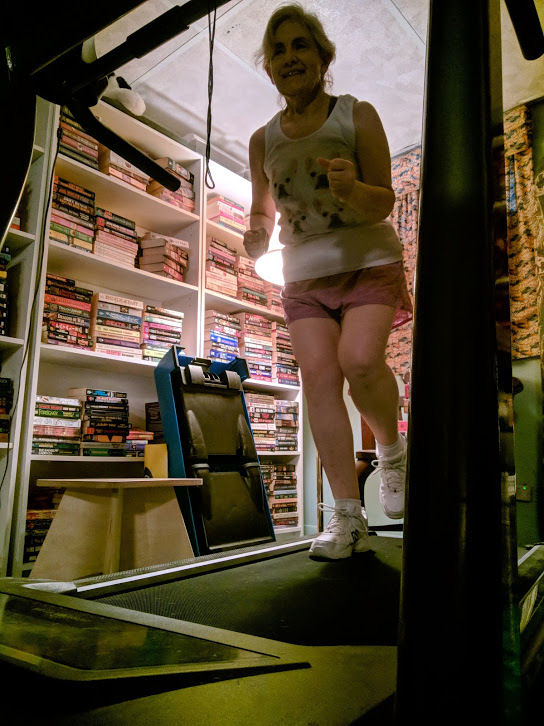
Because of all that, my usual Thursday workout sadly didn’t happen. I was actually at a really exciting part of my audiobook, so I was bummed to miss it! But I try not to feel too bad—I exercised earlier in the week, and honestly, running up and down the stairs all day Thursday totally counts as cardio, right?

Planning around a fitness goal means setting priorities

The big takeaway for me is that planning around a fitness goal is really about setting priorities. Some “life things” just have to take precedent. If you have the luxury of being able to reschedule appointments, definitely do it! But for those non-negotiable events, you just have to work around them.

Take a walk. Create a healthy habit.

Since I’m not exactly a fitness fanatic who jumps at the chance to exercise, scheduling my workouts is imperative. If I don’t put them on the calendar, I’d definitely find a million other things to fill that time. It’s all about making that appointment with yourself. Making the appointment can actually motivate you to do it. You know it’s right there on your calendar so your brain gets used to the idea. Then it accepts the fact. And gets you up and moving.

The exact how-to

Here’s how to juggle your week and your fitness goals. And, like a jigsaw puzzle, get all the pieces to fit. Use a calendar. (Even the Mayo Clinic advocates scheduling your workout!) I live by my Google Calendar because it’s always on my phone. If you like colorful things, use that to your advantage and block out your time with pretty colors! I always schedule the “can’t-miss” things first (like doctors or business meetings), then family and friend commitments, and then—critically—the workouts. After that, I slot in meal planning and the fun stuff. It makes the “me time” feel like a real treat!

Type 2 Fun – What is It, and Why Bother?

Type 2 Fun is actually not fun. Not fun at all. Well, maybe, thinking about it was a little fun. 

The fun that you think about later

What kinds of things do you do for fun? Go on. Okay, I’ll go first. Reading a good book. Cooking. Needle work. Puzzles. Training my dog. I train my dog in competition venues like obedience, rally and agility. I find the training loads of fun. My dog learns fun stuff, and our bond is stronger than ever. Competing with my dog, though? Putting all those hard lessons to the test? Not fun. Until later, when I go back and think about all the great moments we had. We may not have qualified for a ribbon, but there were lots of great and fun moments. Experts call that Type 2 Fun.

What ever possessed me?

Type 2 fun is the kind of thing that you wonder as you’re doing it, “Whatever possessed me to try this?” It’s the kind of thing that may not be fun at all in the moment, but then when you think back, the experience stands out and you relive the shining moments. Like when my dog was able to hold a 1-minute sit when I was across the competition ring. And he could hear my sister (his aunt who he loves) in the ring next to ours, with her dog. Not fun at the time. Lots of fun thinking back on it.

Not necessarily physical activities

Tori-Lyn Mills, a licensed clinical professional counselor with Thriveworks in Columbia, Maryland, clarifies that Type 2 fun can be physical, like hiking, skiing, competing in a 5k race, or it can be a mental challenge, like learning a new language or skill.

Rebecca Moravec, a licensed professional counselor, trauma therapist and founder of Full Bloom Counseling, says that we all need more Type 2 fun in our lives. It has all sorts of benefits for our bodies and our minds.

Sense of accomplishment when we meet the challenge

Type 2 fun offers a challenge, and when we meet that challenge, it’s deeply satisfying and gives us a sense of accomplishment. And that’s a boost for our resilience. She says, “Our brains are ‘prediction machines’ with a primary job of survival, not happiness. We’re constantly asking, ‘Is this safe, is this familiar, is this worth the energy?’ And type 2 fun doesn’t check any of those boxes.” 

A boost to our self-confidence

It’s novel and exciting, and sometimes a little scary. Not dangerous, but challenging. Trying something new gives us a shot of self-confidence as well as dopamine. And type 2 fun is integral in achieving big goals. 

So, when faced with a challenge, just remember – it’s type 2 fun.

Uncertainty can provide opportunity

We humans hate uncertainty. When I’m faced with uncertainty, my brain kind of jitters. I know I’m not alone. If a repair person gives me a four-hour window, it’s frustrating. If my website goes down and the hosting provider doesn’t have a clear-cut answer as to when it’ll be fixed, it’s scary. At least one neuroscientist, though, says that uncertainty can provide great opportunity.

A shocking result (literally)

There’s a study out that shows that people are more stressed when faced with a 50% chance of getting an electric shock than when faced with a 100% chance. The certainty lets you prepare for what you know is coming. We don’t want to face the ambiguity of not knowing. And how can you prepare for something you’re not sure will come? 

Easier to pick up the pieces?

In some ways, it’s easier to pick up the pieces after a calamity. The worst has happened and we can deal with it. We can form a plan and move on to putting that plan in motion. That’s what our resilience can do for us. And to make our resilience even stronger, neuroscientist Maya Shankar says rather than define ourselves by the things we can do, we should define ourselves by figuring out why we do those things. Your why can help you get through those tough times. Shankar delved deep after a hand injury ended her concert violin dreams and discovered that a love of human connection was at the root of that dream. She was able to shift successfully into an avenue that let her keep those human connections.

Embrace your shiny object syndrome!

And Shankar also tells us to embrace the distractions we come across in our lives. They can give us the break we need to let the uncertainty or chaos settle. We humans can get used to just about anything. And by giving ourselves some time, we can let our brains figure out how to deal with it. We’re usually told that confronting the bad stuff right away is the way to get through it. And that works for some of us. But if you’ve tried that and it just scares you more, set it aside for a bit. Let yourself be distracted. Go follow that shiny object. When you come back to face the hard stuff, you might be more ready.

The sneaky reason we seniors feel the heat more

It’s not just you. We seniors feel the heat more now than we used to. Yet another thing we lose as we age (besides our hair, our eyesight, our hearing, and our sense of balance) is the ability of our sweat glands to regulate our internal thermostat. Our sweat glands become less efficient, so we feel the heat more. And some prescriptions we take can also affect our body’s ability to cool itself. In extreme heat, we can become warm without even realizing it, and that could be dangerous.

But before you vow to not leave air conditioning for the foreseeable future, know that you don’t have to stop doing the things you love to do. You may have to modify them a bit and make some accommodations to your physical reality, but don’t stop.

You’ve all heard the advice to drink more fluids when it’s hotter, and that’s good advice. It’s always wise to stay hydrated. But when it’s hot, you may not realize that you need to take a drink of water before you’re thirsty. And ask your doctor if any of your prescriptions can affect how you feel the heat. 

You’ll see more folks out walking really early when it’s hot, and that’s sensible. Do your walking before it gets too hot. And you may also want to take it a little easy on extreme heat days. The Centers for Disease Control has a Heat Risk Tracker that you can check just by entering your zip code to see how your area may be affected.

The clothes you choose to wear can make you more comfortable, too. Fabrics that breathe, like cotton, help keep you cool. And clothes that fit you more loosely help as well.

So, don’t let the heat scare you. We feel the heat more, but if we’re prepared we can still enjoy the summer months.