Failure is an option

Despite what we may believe, failure is an option, and sometimes it’s a good one. None of us wants to fail at anything, but it happens. And in many instances, we should embrace it. In fact, in a recent article in Entrepreneur Magazine, the author states that failure is essential for personal growth. And Stephany Kirkpatrick, CEO and Founder of Orum, sees “failure as a superpower.”

One thing I’ve found through life is that there’s usually more than one way to get anywhere. Except in the Florida Keys. Driving through most cities, there are multiple routes you can take to your destination. A couple of years ago my sister and I were on our way to our cousin and there was a huge backup on the highway. It turned out that it was closed due to the Vice President’s motorcade. So we found an alternate route. 

In the Florida Keys, though, there is one main highway. Route 1 takes you from mainland Florida to Key West. There is no other road. My sense of direction is so bad that I once turned the wrong way from my hotel to my destination. Fortunately, I figured it out before I got to the 7-Mile Bridge and was able to turn around. This is, literally, a bridge that’s 7 miles long from Marathon to the Lower Keys with no entrances or exits until you get to the other side.

When you’re working toward a goal, sometimes the actions you take toward an intermediate step don’t work. When that happens, it could be beneficial. It will make you think about that goal and how to get there. When the obvious path doesn’t work, if you still want to make that goal happen, it’s time to get creative and figure out an alternate route. And your new path may be even better. 

To figure out your new plan, step back and approach the problem from a different angle. Or even try going backwards. Start at the end point and reverse-engineer the process.

When you’re forced to switch gears and rethink your plan, you’re actually wiring more adaptability and resilience in your brain. You’re better able to face other obstacles that may be in your way. You could be doing more for your healthy aging than if your initial plan had worked.

The key to achieving a goal is to create a plan and stick with it – until that plan no longer works. Recognize that your initial plan is not the best one and develop a new one. Your new plan may get you to that finish line in an even better position than if the original plan had worked.

When something’s a habit, you don’t need motivation

You don’t need motivation

What do you do that’s a habit? Something you do every day, most likely without thinking twice about it? Make coffee, brush your teeth, take the dog for a walk, tie your shoes, put your seatbelt on. You don’t even think about it and it gets done. It turns out that when something’s a habit you don’t need motivation!

No motivation to exercise

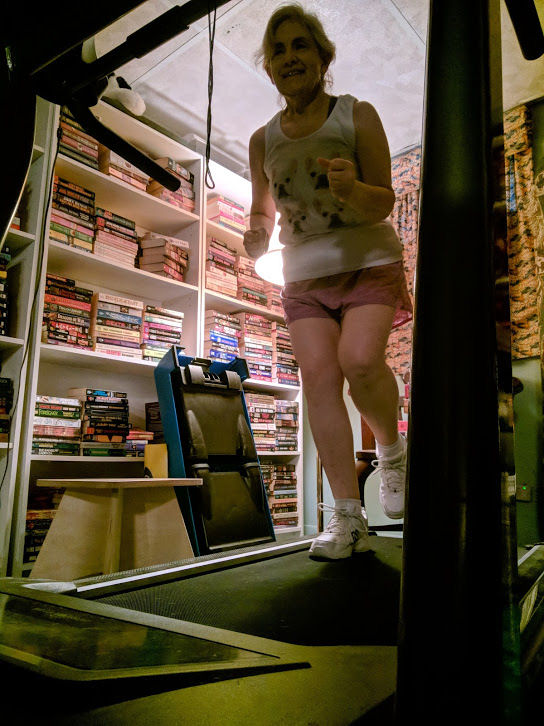
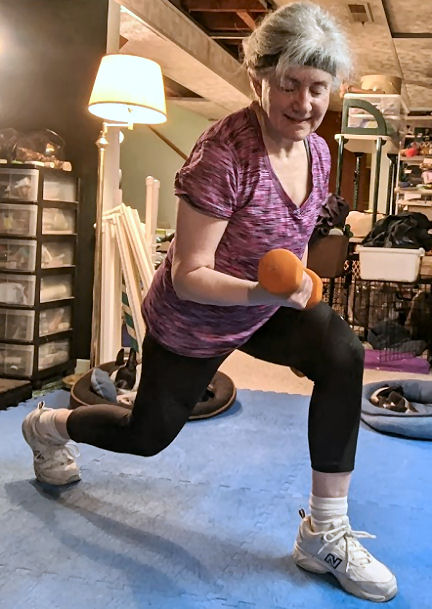
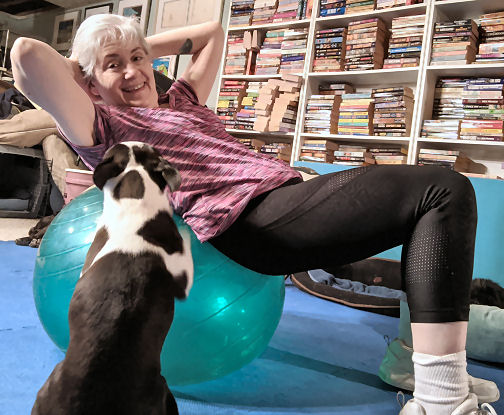
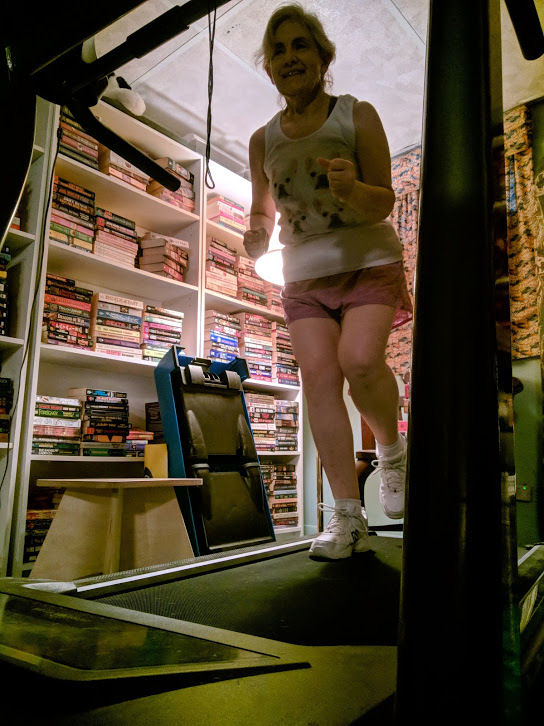
I’ve mentioned that exercise is one of my habits. Monday and Thursday when I’m done with work or errands I change and hop on the treadmill. Tuesday is yoga and flexibility, Wednesday is Pilates and Saturday is my combo day – aerobics and strength. I don’t even have to think about it. The workout’s done and I get to enjoy a nice relaxing shower. Exercise has become a habit for me through the years. I’ve tweaked that habit a number of times over the years, but it remains. It’s part of my healthy aging, part of my resilience. I exercise to support my fitness so that I can do what I want to do when I want to do it.

It’s not just me

Psychology Today recently published an article that supports this. Long-term fitness success is built on small, sustainable actions. And fitness habits are sustained “when they reflect the person you want to become, not just what you want to do.” 

So think about the person you want to be. Picture yourself six months from now. What are you doing? What hobbies do you see yourself enjoying? Are you travelling? Working in your garden? Training your dog? How are you moving while you’re doing all that?

Are those dream pictures the real you?

Ask yourself if this is the real you – if it’s the you that you want to become in those pictures. Now ask yourself if these are just pie-in-the-sky dreams or if you can actually see yourself making the changes needed to make them happen. For changes to happen, the motivation is built in. We’ve all tried a lot of stuff that didn’t work for us in the past. For me it was blow-drying my hair. I did it for work and hated it. As soon as I could, I stopped and am just air-drying my hair now. (In all honesty, I probably should dry it, as long as my hair is now, but I just can’t…) So in order for you to stick with something, it has to be something you don’t mind doing in the first place.

Or, associate something with it that you enjoy – like for me, listening to an action-packed novel while I run. Elevate the thing you’re not thrilled with somehow. And then make it a habit. Do what it takes so that you don’t have to think about doing it consistently.

At first, work the process to make it a habit

Make exercise a habit.

You know what that takes – schedule it on your calendar, put your clothes out, and keep that appointment with yourself. Take a deep breath and do it. Your motivation to do the thing is there – you’ve pictured yourself as the end result of it. Your motivation is built into your actions. You know what it takes to get there. You’ve committed to it. And you’re making it a habit you can live with. When something’s a habit you don’t need motivation. The motivation underlies everything, but it’s not a giant gold medal at the Olympics thing. 

Make exercise a habit. Your fitness journey lies on a path that you take steps on every day.

Playing games to boost fitness

Every evening after work I play games – do puzzles, actually. There’s Sudoku, a picture cross game, and another painting game. Sometimes I fit in a game or two of Spider Solitaire as well. I love my puzzles. After lunch, I play a hidden object game. I tell myself it’s to exercise my focus away from the floaters in my eyes, but it’s really fun. I love my games. And the last few years, lots of people are playing games to boost fitness.

Tech to track fitness

Do you use an app that tells you how intense your workout was? Or do you follow an exercise program online? Some even use virtual reality to follow an exercise program. That’s definitely playing games to boost fitness. 

Do you wear a smart watch that tracks your steps during the day? Does it assess your sleep? You’re playing games to boost fitness. When your watch tells you that you’ve hit your goal for the day, how do you feel? Does your watch send you confetti and congratulations? There’s that hit of dopamine. It makes you want to pump your fist in the air and say, “Yes! I did it!” 

It gets you off the couch

“I’m always going to be a fan of anything that gets people moving,” says Laura Girard, CPT, a trainer and online fitness coach. If an app or a VR set gets people off the couch and exercising, it’s a really good thing. Some of the newer virtual reality technology even has the capability of assessing your form as you perform the exercises or go through the active game. That’s certainly more affordable than hiring a personal trainer, if you’ve already got the VR set.

Alternatively, playing active video games can also get your heart rate up while you’re fighting bad guys. Anything that gets you moving is good – even if it’s playing a fantasy role-playing game. Maybe especially if it’s a fantasy role-playing game!

Provides accountability and motivation

Move to get more energy!

The tracker you wear also provides the accountability and motivation that you need to progress toward your fitness goals. Your watch may give you sound or display notifications, and Lauren Cook, PsyD, a clinical psychologist says, “I think a lot of people are more active because they want to get that dopamine kick of seeing that they closed their rings or hit a step goal.”

But at least one field experiment found that, while the tech provides immediate gratification and keeps us accountable in the moment, it doesn’t provide lasting habit-forming effects.

Tech is not the answer for everyone

And tech may not be the answer for everyone to boost fitness and create long-lasting habits for our healthy aging. People can stress over too much tech or obsess over the data it provides. But tracking our goals and our progress is still incredibly important. But no matter how you’re tracking your progress, be intentional about the goals you track. Don’t try to track everything. And if you’re wary of the tech, the pen-and-paper route is still valuable. The Basic Workout Tracker is a great start. And for some it may be even better. It’s the route that I take. I actually did add a pedometer app to my phone, but I hardly ever have my phone on me, so it’s not much use. When you have your goals written in your own handwriting on a piece of paper, you could be even  more likely to achieve them. You’ll still get that dopamine zing when you’re able to check something off on your page.

So games and tech are certainly fun, but playing games to boost fitness is the smart way to use today’s tech for our healthy aging.

Find comfort in routine

Everyone seems to be stressed these days. Yes, it seems like I write that every other week. But the times are turbulent and it’s hard to know what will be coming at us next. The weather is crazy, the political climate is even crazier, and then the economy is in turmoil. It’s one blow after another. My head is spinning. If you’re like me, know that you can find comfort in routine.

Routines can improve your health

Northwestern Medicine says, “By providing structure and organization, routines can improve your health in various ways.” Routine can help you manage stress, which is beneficial for our mental health. When you know something will be stable, it puts your mind at ease and boost your resilience.

Experts recommend routines for bedtime and sleep. By having a bedtime routine and getting quality sleep, our mental sharpness improves, as does our emotional well-being and energy. When I get my full seven hours, I do feel much more aware, and have more energy.

Healthy eating can be routine

Northwestern’s experts also recommend a healthy eating routine. Preparing menus and shopping at a set time every week ensures that you’re considering your nutrition. Most weeks I shop on Monday afternoons, which is not when the store’s stocks are freshest, but it’s convenient for me. There’s still plenty of great-looking fresh produce to choose.

There’s even comfort in an exercise routine

And, of course, the experts advocate an exercise routine. Staying active, as we know, is essential for our healthy aging. And, as I’ve recommended as well, scheduling your exercise helps you maintain that routine.

But don’t get too set in your ways

But we don’t want to stagnate, either. I’ve talked about goal-setting the last few weeks. We want our routines, but it’s also necessary to grow. So, think about what you want out of life. What’s missing that you want? And add that in slowly. Adding something to your routine is a great way to build healthy habits.

One thing I’ve added to my routine is meditation because it helps me settle my brain. When my thoughts start spiralling or I find myself scrolling depressing news feeds, I take a couple of minutes and clear my head. It makes me more productive and better able to handle the news coming at me. Sometimes I need a guided meditation if I can’t clear my thoughts by myself. And that’s okay. 

If you don’t like your daily routine, figure out why and change it. You should find comfort in routine, not distress.

Be specific, but not too specific

The first quarter of the year is mostly done. It’s true – time flies! Time to take stock, reassess and reimagine your future. The first step is to look at the goals you set for yourself at the end of last year. Are they still working for you? I’m kind of stuck. I set a pretty ambitious fitness goal of running at 7.5 mph at 2.5 percent incline for a full 2 minutes. I’m not there yet. I can do one minute and that’s about it. The rule is to be specific, but not too specific, with your goals. And I think that’s where I’m falling short.

The Goal-Setting Process

First off, we’re old. Why even bother with setting goals? According to a study that included people over 65 in English-speaking countries, goal-setting is quite common. The topics of goals that people set were wide-ranging – and included health and well-being, social connections and engagement, finances, activities and experiences, activities and experiences, home and lifestyle, and attitude toward life. Setting goals helps us to look to the future and remain optimistic. When we set goals, we’re increasing our optimism and resilience since we’re planning on sticking around to see those goals to fruition.

When I set my running goal, I thought about where I wanted to be in three months. I create quarterly goals because that length of time seems to be enough to get something done, but not so long that I feel I can push it off. You know that the human condition is sincerely prone to procrastination. Why do something today when you can do it tomorrow, right? But three months, or twelve weeks, is a good amount of time to achieve something meaningful but not so long that there’s time to waste.

I can already run 7.5 mph at 2.5 percent incline on the treadmill. It’s the endurance that I have problems with. I get tired. I get bored. The motivation just isn’t there. In addition, I’m distracted.

Check my own posts

I guess I need to get my head fixed to achieve this particular goal – read my own articles, maybe? Do more meditation and affirmations? I’ll get on that.

In the meantime, for the other goals that I’ve let slide, like keeping my desk clean by putting papers away every day. Perhaps I should reconsider the next part of goal-setting.

Be specific, but not too specific. This one seems to be a case of over-specificity. Things happen. Crises occur. Sudden projects can take over and cause chaos on my desk when I want things to be organized. So I’ll keep the goal of having a clean desk, but limit the filing to Friday afternoon. Every day is too much, but once a week should be about right. Time will tell. I’ll check back in three months.

Stay warm in the winter with exercise

Are you one of those people who are always cold? Me, too. I love the fall and spring seasons, because it’s not too hot and not too cold. I’m not crazy about summer because I don’t like to sweat. And for me, winter is the worst. My hands are always cold, and I put on my thick socks to try to keep my feet warm. The only time I feel comfortable in the winter is when I’m under my heated blanket or if I’m exercising. Yes, you can, actually, stay warm in the winter with exercise. A friend had to agree with me the other day when I told her that a good Pilates core session can heat me up like nothing else.

Same exercise clothes year-round

I don’t change my workout gear when it’s cold out. I wear a t-shirt and shorts, and, of course, socks and sneakers. When I exercise in the winter I start out cold but warm up quickly. By the way, when an exercise instructor says you’re going to do a “warm-up,” they mean you’re going to get your body used to moving. The internal warm-up doesn’t happen until you’re into the session.

When you exercise, especially if it’s strenuous, your body’s heat production rises immensely – like 1,000 watts. Some of this heat is stored by your body, which raises your core temperature by a few degrees. This is sensed by your skin and other internal thermoreceptors and triggers your brain to respond – you start to sweat. And it doesn’t take long to feel the warmth. I’m in it for about 10 minutes and I’m not feeling as cold.

Pilates and warmth

Like I said before, a good Pilates workout really makes me feel warm. The reason for that is that I’m contracting my core muscles like crazy. And those muscle contractions produce heat. Of course, other exercises will have you contracting muscles, but sustained core muscle contractions are a trademark of Pilates.

So, sure, you can put a sweater on, but a sure-fire way to stay warm in the winter is with exercise. I’m as good as anyone at finding reasons not to exercise. But, staying warm in the winter helps me feel happier. If I’m not shivering, it’s a good thing. I don’t feel like I’m frozen in place, so I can be more productive. So, in addition to all the other benefits, I stay warm in the winter with exercise.

Feel more energized even when there’s more to do

How to feel more energized through the day

Many days I’m working away on a project and at some point in the afternoon, it feels like I hit a wall. Do you feel that way? If you do,we’re not alone! Many people run out of juice at some point in the afternoon. Even if we start strong, we’re exposed to many stressors during the day that take a toll. And even though your motivation is strong to continue the work, if you feel like you have to curl up and take a nap, the work is not going to be your best. But, don’t feel like you have to go on feeling drained and out of sorts. And not by grabbing a candy bar at 3:00, either. Here are some ways to feel more energized throughout your day.

Eat more balanced meals

If you’re a grab-on-the-go type of person, it may be time to rethink your eating routine. When you combine protein, carbs and healthy fats for all three meals during your day, you’re set for optimum energy. Dawn Jackson Blatner, RDN, says, “The key to an energizing diet is getting the right ‘fuel mix’ at each meal.” One quarter of your plate should be whole grains, another quarter protein and the rest colorful produce, topped with a healthy fat. That way your body has the nutrients it needs to be energized all day, avoiding spikes and crashes in your blood sugar. So your energy will be stable through the day.

Take breaks

Sometimes I can work on a project for hours at a time without looking up. That’s great for the work, but when I do finally get up, I feel stiff and groggy, and my eyes have trouble focusing. When I know I’ll be in the groove I have to set a timer to make sure I take a break. The alarm on my phone works great for this. That break can be just a few minutes, but when I get back I definitely feel more energized. Even if that break is just going to the washroom or taking the dogs outside.

Move!

Move to get more energy!

As I’ve written before, it seems counter-intuitive that exercise will give you energy, but even Harvard Medical School says it’s true. Your muscles produce mitochondria when you exercise, which allows your body to use the food you’ve eaten as fuel. So, more mitochondria means more fuel and more energy. A couple of days a week I exercise in the late afternoon, when my energy level is at the lowest point. After my workout on those days I actually do feel more energetic. Strange but true.

Those are just a few ways to feel more energized. On days when I have to keep working in the late afternoon, I also like to have a little snack of a few almonds or peanut butter on celery. It keeps me going until dinnertime.

The right way to breathe

Breathing is something we take for granted, every minute of every day. We only think about it when it becomes hard – for example, if we’re ill. (Like during my cold last week.) And we breathe harder during certain activities, when we exert ourselves running up the stairs, for instance. And we still don’t think about it. That’s pretty amazing, if you ask me. But, is there a right way to breathe?

Air is a life-giving resource that we don’t even have to think about receiving. During our normal, every-day, tasks oxygen comes in and carbon dioxide goes out and we don’t have to do a thing. But when we exercise, we should be conscious of our breath to maximize the benefits we want to receive. When our lungs are working properly, our performance is optimized and we can achieve the other benefits that exercise gives us. So, what’s the right way to breathe during exercise to get the most out of it?

What happens when you breathe?

When you breathe, air travels through lots of tubes and byways on its way to your lungs. In your lungs, the air ends up in little sacs called “alveoli.” Each alveolus is surrounded by tiny little capillaries which drop off carbon dioxide and pick up oxygen and take it through your bloodstream. The primary purpose for breathing is actually to get rid of carbon dioxide rather than to get oxygen.

When you exercise, levels of carbon dioxide increase in your bloodstream, leading to the need to breathe faster to get rid of the excess. Exercise can increase respiratory efficiency but it doesn’t actually lead to increased lung capacity.

When you breathe shallowly, this can lead to additional stress. If you pay attention to your breathing and notice that you’re just using the upper part of your chest, this is shallow breathing. You’re not getting the oxygen you need, and you’re also not getting rid of enough carbon dioxide, contributing to a panic mode. That’s why people say to “breathe deeply” to help you calm yourself. Change your mindset just a little to breathe from your diaphragm and you’ll be calmer and get more out of your workout.

Diaphragmatic breathing

The best way to feel what you’re supposed to be doing is if you try this lying down (no pillow). Breathe in through your nose and feel your lower ribs rise (put your hands there to feel it more). Breathe out through your mouth and feel your lower ribs fall. Using the diaphragmatic breathing technique during exercise, exhale for the exertion and inhale on relaxation.

When you run

My breathing always increases when I run, and sometimes I find myself breathing through my mouth only. Experts indicate that doesn’t really matter – focus on the thing that makes running easier and more effortless. Some experts recommend varying the number of steps you take during inhalation and exhalation so that you’re not always on the same foot. Keep in mind that there’s really no one right way to breathe during exercise. Just be sure to breathe and not hold your breath. Again, focus on the thing that makes your exercise more effortless, and your breathing will follow.

Exercise with a cold?

I had a head cold this week. It was not COVID – I tested – thank goodness(!), so I didn’t have to miss my classes. I did wear a mask while close to people, but I wondered if I should work out. Should I exercise with a cold? The first couple of days I felt completely miserable and didn’t even consider changing into exercise gear. But after that, would I just be using my cold as an excuse to be lazy?

Above or below the neck?

The Mayo Clinic says that it’s perfectly fine to exercise as long as your symptoms are all above the neck and you don’t have a fever. Provided that your symptoms just include things like a runny nose, nasal congestion, sneezing and a minor sore throat, you should be fine if you exercise with a cold. Note how all these symptoms are “above the neck.” That’s what a head cold is about – and it’s not really a big deal. Sure, it’s uncomfortable and sometimes downright messy. But if you feel like exercising with a head cold, that’s fine.

On the other hand, if you have more than a head cold – if your symptoms are in your chest and lungs, or if you have a hacking cough, then it might be better if you wait to exercise until you’re better. Also, the Mayo Clinic suggests that if you have a fever, fatigue or muscle aches, wait. You don’t want to jeopardize your health even further. And if you have COVID, isolate yourself. If you want to exercise, don’t do it around other people. Be considerate. I even put a mask on at home while my sister and I did the dogs’ nails. It’s the right thing to do.

It’s okay to take time off

Definitely exercise if you're up to it, and your cold symptoms are above the neck.

Earlier, I mentioned that the first couple of days with a cold I didn’t exercise. I just felt too lousy. And even though sometimes if you exercise with a cold, it can actually open your nasal passages and temporarily relieve congestion, you certainly don’t have to. I’ve mentioned that it’s okay to take a day or two off from exercising without affecting your performance. But you should resume your normal activities when you can. For me, that alleviates my guilt, and I know I won’t be too sore the day after I exercise. 

The question is very personal: “Should I exercise with a cold?” For me, the answer is a practical, “If you’re up to it.” If it really is just a head cold, I won’t have too many days off and I’ll still be able to do the things I want to do.

A strong core eases back pain

Having back pain is the worst. You can’t do anything when your lower back hurts. Upper back pain is bad, too, but movement is usually at least possible. When your lower back hurts, you can’t walk comfortably. Forget about standing up when you’re sitting. And when you’re standing you can’t sit back down. And leaning over or bending is impossible. I speak from experience. Up until a few years ago I had sciatica pain that was unbearable for weeks at a time. The sciatica pain blended with the hip bursitis pain on occasion to create spasms of pain and breathlessness. I don’t like to think about that time. Then I read some studies that led me to work on my core. These studies indicated that having a strong core eases back pain. And in some cases prevents it entirely. Less pain means we can be happier every day.

Physical therapists agree

I still get newsletters from Athletico, where I did physical therapy for my knee a number of years ago. The latest newsletter (February 2024) highlights the correlation between a strong core and lessening back pain, in fact. “The goal of core stabilization exercises is to improve your abdominal strength and increase the stability in your lower back or lumbar spine, which can help alleviate aches and pains you’re currently experiencing.” So the key to easing back pain is not pain medication or even rest, it’s simple core exercises. This is great news for our healthy aging regimen.

The simplest core stabilization exercise

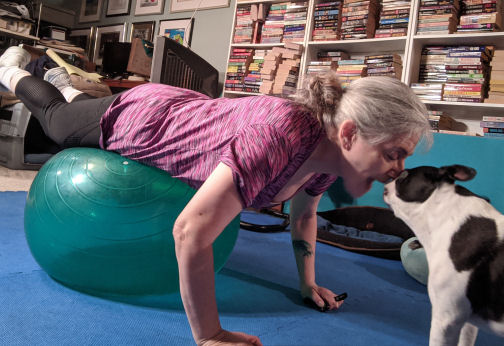
Renegade row - a great core stabilization exercise.

A simple core stabilization exercise is the plank, done on your forearms or the palms of your hands and your toes. Look straight ahead, tighten your core and keep your back in line. Don’t sink down or have a rounded back. If even a forearm plank is difficult for you, try an incline plank with your hands on a table, your kitchen counter or even a wall. As you get stronger, you can go lower. And you can add variations, like the “Renegade Row,” which challenges your core even more.

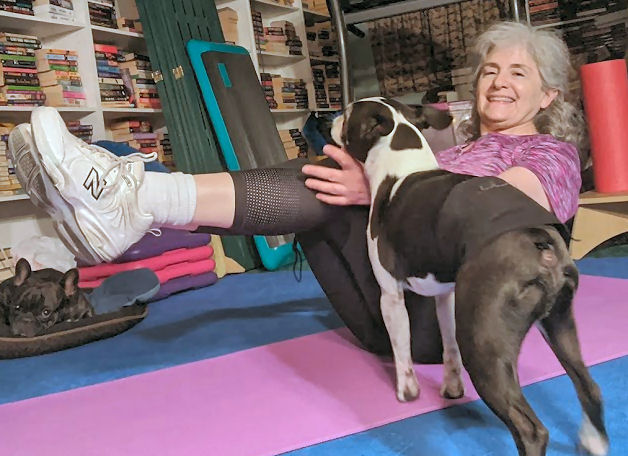
Other good core stabilization exercises include “Dead Bug,” which I talked about just a couple of weeks ago, and a simple pelvic tilt.

My goal, when I started working on my core, certainly was not to get a “six-pack.” I’ll be happy if no one else ever sees my abs. They’re strong and my back doesn’t hurt, and that’s all that matters to me. A strong core eases back pain for life. It doesn’t take long, if you’re consistent, and it’s certainly worth the few minutes to do the exercises most days.