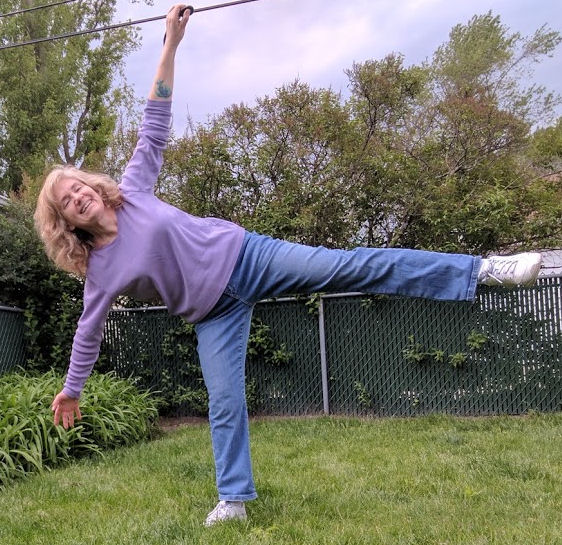
Exercise outside – but don’t kill yourself

Increase your balance in just a couple of minutes a day

Our doctors tell us to go outside and get some fresh air. (But be sure to slather on the sunscreen and insect repellent.) The experts tell us that being outside also helps our optimism and resilience. And, let’s face it, a deep breath outside is a whole lot different than one inside. But there are a million things that need doing, including getting our exercise in to satisfy the CDC recommendations. How do we fit it all in: meeting our goal of exercising for the recommended time, being outside, and getting everything else done? How can we effectively exercise outside, stay safe, and be kind to ourselves?

“Soft Hiking”

Two young women in the UK have introduced the notion of “soft hiking.” They’re outdoors in the natural environment, enjoying the scenery, and being active all at the same time. They exercise outside and document it on social media so others can join in their fun. They encourage others to explore their area of the world and be active in the outdoors. The notion of “soft hiking” makes exercise outside less intimidating, intense and frightening. Go at your own pace. Go off-trail to examine a unique tree or look at a historic plaque. Reconnect with nature. Be able to breathe deeply in the fresh air. And exercise outside without killing yourself.

Lower the intensity

The notion of “soft hiking” goes along with a movement I’ve seen lately to lower the intensity of pretty much everything, including exercise. Emotions have been so intense the last few years that we’re seeing a rebellion. So, let’s go along with that. Ramp the exercise intensity down, too. Even Michelle Obama has eased off on her exercise intensity. Lowering the intensity doesn’t mean that the exercise is less effective, though. It just means that we’re exercising smarter. 

Know your body

The key is to know what your body can do. High intensity exercise for you may not be as high for someone else. I always say that the way to grow is to challenge ourselves. That doesn’t mean that we have to push to the point of passing out. The key is to be kind to yourself. If the notion of “soft hiking” intrigues you, lace up your sneakers, grab your water bottle, and go find a trail nearby. Examine interesting plant life (but don’t touch it unless you know it won’t give you a rash). Read historic plaques. Find a new route to wander. Go exercise outside.
Get up – get going – get it done

Get it done – no matter what it is

Get it done!

If you like to get stuff that  you don’t especially enjoy doing out of the way early, like I do, then this is for you! The great Mark Twain is credited with saying, “Eat a live frog first thing in the morning and nothing worse will happen to you the rest of the day.” And if you think about it, that’s probably true. And productivity expert Brian Tracy has expanded on Twain’s saying in his book, Eat That Frog. When I can, I try to abide by that precept – get up, get going, get it done. That way I have more time to do what I really want to do later on.

If you don’t like to exercise, you probably won’t do it

If you hate to exercise – I’ve said it before – you’re not going to do it. But if you find an exercise program that you don’t mind, and you like the music, the choreography, and the instructor, then you’re more likely to do it. If you have that program queued up, then you don’t have to waste time looking for it and you can just jump in. And if you don’t have anything else scheduled, you can exercise early and get it done. My favorite time to exercise is early – what a great feeling to get it done.

Taking action early = fulfillment

This maxim can translate to other areas of your life too. When you see yourself as someone who takes action, and takes it early on, there’s a real sense of fulfillment. It’s not enough to see yourself in a certain way, though, you have to take the steps to get it done. 

Perfectionist? Let it go

That could mean easing up on your perfectionist leanings. I know – you like things to be “just so.” But if you keep tweaking a project, it will never be finished. And done is almost always better than perfect. Naturally, check for typos and other obvious errors, but as a chilly heroine would say, let the rest go.

Other productivity professionals say, “Be dumber and care less.” I change that to “grow a thicker skin.” Of course we care about our work. Sometimes that shows up as, “perhaps I should tweak this sentence so people won’t think ‘X’ about me.” My rule has been to not overtly offend anyone, but if I have something important to say, then say it. You can be a genius, use all the high-falutin’ vocabulary, and finish a project in 3 weeks. Or you can just say something plainly and get it done. And once that thing is done, you’ll get a sense of accomplishment! It’s done! Finished! And I did it! So happy! What a boost to your optimism and resilience.

How to get it all done

Sounds good, right? But how to get it done efficiently? First, identify the project. Next, identify the steps you need to take. Third, flesh out those steps. And finally, get up and get going.

Enjoy everything in moderation – even wine

Surprising place for provoking thought

Reading about healthy aging at a tire store!
Health reading at a tire store

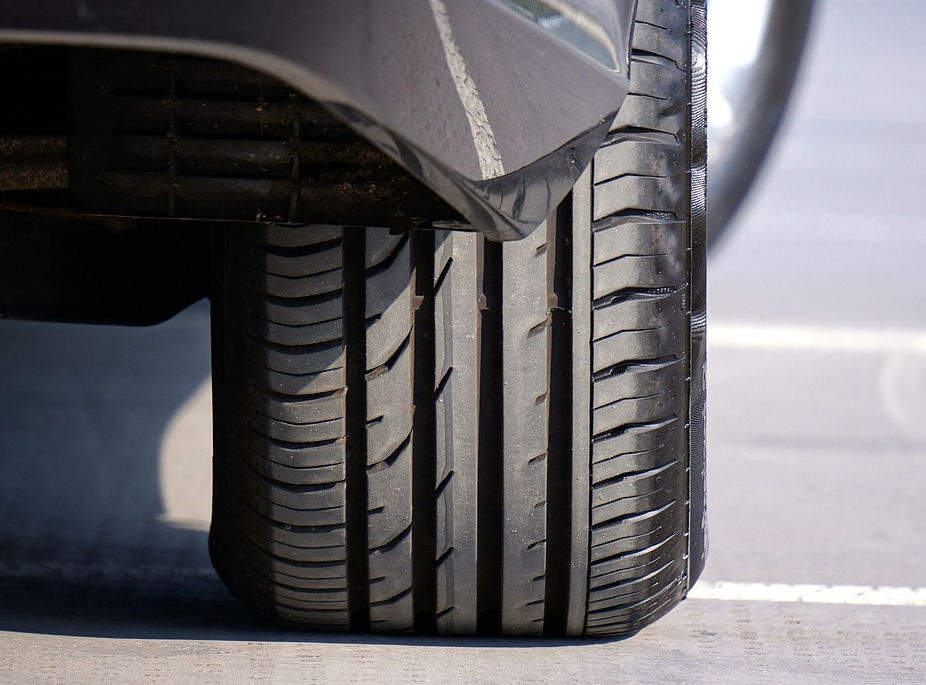
I had to get new tires for my car this week. It would take an hour but I was prepared with a book. There was an array of Wine Spectator magazines on the table in the waiting room. Surprising magazine choice at a tire store! I picked up the top copy and started to leaf through it. There was an article about wine and its health benefits, so I started reading. Going right along with what I’ve been saying for years, it turns out that enjoying wine in moderation is not detrimental and can actually provide some benefits. Enjoy everything in moderation – even wine.

But wait – the WHO says no alcohol

The World Health Organization decreed at the beginning of 2023 that no amount of alcohol consumption is safe. The paper cites previous studies in which alcohol was considered a cancer-causing agent. There was no study linking specific amounts of alcohol to cancer, however, merely the potential cancer-causing risk of alcohol consumption. It could be that the WHO considers that it may be all too easy for moderate consumption to become excessive consumption.

Some studies have shown benefits

But a recent study determined that moderate drinkers live as long as people who never drink. So, why not enjoy! And the Mayo Clinic has observed that the polyphenols in red wine may help protect the lining of the blood vessels in the heart. This could be the reason that red wine has been touted for its heart-healthy benefits.

The flavanols in wine have also been implicated in reducing cognitive decline and a reduced risk of stroke in moderate drinkers – which we all want for our healthy aging. Yes, the flavanols can also be found in other foods, but why not enjoy the wine? 

Enjoying with friends has other benefits

Wine, enjoyed with friends, has benefits beside the physical ones.

Another point to consider is that we often enjoy wine in the company of friends and family. Getting together in a social group is not just fun – fun planning and reconnecting with friends – but it also increases our resilience and optimism. Why not have a wine tasting at your next get-together. Tasting wine critically with friends will combine all of the benefits of good wine, good food and good friends.

Enjoy everything … in moderation – has been my motto for years. I never deny myself anything I really want. Chocolate cake? Pizza? You bet. I plan for it and that could make the enjoyment even greater. A new purse? New shoes? If I see something I really want, then I figure out a way to make it happen. I don’t splurge, but I enjoy.

So – enjoy everything. Even wine – in moderation.

Mindset matters

Start your day with a positive thought: "I get to play with my dog today!"
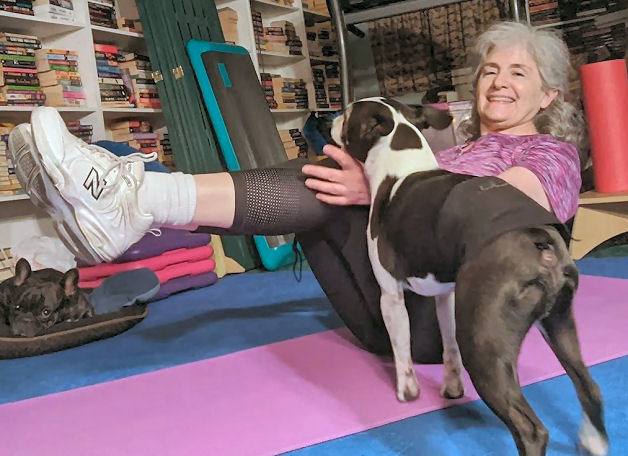
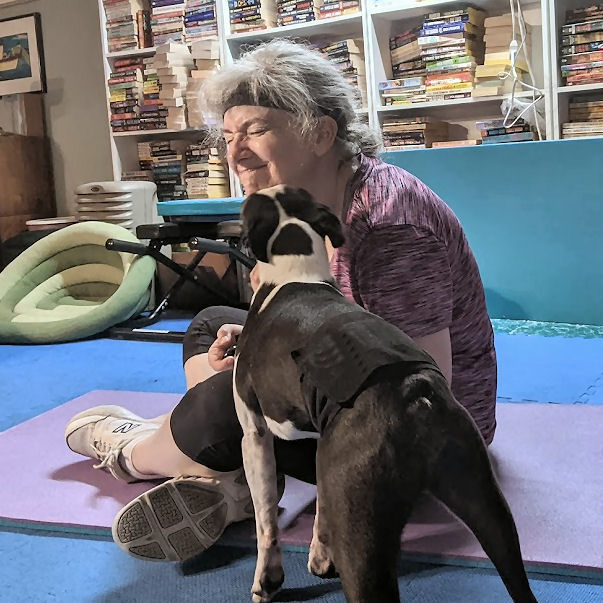
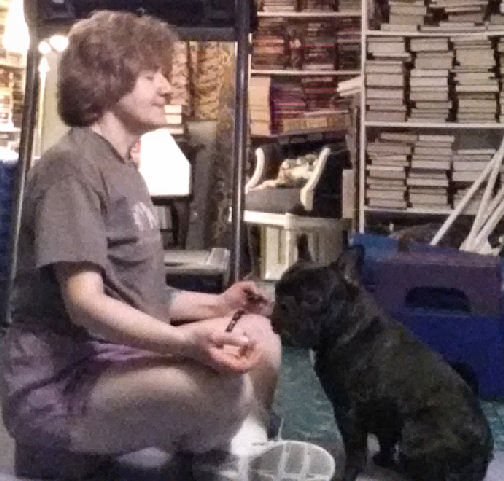
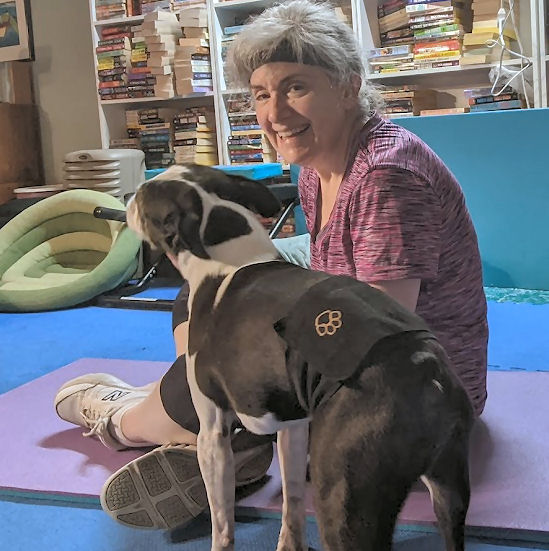
I play with my dog and he helps me!

Try something new tomorrow when you first wake up. Smile. That’s it. And maybe think something positive. Something good. Many days I say, “I get to play with my dog today.” Or perhaps, “I’m looking forward to sitting down and writing 1,000 words today.” You might realize, “I get to see my kids and have a great dinner tonight.” If you set yourself up in a positive way, your whole day will be better. Mindset matters.

Anything positive

That positive thought will set the tone for your whole day. Think about it – if you start out cranky, then even the most minor thing could make your day worse. Start out in a bad mood and a little spill could cause you to be angry all day. But if your mindset is positive you’re more likely to just shrug off that little spill, wipe it up and move on. So anything positive will help your day.

A while ago I wrote about 3 morning rituals that can help your day. Having a positive thought first thing could be the most important. The Dalai Lama said, “Just one small positive thought in the morning can change your whole day.”

Increase optimism and resilience

That positive energy from your one thought will cause you to become optimistic, and increase your resilience. And, you’ll be happier. All with that one thought. You’ve created positive energy for your day.

Of course, that doesn’t mean that every day is all rainbows and unicorns. We all have to deal with everyday realities. Work has to get done. Articles (like this one) have to be written. We think about our friends who are going through tough times and commiserate with them. Try looking at things from another angle. Approach a problem looking for a positive outcome. And our own mindset matters. A positive mindset will surely help us along those bumpy roads.

Even the Mayo Clinic advocates positive thinking. As we get more used to positive thinking, we become more optimistic. And being more optimistic is key in managing our stress. If you’ve been in the habit of denigrating yourself – “my hair is terrible.” Or “I have no writing talent,” get over it! As I’ve said before – be nice to you! If you’re positive to yourself that, too, will extend to others.

Start your day positively. Because mindset matters.

The good stress

When I think of “stress,” my brain starts whirring, my heart starts pounding, I start to sweat, and I’m not happy. Most people, I think, react the same way to most stress. In fact, the World Health Organization defines stress as “any type of change that causes physical, emotional or psychological strain.” And when this type of stress continues, it can become “distress” which leads to anxiety and overwhelm. But there is a “good” stress – called “eustress.” 

Stress can be beneficial

Eustress can be a beneficial emotion, leading to “positive emotional arousal, leading to activation and engagement” with the world around us, according to a paper in the National Library of Medicine. 

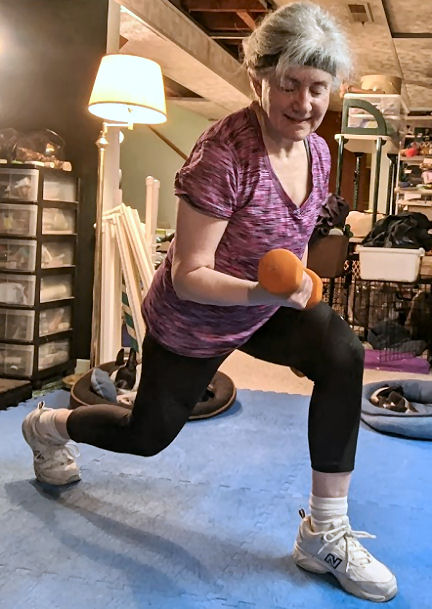
Exercise is stressful, but "good" stress.
Exercise is “good” stress

So, eustress is “manageable, acute, and short-term.” Think of exercise as an example. We’re placing stress on our bodies when we exercise. But exercise by definition is short-term, and the stress we put our bodies in is acute – we voluntarily raise our heart rates or work our muscles in a way that’s different from their normal state. And the reason that we exercise is to become more fit, release endorphins and improve our mental well-being.

Nurtures our well-being

“Eustress is the physical, mental, and/or emotional tension that is placed on the mind and body when we engage in activities that actually nurture our well-being and foster growth,” says Andra Brown, a NY-based licensed mental health counselor who specializes in anxiety, racial identity, and stress. Brown says that eustress can make us excited and motivated. When we feel eustress, we feel compelled to act in a positive manner. Our mindset improves when we’re under eustress. And when we act positively, our resilience grows.

If I get an idea for an article, and I know it’s a good one, I’m fired up. I open a new Google Document and write rapid-fire until that idea is down in black and white. 

Stress and exercise

I’m not excited to exercise, as you know. But, once I push “Play,” the music comes on and the instructor gives the first direction, I start moving and can forget about everything else. Good stress indeed!

Public speaking can even be eustressful

Brown emphasizes that eustress triggers can increase productivity. Think about the last time you spoke in front of a small group of friends about a subject you’re passionate about. Even though public speaking may usually terrify you, when it’s about a topic that’s near and dear to your heart, you probably spoke eloquently and far more succinctly than you believed you could.

As you’ve seen in previous articles, exercise generates energy. Even if I’m tired before a workout, I feel energized afterward! Exercise, therefore, is positive stress. It feeds our body and mind.

I try to combine distress and eustress

Listening to the news, on the other hand, is “distress.” It brings on feelings of anxiety and is practically debilitating. I do like to know what’s going on in the world, though, so I pair watching the national news every day with a calming Sudoku puzzle. On one hand, I’m anxious, but on the other, I’m solving a puzzle. I’m hoping that the eustress outweighs the distress. Indeed, Brown says that during moments of eustress, we are able to perceive certain challenges as less threatening.

So, there’s no need to fear stress – just do everything you can to make it good stress.

True happiness may not be what you think

When you think of being “happy,” what comes to mind? Is it smiling ear-to-ear? Or a big belly laugh? That expression of happiness, though, is not really sustainable. It’s impossible to have mind-blowing joy every minute. We need to sleep sometimes, right? And at this stage of life, happiness should be sustainable and not exhausting. To me, happiness is contentment raised up a notch or two.

true happiness

True happiness is the feeling you get when all is right in your world. When you see beauty and can actually pause and reflect on it for a moment. Knowing that you can share that moment with family and friends and they’ll understand your happiness in the beauty you see. My vision of happiness also revolves around the idea of positivity going forward. Thinking of being happy not just now but in the future. Our resilience grows from that idea of true happiness.

Lots of moments of joy

These days, moments of joy occur when my dogs “get it!” When the dogs seem to have light bulbs above their heads. If Simon sits and actually stays until I tell him it’s okay to move. That’s a huge moment of joy for me. I know that my training is paying off and if I enter a competition, then we’ll have a prayer of succeeding. Lesser moments of joy occur in just sitting with my dogs, though. I don’t need outside validation to be happy with them. But it’s not just my dogs that make me deep-down happy – seeing the deep purple crocus poke their heads out of the soil fills my soul. I choose happiness every day.

Happiness may have a goal orientation

I’m looking to the future in happiness. I’m preparing to be happy then, too. My goals are part of the foundation for future happiness. As writer Christopher Boyce puts it, “have goals but be prepared to let them go.” Think about your future self – how you want to live, what you want to do. Make goals to achieve that life. And, of course, set your intermediate goals to get you there. But if you’re not happy when you’re working toward those goals, set new ones. Life is a journey. If we’re not happy at any point for sustained periods, we need to change course. 

True Happiness May Take a While

Years ago, my sister and I owned an RV, stored in Marathon, Florida. We would take separate vacations there, driving down from our home near Chicago with our dogs. It’s a 24-hour drive, so we each took 3 days to get there – essential with dogs. No, the drive was not fun. It was sometimes nerve-wracking, but the end result was worth it. So, sometimes thinking ahead a little bit makes the unhappy part insignificant. We overcome obstacles to get to that happy future. And part of that future is being as fit and healthy as possible to enjoy it.

Tears Along the Way

Happiness is multi-faceted. There’s bad mixed in with mostly good. There may be tears along the way, but an overall happy life can sustain setbacks, grief and sadness. When you’re content at the end of most days – isn’t that happiness?

Invisible benefits of exercise

I agree with Khloe Kardashian

I’m not a Kardashian fan. I don’t follow any of them. But I read an article about how Khloe Kardashian loves the invisible benefits of exercise, and I have to agree with her. Kardashian turns to exercise for the “mental release” it gives her. Exercise gives her power over her life – it’s one thing she can actually control. And it’s true – you decide what kind of exercise you want to do. You decide when to do it. How hard to exercise, and how long your session should be. I choose to exercise at an intense level. I get the most out of the 30 minutes I’m willing to spend on exercise.

It’s not about the scale

It’s not about losing weight – Kardashian says she hasn’t stepped on a scale in ages. Because a scale is just numbers. If you’re happy with how you feel, how your clothes fit, and you’re healthy, then your weight shouldn’t matter so much. 

Exercise for confidence

An intense workout makes me happier.
An intense workout leaves me happier in a short amount of time

Kardashian also extols the confidence that exercise gives her. We’re powerful when we improve our heart, our muscles and our bones. Exercise not only improves our physical health, but our mental health too. The mental release is one of the invisible benefits Khloe Kardashian finds in exercise. I’ve often written that when I’m in a bad mood, my sister won’t talk to me until after my workout. I’m in a much better mood then. The endorphins released during an intense workout make me happier and makes everyone less depressed. After a good workout, we’re much more able to face any difficulties with the confidence boost we get.

Improve your mindset with exercise

Exercise is good for your mindset too. That’s another invisible benefit of exercise. Kardashian admits to previously having unrealistic goals, like cutting out all sugar or working out five days a week. But now, with her consistent fitness practice, Kardashian is all about seeing exercise as a tool for wellness. And that’s a very healthy outlook. I don’t exercise because I want to fit into Size 2 jeans. That’s never going to happen. I exercise because I want to remain strong and independent, and do the things I want to do. Exercise is part of my healthy aging routine.

Harness your anxiety

The last couple of years have shown most of the world that anxiety can be generalized and no one is immune from it. Everyone has had some degree of anxiety for most of the last two years. And it doesn’t seem to be easing up. I’ve written about what to do to ease your anxiety, but what would happen if we could harness our anxiety and make it work for us?

The possibilities are practically endless

I think of all the worries we, collectively, have expressed the past several months and am just floored by the possibility of the anxious energy that could have been put to good use. If I could have harnessed my anxiety, I could have another book written. Our leaders could have developed a plan for world peace. On second thought, maybe not that last one.

But, if we could harness our anxiety, our productivity would soar! 

Put your anxiety to use

Matt Higgins, author of Burn the Boats: Toss Plan B Overboard and Unleash Your Full Potentialexplains four ways to put your anxiety to good use.

Tip #1 – Find supporting data

Matt’s first tip is to find a study to reassure you. Matt was worried about how his lack of sleep might affect his performance in a marathon. So, he found results from a study indicating that sleep deprivation did not matter in marathon performance. Of course, the study did find that mental performance was adversely affected, but not physical. Matt competed in that marathon and improved his time by a significant amount.

Data is not always reassuring, but somebody somewhere will have gone through what you are, so a quick search is worth the effort.

Tip #2 – Meditate

Meditation boosts resilience.
Meditate with a friend…

The second tip: meditate daily. “Meditation has been shown to boost resilience, emotional intelligence, creativity, relationships, and focus—and I’m going to be another voice telling you that it should be a key tool in your anxiety tool kit.” I recently decided to meditate for a short time every day. Just a couple of minutes. Sometimes it’s a guided meditation, other times I just sit with my eyes shut and take my brain on a mini-vacation. Matt says he’s not perfect about his new daily meditation habit, but firmly believes in it, as self-care is essential.

Tip #3 – Add people

Next – add people to your cause. I’m a firm believer in friends and community. And when your friends join you in a cause, it’s just natural that your joint anxiety plummets. Not to mention, you get a ton of stuff done. But pick the right friends – every person has different beliefs and ways of getting things done.

Tip #4 – Acknowledge that you need help

Finally – don’t hesitate to ask for help. Acknowledge that you need help. Don’t forget that being vulnerable is one step to growing your self-confidence. Matt tells of a friend whose anxiety manifested in ways that were negatively affecting his performance at work. He intervened and helped the friend to tone down the intensity of his emotions. That friend went on to a succeed in a very difficult profession.

So – make your anxiety work for you. First – narrow down the subject of your anxiety and then identify ways of making it be productive for you.

Think Small … and Big

Achieving small goals may make you happier.
Achieving small goals may make you happier

You know I like to divide my big goals into bite-sized pieces. That way I can celebrate all the small wins on the way to that big one. But I’ve also learned to think small … and big. Just because I have big goals doesn’t mean those are the only ones. I also have small goals to achieve. And those are the ones that may be keeping me happiest.

Goals changed with the pandemic

Writer Alexis Jones admits to also being on the small goals bandwagon. Not too long ago Alexis was focused on the big career goals, her 5-year plan. But then the pandemic hit. Everything was uncertain. Plans were canceled, no one went into work. Most goods were delivered. Businesses were shuttered. 

The world changed, and made Alexis take a hard look at her goals. They didn’t make sense at the moment, so she adjusted her thinking. Alexis still worked at her long-term goals, but she also made smaller and more immediate and personal goals. She made a goal of a consistent mid-day walk to clear her mind. Alexis also reached out to friends to maintain relationships that had been neglected. As a result, Alexis says she’s closer to some goals she felt were too big to tackle, like improving her mental health and mending relationships.

Achieving small goals sets you on the path to bigger things

Psychotherapist Natalie Jones says that Alexis is not alone. Achieving small goals is a sure-fire way to put you on the path to achieving larger goals. “Micro goals are the ones that really sort of help us to feel good about ourselves,” says Dr. Jones. And not just that. Achieving small goals gives us the momentum to look forward to bigger things. When we accomplish the small things, it helps us know how to go about setting and achieving the bigger goals, or “give us data to gauge about ourselves and what it’s going to take in order for us to get the big stuff done,” Dr. Jones says.

My own mini-goals? I decided to meditate for 2 minutes a day a few weeks ago. I take my brain on a mini-vacation. Sometimes I listen to a guided meditation. Other times I just sit with my eyes closed. Other times I just picture my favorite spot by the water and listen to the waves. I think I’m happier, calmer, and more reasonable as a result.

So, think small … and big, for your happiness.

Pick a new hobby for your health

Pick a new hobby for your health! One of mind: hang out with dogs!

It’s winter. It’s cold. I don’t want to go outside for any length of time. I don’t want to go anywhere because, well, it’s cold. But staying home is dull. What to do? Start something new. Pick a new hobby for your mental health! Dr. Eric Smiltneek, a family medicine and addiction medicine doctor at Aurora Behavioral Health, says that hobbies have “great value for our happiness and positivity.” In short, hobbies are good for our mental health. 

Do your research, but pick one!

There are so many things to choose among that could hold our interest. Do your research – think of hobbies that you could picture yourself doing, then find out if there is special equipment or knowledge that would be useful in pursuing that hobby. But according to Dr. Smiltneek, don’t spend too much time on that research. Pick a new hobby and start getting happy.

The macaron experiment

Last year I made French macarons. I … almost … perfected the piping technique. I got those perfect little “feet” on the pastry, the outer crunch and inner fudginess. The sizes of the macarons were kind of random, but the finished products were delicious. And while I was in macaron baking mode, the rest of the world slipped away. 

Hobbies lower stress and grow happiness

Hobbies are great for lowering stress, anxiety and blood pressure. People who enjoy hobbies are at lower risk for depression. Growing our optimism grows our happiness, and leads to greater resilience. And we all need resilience for our healthy aging.

And hobbies grow our resilience

And people who enjoy hobbies can do it either individually or in a group. One recommendation for growing our resilience is to make connections with others. Hobbies can help us do that. When we’re in a group enjoying a hobby, we automatically have something in common. It’s easier to talk to others about that thing we have in common. If I were to continue my macaron-baking hobby, I’d certainly join a class to improve my piping skills! 
For more on meeting every challenge and growing your own resilience, download the ebook today.