3 Morning rituals to start your day positively

Have a day filled with wonder!

I woke up yesterday and could not remember what day it was… The day before was unremarkable. I didn’t do anything out of the ordinary. And all the days are running together. But then I thought of something special I had planned for later in the day which lit a spark. (I planned to design a cover for my new fitness journal that’s in the works.) And suddenly the day filled with wonder. I did the 3 things to start my day positively, and the rest of the day was bright and happy and full of purpose.

It stands to reason – if your day starts well, it will progress the same way. So, let’s consider the start to the day. Everyone has morning rituals. Are yours positive? Do they inspire you to find light in your day? 

Wake up

Paul Valery, a French poet and essayist, said “The best way to make your dreams come true is to wake up.” He recognized he wouldn’t get anything done by lying around in bed all day. You need to wake up and get moving to make things happen. So, start your day positively by actually getting out of bed when your alarm goes off rather than hitting the snooze button and turning over. I have it easy – if I don’t get up when my alarm goes off my dogs will step on me…

One positive thought

“Just one small positive thought in the morning can change your whole day.” The Dalai Lama knows a great deal about having the right mindset. To create positive energy which will follow you throughout the day, start with a positive thought from the moment you wake up. So even if you don’t have something special planned for the day, think of something positive and that will create positive energy for your day. You’ll grow your resilience with your optimism and create that uplifting mindset. Most days I choose happiness! Whatever else I have going on, happiness makes the day brighter.

Today is my future

“My future starts when I wake up every morning.” Jazz Musician, Miles Davis, realized the value of a fresh and positive start to every day. Embrace this attitude by reminding yourself from the moment you wake up just what you’re striving for and why this is important. Reach forward toward your goals. Davis also was famously frustrated by fellow musicians retreating – going backward rather than forward: “Instead of going forward he was going backwards. I told him not to lose what he brought from Chicago, but some guys just go backwards, man.” (about Darryl Jones, bassist) 

Every day: wake up and stretch. Have a positive thought while brushing your teeth. And remember that today is your future: it’s going to be great!

Do workouts you enjoy

For fitness contributor Elizabeth Enochs, sticking with workouts she actually enjoys is the key to staying motivated to exercise on a regular basis. “I used to work out nearly daily, spending hours in the gym each week. I looked forward to intense cardio and strength training — but for the last couple of years, I’ve only been interested in exercising outdoors and stretching in my house. Hikes, long walks, bike rides, and kayaking trips are my workouts of choice these days. Currently, I’m working out less than I did for most of my 20s and my workouts are easier, but I wouldn’t be exercising at all if I only allowed myself to do HIIT.”

A struggle to stay motivated

Such great advice. It’s a struggle to stay motivated to exercise, day in and day out. I’ve written that it’s not one and done. I wish it were, but you can’t exercise once and say, “I’m good for life. Never have to do that again.” Nope. as one of my workout instructors says, “Fitness is a journey, not a destination.” And especially now, as we get older, exercise is crucial for our healthy aging.

In it for the long haul

I enjoy the books I listen to while running.

We’re in it for the long haul, so you have to stick with workouts you actually enjoy. Because if you don’t enjoy your workout, you’re not going to do it again. As simple as that. I don’t enjoy the act of running, but I do it a couple of times a week. Why do I do it if I don’t enjoy it? Because I enjoy the books I listen to. I see the benefits of running in my improved stamina and endurance, but I wouldn’t keep at it if it weren’t for the audiobooks I listen to on the treadmill.

CDC recommendations

Of course, the CDC recommends 150 minutes of moderate physical activity per week for adults, so I need more than the 40 minutes of running I do a week. On Tuesdays I usually do Pilates to give my knees a rest. Why Pilates? I enjoy the muscle-lengthening feeling I get, plus it’s a terrific core workout. That half hour goes by quickly. 

And a couple of other days every week I do combined aerobics and strength training workouts. I have a library of workout DVDs that I … kind of … enjoy. Combining the aerobics with weights gives me a double bang for my buck.

Do workouts YOU enjoy

But that’s what I do. You have to do the workouts that you enjoy … or sort of enjoy … or don’t mind doing … otherwise you won’t do it at all. So, go for hikes or bike rides. Or dance up a storm and get your heart rate up and the sweat running down your face (and other parts). Do yoga or pilates and get flexible. Because if you don’t exercise, you don’t get the benefits. And you can’t eat that extra half-serving of pasta.

3 ways to de-stress this holiday season

We’ve passed Thanksgiving. That means the holiday craziness is in full swing now. There seem to be two kinds of personalities prevalent around the holiday season: Cheerful or snarling. It’s easy to get frazzled. To let your nerves and anxiety get the best of us. But it’s important to manage stress especially for our healthy aging. We feel calmer and more able to tackle future problems, plus our immune system can even be stronger when we experience less stress. Here are some easy tips to turn your snarls into grins. Your 3 ways to de-stress this holiday season:

Plan for the tough stuff

Don’t have your shopping done yet? List all the people who you have to buy gifts for. Have an idea of what you’ll get them and plan your shopping trip(s) accordingly. And don’t forget the wrapping paper or gift bags. Now schedule your shopping runs and wrapping parties. If you’re cooking, plan your menus and shopping for that too. Chef Alex Guarnaschelli recently shared her timeline for prepping for Thanksgiving. Take a lesson from Chef Alex! Plan for the tough stuff.

Have a plan to de-stress

Easy ways to de-stress this holiday season.
A short guided meditation can also help you de-stress

Inevitably, some things will get to you. Your annoying student went one step too far. Or your mom poked her nose into your family’s business one time too many. So, have a plan to distract yourself from the stress when you’re feeling the tension. Play a short game of Fishdom on your phone. Take a bath. Go for a walk. Exercise. Dance to your favorite tune. It won’t take long. 5 to 10 minutes should be enough time to feel calmer.

Recognize things you’re grateful for

The Thanksgiving holiday may be in the rear view mirror, but being thankful should be an everyday occurrence. You may be frustrated with some things in your life. And you may feel something akin to desperation about others. But there will always be things you’re grateful for. Remind yourself of them. Yes, some days it’s harder than others to see the bright spots. But they’re there if you open your eyes. Feeling gratitude in your life leads to optimism and hope.

The American Heart Association has identified these and other activities to manage stress. But these easy 3 will get you started.

3 tips to glide through the holiday season. There will still be stress – no getting around it. But you’ll be prepared and ready to meet it head on.

Exercise intensity after menopause

Exercise is for everyone.
Exercise is for everyone

Here’s something we can all agree on: no one is getting younger. It’s also a fact that women go through menopause at some time mid-life. The CDC has emphasized the importance of exercise for everyone, at every age. So, even though women’s bodies are changing, does that mean that our exercise should change? If we’re used to intense exercise, can we continue with that intensity? Or, if we need to start doing something, what’s the right intensity level? What’s the proper exercise intensity after menopause?

The short answer

Everyone is different. You know your own body, so do what feels right.You still should challenge yourself, but you might want to be creative about the challenge. 

Former First Lady Michelle Obama is quite open about her menopause experience. If you recall, when she lived in the White House she famously led “fitness boot camps” for friends and came to be known as the “Drillmaster.” Everyone wanted Michelle Obama’s beautifully toned arms. Mrs. Obama still exercises, but she admits that she’s toned down the intensity. She has found that she cannot push herself as hard as she used to. Obama and her friends turn more to flexibility rather than cardio workouts. Not only that, Obama no longer leads all the workouts, but her group of friends keeps everyone fit and healthy.

The answer for me

As you know, if you’ve been reading my articles, I work out regularly. I’ve challenged myself and as a consequence can run faster now than I ever could before – because I committed to it. I still don’t enjoy it and probably never will, but that’s not why I run. 

The answer for everyone

Listen to your body. If you’re feeling good, perhaps push yourself a little harder. If an exercise is especially tough, ease up. Perhaps focus a little more on lower intensity moves or work in an extra Yoga or Pilates program.

Watch the “slow weight creep”

Mrs. Obama admitted to the “slow weight creep” of menopause. As she wasn’t able to maintain the intensity, she wasn’t burning the calories that she used to. And so had to be mindful of her intake. “I have to be more mindful, not obsessive, but more mindful,” she said.

The Mayo Clinic agrees with Michelle Obama’s assessment: “Women tend to lose muscle mass and gain abdominal fat around menopause. Regular physical activity can help prevent weight gain.”

Now’s the time to improve your balance too

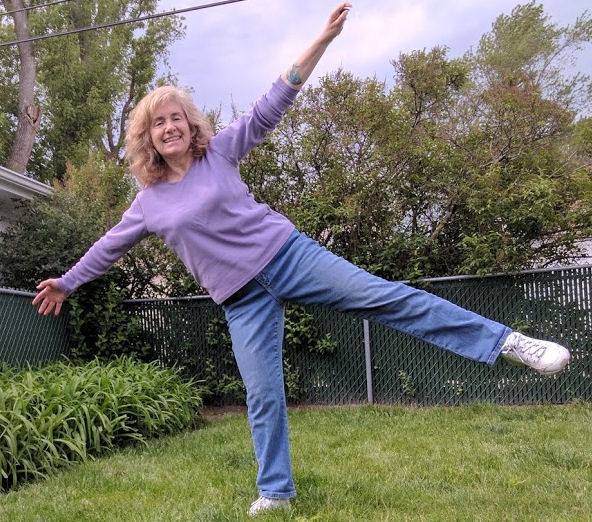
The Mayo Clinic also recommends working on your balance to improve stability and prevent falls. “Try simple exercises, such as standing on one leg while brushing your teeth. Activities such as tai chi also can be helpful.” Please note, though, that while tai chi improves balance over time, the improvement is cumulative. Tai Chi practice over a period of time will help your balance. The simple exercises found in the Week of Core-Centered Balance Moves can start helping you in just a couple of minutes a day.

Never stop

I’ve known many people who view retirement and aging as an excuse to quit their exercise programs. But, now is the time to get fit and strong and live our best lives – actually do the things we worked for, for all those years. Listen to your body. If you’re feeling good and things don’t hurt, your exercise intensity after menopause does not have to decrease. Take the time your body needs to recover, but don’t stop.

The danger of overdoing exercise

Exercise is good but don’t overdo 

Exercise is good, but don't overdo it. Over-training can be just as harmful as not exercising at all.
Exercise is good, but don’t over do it.

I’ve been telling you about the benefits of exercise for a long time. The first time I listed some of the benefits of exercise was way back in 2015 in my article “Why Exercise?” Exercise burns calories so you can eat more (still my favorite reason!), it can combat some health conditions and diseases, it boosts your mood and gives you energy, and on and on. Exercise is good, but don’t overdo it. 

I remember years ago when I used to go to a gym there were women on treadmills and stationary bikes for hours and they wondered why they kept getting sick or weren’t losing any weight. In all probability, these people were overtraining. 

Cortisol and “fight or flight”

Cortisol is a hormone your body produces when it’s under stress, or when your body thinks it’s under attack. If you’re walking along and a big dog jumps at you from behind a fence and starts barking, you’re still going to jump. Your heart is going to beat faster, even though you know that it can’t get to you from behind the fence. Your body is designed to automatically protect you from threats. It produces adrenaline and cortisol. Adrenaline speeds up your heart and makes you hyper-aware of threats.

When you realize that you’re safe and the threat is gone, your heart rate goes back to normal and your breathing slows down. According to the Mayo Clinic, cortisol “curbs functions that would be nonessential or harmful in a fight-or-flight situation. It alters immune system responses and suppresses the digestive system, the reproductive system and growth processes. This complex natural alarm system also communicates with the brain regions that control mood, motivation and fear.” 

Cortisol and exercise

So, when you overdo exercise, your system thinks it’s under attack and produces cortisol. And keeps producing it. So your body retains elevated levels of cortisol. It can interfere with the way your body works normally and even slow down your metabolism, according to Louis Cohn, a physical therapist at Aurora Sports Health. Cohn says, “When starting out, aerobic sessions should be kept between 30 and 45 minutes. You are then able to obtain the positive effects of cardiovascular training without the negative effects of over-training.” So it turns out that over-exercising can be just as bad as not exercising at all.

Moderation in everything

My workouts are 30 to 45 minutes 3 or 5 days a week. On days when I don’t have anything pressing, I’ll do a 50-minute workout. This works for both aerobic and weight training. And remember to rest the muscle group you worked the day after that strength program. 

So, like chocolate, exercise is good, but don’t overdo. Be sure to listen to your body. If you’re tired or if your body is aching in ways that are weird, you may be overdoing exercise. Take a break. Do something less stressful for yourself. A gentle yoga or pilates practice might be a good “rest day” activity. And be sure to eat well to fuel your body.

4 Steps to compassionate resilience

Being mentally tough, or “resilient,” is what all the psychology “experts” are talking about in the last couple of years. While it’s crucial to our well-being and healthy aging to be able to bounce back when the going gets tough, it’s also important to stay kind – what I call “compassionate resilience.”

Awareness

If you’re feeling panicked by events in the world, the first step is to be aware of that feeling, and then how you’re going to interact with those events. Is it panic? Or overwhelm? Are you frustrated? If you’re an observer, observe without judgment of yourself. If you’re a doer, figure out how you can make the situation better – first for yourself and then, perhaps, for others. 

Be aware of how your feelings affect you. Identify them – is it fear or anxiety that you’re feeling? Why? How will the happenings far away affect you here and now? Or here and later. If you’re feeling overwhelmed, identifying the things that are causing that feeling will help you to start on unraveling the tangle of burdens that you feel pressing upon you. Nurse practitioner Deborah Stamm of the Center for Health and Integrative Medicine at Advocate Good Shepherd Hospital says that naming the emotion “lessens the intensity and reminds you that you are in control of the emotion, not the other way around. It keeps you connected with your logical brain, and you are better able to think of new ways to handle situations that arise.”

Action 

Taking action will help you turn your narrative around. Write your Congressperson!
Taking action will help you turn your narrative around.

If that outcome is not something we want, how can you change it? Changing the narrative from, “I’m scared” to “I’m going to write to my Congressperson” will make you feel that you’re accomplishing something worthwhile. You’re being mindful of the moment, you dispassionately thought about the situation and decided on a course of action. At the same time, though, be sure not to let yourself think too much about the future. Do what you can now and put the situation aside until something changes or something else can be done about it

Be grateful

Stamm says another crucial aspect of resilience is gratitude. She says our brains are wired for negativity but, in contrast, optimism leads to resilience. We have to work on our positivity, to balance our brains. See my article “Five Ways to Maintain Positivity” for a start. Stamm recommends writing in a gratitude journal for a start on triggering positivity every day.

Be kind to yourself

Finally, to boost your resilience, be kind to yourself. If others talk about you in negative terms, don’t believe them! It’s easy to be down on yourself. We all do it from time to time. “I’m too fat.” “I shouldn’t eat that chocolate.” “My hair is terrible.” It’s easy to get caught in that trap. But – don’t! Eliminate that negative self-talk! You are worthwhile. The things you do are amazing! Believe that. 

Be grateful for the great things in your life. Believe that you’re worth every good thing that comes your way. Identify your feelings, especially the negative ones so that you can create a plan of action to turn your own narrative around. All this will lead you to compassionate resilience. You’ll be mentally tough – but still kind and compassionate.

Queen Elizabeth’s habits for healthy aging

Queen Elizabeth practiced many habits for healthy aging during her long life.

The world has been mourning the loss of Queen Elizabeth II of Britain, but also celebrating her healthy long life. The Queen was in the spotlight for most of her 96 years, and was working until almost the end. How did she do it? Did she just have good genes? Or did she practice habits for healthy aging?

The answer to the question is probably a mixture of both good genes and good habits! The Queen’s mother lived to be 101 years old, but Queen Elizabeth did have great habits for healthy aging!

Habits for healthy aging from an expert

Dr. Kevin Koo, family medicine physician at Advocate Medical group, says, “As someone who cares for many people in their 80s, 90s and even 100’s, the patients who are the healthiest are those who are on top of their health and well-being. They go to doctors’ appointments. These patients socialize often.” They read, travel, volunteer and exercise.

Eat right

First off – Dr. Koo says to eat a healthy, balanced diet. Queen Elizabeth typically ate small meals throughout the day, and her meals included grilled lean meats and lots of vegetables. But she also indulged occasionally in dark chocolate and biscuits. There’s nothing off-limits in a healthy diet. As I always say, “Everything in moderation!” And Dr. Koo agrees: “balance and not overindulging in anything are important when it comes to your diet.”

Social interaction

The queen met with lots of people on a daily basis. For the rest of us, feeling connected to others is important for our physical and mental well-being – from increased brain function to decreased depression. The pandemic isolated many people, and we’re only now realizing how detrimental that isolation has been – especially to seniors, many of whom were unable to interact with others. 

Exercise

We know the Queen walked the castle grounds and she walked her dogs. In her early years, Queen Elizabeth also enjoyed swimming.

Spend time outside

Fresh air and sunshine can boost not only your spirits but your health as well. We may not have castle grounds to wander, but we can walk through our neighborhoods and get the benefits.

Pray or meditate

Prayer or meditation can reduce stress and improve your outlook. Meditation was one way I mentioned that naturally fights depression. And Queen Elizabeth frequently mentioned prayer in her televised comments. 

Engage in your passion projects

Whether it’s volunteering for a charity or engaging in a hobby, this is another way to find a productive outlet and have more social interaction. 

Never too late

Dr. Koo reminds us that there’s no time limit on healthy aging. It’s never too late to start eating right, start an exercise program, or start volunteering for a worthy cause.

6 Ways to fight depression naturally

Mental illness is no joke. It affects many people every year. There’s no age limit, and it affects people of every ethnic group and wage bracket. If you’ve tried everything but nothing seems to work, it could be time to seek professional help. But if you’re feeling down and are starting to think that maybe you should address the issue, there are ways to fight depression naturally without drugs or a psychiatrist. Here are 6 of them:

Exercise is one way to fight depression naturally.
Exercise fights depression naturally.
  1. Exercise to ease the jitters of anxiety. There are lots of other benefits of exercising too: https://fitness-over-50.com/2015/09/why-exercise/ Remember that the “runner’s high” is not just from running. Whenever you exercise, your brain produces those valuable endorphins. Not only that, but studies also suggest that exercise promotes the production of dopamine, which plays a role in how we feel pleasure.
  2. Start a new hobby or spend time with a favorite one for distraction. No negative thoughts when you’re painting your next masterpiece. Or when you’re trying to fit together a 1,000 piece jigsaw puzzle.
  3. Take 15 minutes a day just for you. Take a walk and enjoy nature. Or dive into a novel – you can’t worry about the world when you’re deep into fighting the Civil War with the hero in the historical novel you’re reading.
  4. Listen to your favorite tune. That’s sure to brighten your day. In fact, there are scientific studies that prove it: https://fitness-over-50.com/2022/05/set-your-happiness-to-music/
  5. Spend time with friends and family. Take your mind off of the world and put it into helping your network. Your friends and family are your support, and you are theirs. https://fitness-over-50.com/2021/06/you-are-not-alone-on-your-fitness-journey/
  6. Meditate – it really does reduce stress and will minimize negative thoughts. Meditation is not just for yogis or sitting in the lotus position. And meditation does not have to take long. A short guided meditation (https://fitness-over-50.com/try-a-guided-meditation-for-calm/) also will work to clear your mind and lead you to more productive thinking. Meditation also assists in maintaining your positivity.

We all feel “down” on occasion. It’s natural. And, unfortunately as we age it becomes more common. So, as part of your healthy aging, the next time you feel blue try the exercise route first to help your mindset. It’s a quick fix, and one that usually works for me.

Don’t use visualization to achieve your dreams

You may have seen “experts” talk about using visualization to achieve your dreams. Just picture yourself living your best life on that tropical island and it will happen. Nope. Not even close. Or visualize yourself running a marathon. Not going to work. Don’t use visualization to achieve your dreams. It doesn’t work that way. Wishing it doesn’t make it come true. 

Visualization is all-or-nothing

Dr. Irena O’Brien, a cognitive neuroscientist, explains why: “Visualizing a successful outcome encourages us to think in all-or-nothing terms. This is exactly the opposite of what we should be doing. Thinking about goals in their entirety can inspire fear and overwhelm that can halt our progress.”

Visualizing success is as real as actually achieving that success to your brain, and it reduces your energy to continue working toward your goal. That’s because your brain believes that you’ve already achieved your goal. Studies have measured this drop in energy using systolic blood pressure. So, when you’re visualizing completing the marathon, your brain believes that you’ve actually accomplished it.

No easy way

Fran on treadmill. Visualizing the steps to get to the big goal.
Visualizing the steps to reach the big goal.

Visualizing standing on the podium at the finish line of that marathon makes us believe that there’s an easy way to get where we want to go. That we don’t have to do the hard work that will ensure that conclusion.

And we know that’s not true. We have to do the work. How am I going to run 26 miles if I get out of breath by the end of my block?

So how do we get there?

Dr. O’Brien agrees with the strategy I outlined: If you have a big goal in mind, break it up and figure a way to get those smaller chunks done. Using our marathon example, we can establish a plan to be sure we’re ready for that race. If the big race is six months away, we can schedule our training week-by week and day-by-day to give us plenty of time. Of course if you’re serious about your marathon running, you’ll want to check with a trainer specializing in long-distances for that plan. 

For our marathon example, we can schedule a one mile run twice the first week, and strength training a couple of other days during the week, and build up from there. If you use a treadmill for most of your training, be sure to include real road work for some. The conditions are different, and you’ll want to get used to running with wind and weather.

Visualize the steps

Instead of visualizing your successful outcome, visualize the steps. Visualize yourself running, and passing the one-mile mark and still feeling strong. This will work because you’ve outlined those smaller steps that are manageable and perfectly achievable.

And, finally – just start. Don’t spend too much time crafting the steps you need to take to achieve your ultimate goal. Dr. O’Brien says that “mindset is built through action.” Once you get going, you’ll see that your first step is achievable, and so will the next and the next. Use this technique to achieve all your goals – fitness, as well as others.

Remember – don’t use visualization to achieve your dreams. Your dreams will come with those smaller steps.

Manage stress to boost your immunity

A big part of healthy aging has to be managing stress. As we get older, our immune system doesn’t work as well as it used to. Along with our senses of balance, hearing and eyesight. It turns out that stress plays a big part in compromising our immunity. We don’t need added pressures on our immune system, so it’s even more important to manage our stress as we get older. And it stands to reason that if we can manage our stress, we boost our immunity.

Stress affects immune system aging

Recently, a large study researched how stress affects the premature aging of the immune system. Almost 6 thousand people age 50 and up were surveyed about stress in their lives – the questions involved family, job, finances and social discrimination issues. Scientists also measure their T-cell levels. T-cells, or lymphocytes, protect against bacteria, viruses, cancer and other harmful cells that promote age-related harmful conditions (like osteoporosis, heart disease and Alzheimer’s disease).

“The researchers concluded that chronic stress, stressful life events and higher lifetime exposure to social stressors may contribute to accelerating immune aging.” 

Molly Ireland, nurse practitioner at Aurora Health Center, says that while everyone experiences stress, the ways that we manage it can reduce its negative effects. I identified ways to reduce stress some time ago, and some are recapped here.

Manage stress to boost your immunity

So, how can we manage stress to boost our immunity?

Exercise plays a big part in how I manage stress.
You know how I manage stress – exercise plays a big part.

First off – make sure you prioritize you. Eat well and get plenty of sleep. And when you “eat well,” make sure you get plenty of vegetables and fruit, cut down on processed carbohydrates and sugars, and eat as much protein as you need. Eat more fiber and less fat, according to Ireland.

If your doctor wants you to lose weight, take this recommendation to heart. Being at a healthy weight will boost your immune system too. 

Exercise. Yes. Your doctor thinks it’s a great idea, too. Here’s how to start: https://fitness-over-50.com/2021/07/how-do-you-start-to-exercise/

Take time for you. Pursue hobbies you love. Sometimes, just being alone can help you manage your stress. But see friends and family too, because social interaction is important.

Break goals down into smaller, more manageable chunks so you don’t feel overwhelmed.

Get help when you need it.