Get ready for the dark months with the Great Lock In

One of the latest fads on TikTok these days is the Winter Arc or Great Lock-in. You’re thinking, “Didn’t we do that last year?” Because we did the Winter Arc challenge last year. But this year, it’s a different way to get ready for the dark months of winter. The Winter Arc was all about focusing on the mental and physical side of your health and well-being. The goal was to become calm and really dialed into exactly what was needed for that.

A different way to get ready for the dark months

This year, there’s a fresh approach. The Great Lock-in, embraced by Gen Z (born between around 1997 to 2012), but is actually good for everyone, is about getting yourself ready to achieve those big goals you have for yourself by the end of this year.

The viral TikTok post from @kadieglenn centers around self-trust. Because you’re not going to be able to achieve the big things you want if you can’t trust yourself to actually get there. You’ll recognize her points, but she’s finding a new audience with her post. So, be true to yourself and let’s get ready for the dark months of winter when we’ll crush our big goals.

Start small

Kadie Glenn, a London-based influencer, says to first start small so that consistency is easy. I’ve recommended that you break all your goals into little pieces so you’re not looking at that big, overwhelming one. Glenn gives the example of not saying you’re going to hit the gym five days a week when you havn’t been there all year. Start with two days. And if you’re successful with that, then you can scale up to more.

Track your wins – doing it is a win
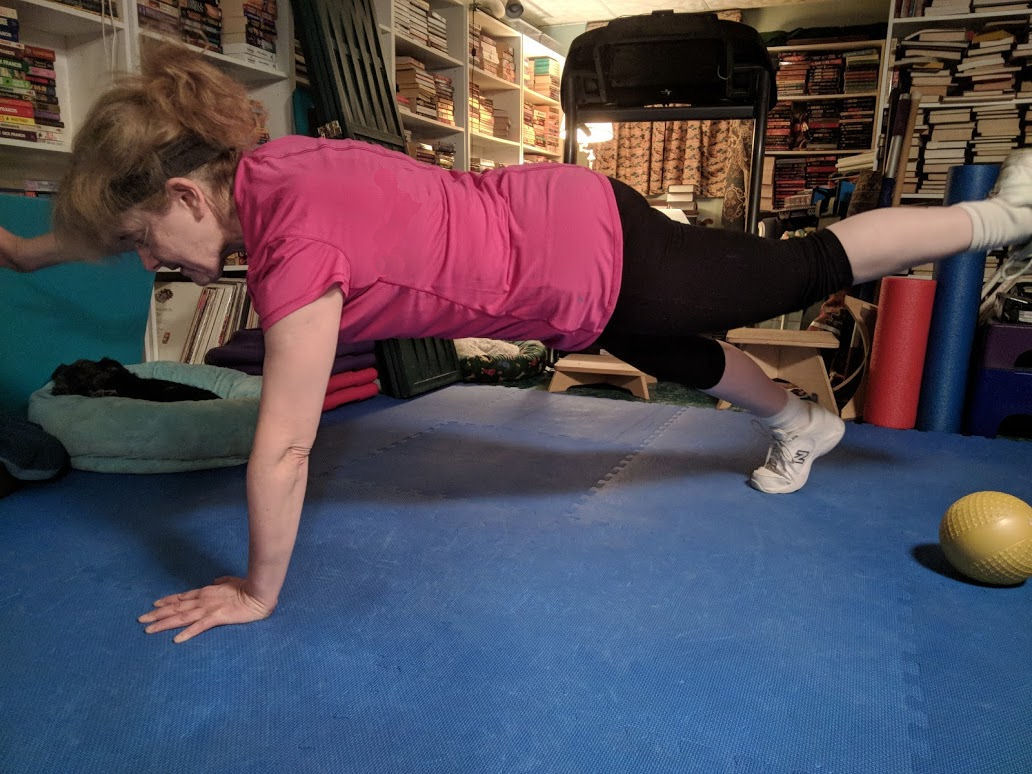
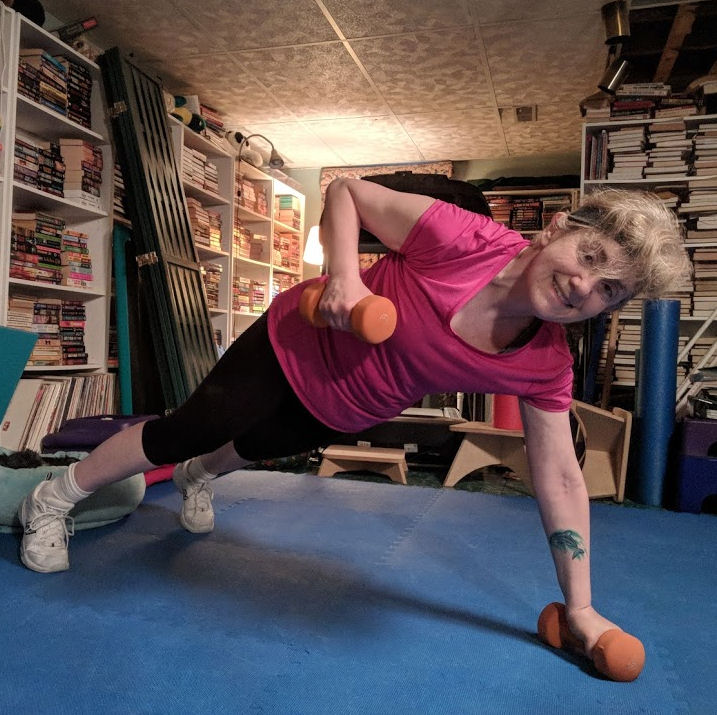
I tracked every second as a win, working on the Balance Plank pose.

Next, track your wins. Glenn says one way is to use a habit tracker so you show “proof of progress.” Progress is a definite win. When my arms were shaking, practicing the Balance Plank, before my face hit the mat, I was counting the seconds. From one to three, then five and ultimately ten seconds. Those incremental seconds were wins for me. 

Once is okay, but twice?

Third, Glenn’s rule of “Never Miss Twice.” Sure, things happen. You can go off the wagon for one day. Eat the pizza. Miss a workout. But not two days. This gives you permission to take a mental health day. There have been days when I just couldn’t face that treadmill. I’m human. And even though I committed to my treadmill two days a week, there have been times when I just couldn’t. If you miss a day, it had been all too easy to give in to the shame and self-disparagement. You say, “I’ll never get it. I’ll never be able to resist the cheesecake.” But the “Never Miss Twice” rule acknowledges that we’re only human and have flaws. Get right back on the wagon and continue. There will be bumps in the road. Acknowledge them and move on.

Drop what doesn’t serve

And finally, “Create fiction and flow.” Create friction with those bad habits. Drop the habits that no longer serve you. If you need to delete apps off your phone, do it. If you need to delete so-called friends from your social media feed, do it. And the same for real people. This is more difficult, but probably more necessary. Drop those toxic influences from your life. Eliminate the annoyances where you can. Acquire a problem-solving mindset.

Here’s a personal example. You know that my sister and I live together. Sometimes she washes her hair in my bathroom – no big deal. The sink is nice and deep and has a goose-neck faucet. I used to keep a cup near the hot water lever. It wasn’t in the way, but my sister insisted on moving it every time. The problem was that she moved it to a spot where I consistently knocked it to the floor. It’s a small thing, but it annoyed me. So now I keep my cup in a spot that’s out of the way, not on the sink. Problem solved.

Create flow with systems

And at the same time, create the flow you need to become the person you want to be. Glenn gives the example of being frustrated every morning, rushing to find your gym clothes. So, make going to the gym easy by setting your clothes out, including shoes, the night before. That works for career dressing, too. Or creating a task list for the next day in the late afternoon, when you know what’s not going to get done today.

Glenn’s post ended with a saying that makes perfect sense. “We do not rise to the level of our goals, we fall to the level of our systems.” So if we create systems that work to advance us toward achieving our goals, we’re bound to be successful. Let’s get ready for the dark months so that we crush those big goals at the start of the new year.
Introverts fail at this

We’ve seen lots of discussions lately about emotional intelligence. But many introverts fail at this. I’m an introvert. I’d much rather send an email than talk to someone. I’m writing this the day after Labor Day – and yesterday was absolutely fantastic. I spent most of the day with my dogs just relaxing. I read a good book for hours. No contact with the outside world. And it was great. So today (and most days, actually) I’m a little on edge because I do have to interact with other people. Most people’s worlds depend on successful interactions with others. And many introverts fail at this.

Imperative for success?

Many experts believe that emotional intelligence is imperative for success – for getting ahead, and even being happy. But introverts have a hard time with at least one, probably more, of the key skills that emotional intelligence requires.

We hear the term “emotional intelligence” being kicked around a lot lately, but what does it entail? 

The keys to emotional intelligence

Self-awareness – this means that we are able to recognize our own emotions, choices and actions and how they may affect others. Introverts usually don’t have a problem with self-awareness. If anything, we’re too self-aware.

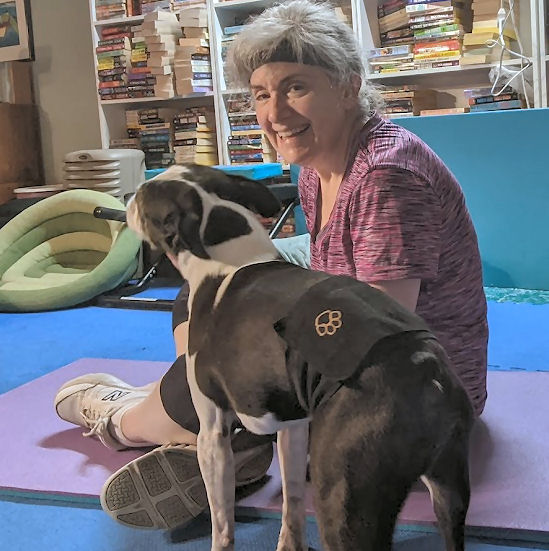
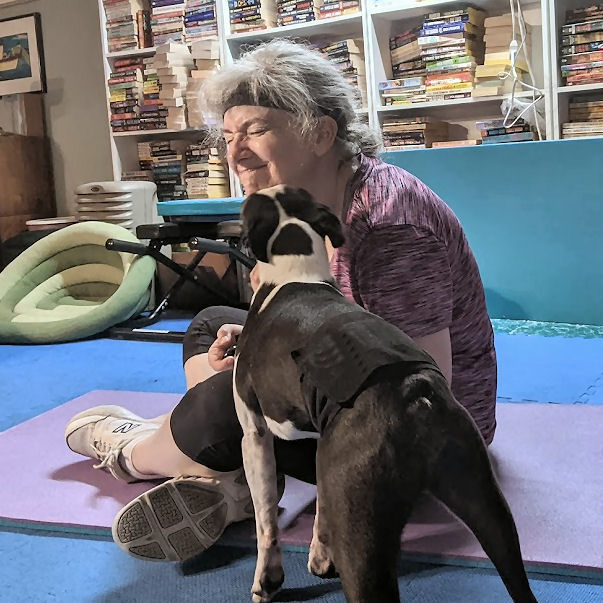
I'm an introvert. I'd rather play with my dogs than interact with people.

Self-regulation – the “ability to process and express emotions constructively, adapt to changes flexibly, and manage conflict effectively,” according to Psychologist Daniel Goleman. Sometimes I do have a problem expressing my emotions clearly and in a way that others understand without having to take action.

But here’s the big one – social skills. Goleman defines this as being an active listener and a strong communicator who can form “high-trust relationships.” This an introvert does with only a very few people. It takes a lot for us to really trust others.

Empathy and motivation are the last two emotional intelligence skills that Goleman identifies. Again, we don’t have a problem understanding and feeling for others. We can usually respond to others’ emotions in a careful and caring way. And we introverts can have a highly developed drive to seek out learning experiences and get things done.

How does this impact introverts?

So how does the lack of social skills impact us introverts? By not forming those “high-trust relationships” with others, we risk not having the camaraderie of others. Successful teams form relationships seemingly forever. And having those relationships adds a richness and fulfillment to life. Different people can add different perspectives to our own lives. They’ll bring up ideas that we may never have. Others have different backgrounds that can only add color and variety to our own lives. So, as much as it’s difficult, we introverts have to push and open ourselves to others for our own health and resilience.

Sometimes you need to take a breath

Just take a breath

The world is moving at a faster pace than ever. News keeps coming at us all day, every day. From every direction, on every screen. And it’s hardly ever good. We’re being bombarded with messages from all over. Our “productivity culture” urges us to get more done faster, to do more, see more, go more places. But sometimes you need to take a breath. Just stop. Turn off the screens and get your hands dirty. 

Time out for me

More experts are advocating “adult time-outs.” And it’s a great idea. Best-selling author and entrepreneur Chris Guillebeau in his book Time Anxiety promotes the idea of a “reverse bucket list.” You actually celebrate things that you’ve done. “The reverse bucket list is just like it sounds—what have I done that is interesting or notable, whether to other people or not? I think it’s helpful to just celebrate or even observe some of those things. You can do it as a big picture, like a life bucket list, or you can just be like, what’s your list of things that you’ve gotten done today? For those of us who tend to be thinking more about the future, perhaps reflecting on what we’ve been able to do thus far can actually bring us to a centering point.”

Take a look back

I’ve found that looking back on your day can be especially helpful on those days you feel like you haven’t accomplished anything. You know, those days when you’re busy all day and don’t have much that’s tangible to show for it. I call it the “Amazing Box” that you use to just note highlights of your day – good stuff that you did or that made you feel good. Your Amazing Box can be physical or digital – you can actually drop slips of paper that you’ve written on into a physical box. And it can be fun to pull slips out at random when you’re feeling low. But, yes, sometimes a digital box is easier – if you write notes on a digital platform then you always have it with you.

Looking at your notes about good things you’ve done is a great way to calm your brain. It lets you step back from all the tumult and say, “Yes, I did that. I’m really okay.” Or, “I’m really good at that.” Sometimes you need to take a breath and step away from the crazy now and look back a little.

Take up a granny hobby

Guillebeau and other experts are embracing “granny hobbies” for calming anxiety also. Getting your hands moving prevents you from doomscrolling and getting caught up in that swirling chaos. Folks have been nurturing their sourdough starters since the pandemic. Others are turning to crafts like knitting and crochet for their calming effects. Still others are getting their hands dirty and gardening. I do love to knit, but my personal favorite is needlework. Nothing like pushing a needle in and out of material for calming your brain. The activity is deeply satisfying, plus at the end you’re left with something beautiful or good to eat. 

Sometimes you need to take a breath. Step back and calm your brain. Put the anxiety on hold, if only for a little while. Look back at your day. Or work with your hands and get some peace of mind.

Worry is a waste of time

Worry is a waste of time. And yet we can’t help ourselves. I’ll include myself in this group. I’m a worrier. Most of the worry is nebulous and not about anything specific. Some worry is about whether or not a certain event will occur. Sometimes I even worry about the weather. None of this worry is productive. The worry is omnipresent. And it’s not good for us.

I worry about storms

Worry causes our anxiety to spike. And we know that anxiety is not healthy. An article in Harvard Health Publishing states that when we’re under stress, we’re prone to headaches, nausea, muscle pain, and other ailments. There is nothing actually physically wrong with us, but we’re manifesting these symptoms. And stress over the long term can cause your blood pressure to rise and loss of sleep.

My favorite method to relieve stress

Focus on fitness to relieve stress.

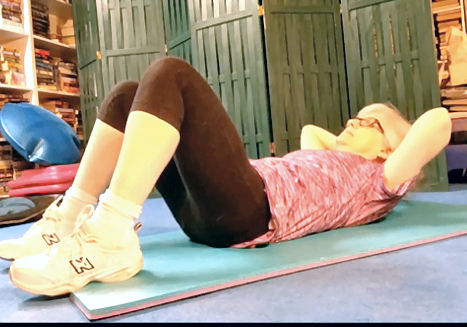
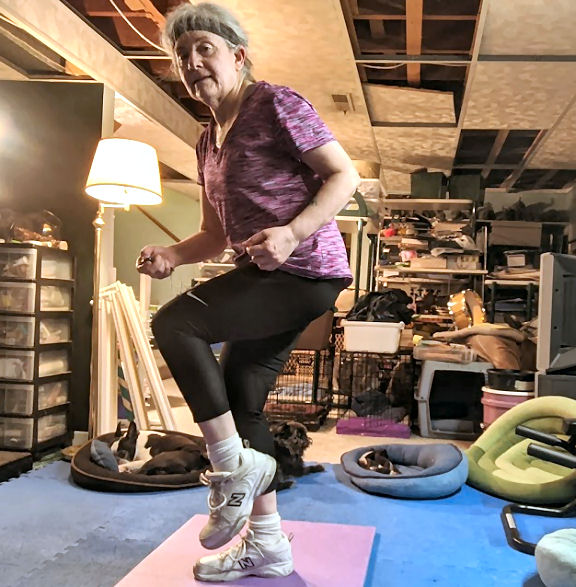
I’ve written about various methods that can calm stress and address anxiety. My favorite is still my fitness routine. When I’m exercising, I have a half hour or forty minutes that I have to pay attention and focus. I can’t let my mind wander.

Let them … what?

A new trend on addressing stress comes from best-selling author Mel Robbins. Her “Let Them” theory, which is not new, helps us believe that we have no power over others. They’re going to do whatever it is they’re going to do and we can’t influence their actions. We only have power over our own actions. How we react to others is the only thing we can influence. 

The more we let others do their own thing, the healthier it is for us. Worrying about what the other guy is going to do is not going to persuade them in any way, and the only result of that is to make us sick. Worry is a waste of time. This is a powerful mindset. Accepting that you can’t do anything about what others do can help you make room for a more positive mindset.

If there’s something to do, do it. Otherwise be like Elsa.

When we start thinking about the world situation, or the weather, or what your crazy neighbor will do (we’ve been lucky enough to not have too many crazy neighbors), just ask yourself what you can actually do about it. If it’s nothing, then ask yourself how you can prepare for whatever outcome you’re most anxious about. And do that. Or, be like Elsa in Frozen and let it go. Your blood pressure will thank you. You might sleep better. And you’re doing more for your healthy aging and your resilience than sitting and worrying about what might never come to pass.

Discipline is mindset

People say I have tremendous discipline. Not to toot my own horn, but I moderate my portions – even spaghetti. Exercise 4 or 5 times a week. Wrote and published 3 books in my spare time. And I usually don’t get sucked in by the usual clickbait. How? Discipline. Discipline is mindset. It’s hard – kind of like putting on jeans fresh out of the dryer. Sitting is awkward, and you may not be able to do the button. But if it’s important enough, and the steps toward that ultimate goal are small enough, it happens without you even realizing it.

The benefits that come with discipline

Discipline comes with its own set of benefits, not least of which is achieving goals. But you’ll also be improving your resilience – knowing that life takes potshots at us, trying to throw us off our game. But with discipline, we get right back to the task at hand. And with the discipline of creating good habits, we’re influencing our healthy aging. When you’re disciplined, you’re happier too. You know that you’re doing what it takes to get to where you want to be.

We’re wired to be couch potatoes, though

So, how do you make discipline easy? First, recognize that our brains are wired for us to be couch potatoes. There’s nothing we all like more than bingeing our current Netflix series. Our tendency is to conserve energy. But we know that the science is just the opposite. Expending energy produces more energy.

Second, we expect that our motivation will kick in at some point and magically lift us off the couch. It doesn’t work that way, unfortunately. If we want the results of exercise, we have to do it ourselves. Getting strong takes work. And no one is going to do it for us.

It’s hard and the writing was trash…

Third, you probably have the belief that if you’re disciplined, it will feel like everything in your brain will click into place. Again, not how it works. When I was working on my second novel, it was a struggle to get up early and write the hundreds of words I set as my goal. Some days it didn’t happen because the words were trash. But when you have something really important at the back of your brain that you want to achieve, you do the work. Toward the end of that book, the writing did get easier and I was able to finish – and some say this book was even better than the first novel.

Everything all at once is a recipe for disaster

And fourth, when you’re trying to be more disciplined, you’re probably trying to do everything all at once. Again, that’s just setting yourself up for failure. Discipline is mindset, but it only works when you take small steps. Train your brain to take those small steps every day. Because they lead up to the big ones.

Change the narrative

My new watchword is to do something every day that makes you happy. I don’t like to feel sorry for myself. But my birthday’s on a Tuesday this year – the busiest day of the week for me, when I don’t get home until about 9:30 in the evening after teaching a dog class and then training my own dog. I enjoy relaxing in the evening, so Tuesday is not my favorite day of the week. But instead of telling myself that it’s a bummer that my birthday is on a Tuesday, I’ll change the narrative and tell myself that every moment is an opportunity to look back and enjoy my life.

Where’s my happy place?

Now, I have it pretty good in life. Yes, there are some concerns, but (knock on wood) I’m amazingly healthy overall, we have food on the table and a roof over our heads. My dogs are thriving (also knock on wood because 2 are elderly) and I enjoy training them. But for this birthday I’m feeling low, and reminding myself of how grateful I am for everything I have is not helping. So I have to go back and remind myself of an article I wrote a while ago. You only need one thing to enter your happy place: a mindset shift

Mindset influences actions

Change the narrative and get happier.

I’ve noticed that my mindset influences my actions. If I’m feeling low, my sister starts asking me if everything is okay, which annoys me and worsens my mood. So, when she starts asking, I know it’s time for me to take a look inside. Dr. Jacob Towery, adjunct clinical instructor in the department of psychiatry at Stanford University, says that our mind influences our actions. And that mindset is malleable and can be changed.

Dr. Towery assures, “the good news is mindsets are highly changeable, and if you are willing to learn the technology of changing your mindset and defeating your distorted thoughts, you can have significantly more happiness.”

Change your mindset, change your life

The key to changing your mindset is to question your thoughts that are self-defeating and work on creating new narratives that are more self-serving. That positive mindset goes a long way toward building your resilience.

So, on my birthday I’ll change the narrative and view every moment of that Tuesday as an opportunity to smile and say, “Thank you” when someone wishes me a Happy Birthday. And I’ll work on enjoying that.

Change your mindset, change your life

What is happiness? To be deeply happy, do you need to achieve great successes? Reach great heights? Be thin, rich and have lots of friends? Like fitness, happiness is different for everyone. One psychologist seems to consider happiness as transitory, and that we should seek a life of fulfillment. By achieving that fulfillment, Robert Puff, PhD, we can build lasting emotional well-being. And Dr. Puff sees the path of fulfillment as being possible for everyone, not just the few lucky ones. Our brains are malleable. We can shape our destiny. Change your mindset, change your life. Changes are possible.

The key to being happy is in your brain. And Dr. Puff sees four practical challenges you can set yourself as ways to change your brain to be happy.

Observe

The first challenge is to just observe your thoughts. No judgment here. Just observation. Your thoughts are not good or bad. They just are. Acknowledge your thoughts but don’t react.

Change the negative

Are you having negative thoughts? Are your ideas constructive? Whenever I catch myself circling down that negative thought spiral, whether it’s from scrolling through my social media feeds or listening to the news, I stop that. I consciously try to shift my thoughts away from the negativity. If there are questions about the topic, I try to learn more, listen to the entire news story. Then I acknowledge that it’s bad news. 

Is it true? I’ll try to confirm with another source. Because, especially these days, not all stories we see and hear are true. Can I do something about it? No? Then I think about the pretty pink petunias in the flower box at my neighbor’s house.

Positive visualization

Visualize yourself working on and achieving your goals.

Dr. Puff recommends that we “regularly take time to vividly imagine your desired outcomes and feelings.” It doesn’t have to be for an extended period. For a few seconds, see yourself successfully working on one of your goals. Really picture yourself performing the actions. You’re rewiring your brain here. You see success and your brain releases happiness. 

Cultivate gratitude

And finally, Dr. Puff says we all need to cultivate a sense of gratitude. Every day, create a short list of things we’re grateful for in our lives. This shifts your brain from what’s lacking to what’s abundant.

With these 4 challenges, you’ll change your brain. Keep on doing them, you’ll certainly be more content. And you’ll be more likely to follow through on achieving your goals. When you’re optimistic, you want to continue to be happy. You’ll see the way to be happy in the future is by working on the goals you set for yourself and achieving success. So, when you change your mindset, you change your life.

Mental health awareness month

May is Mental Health Awareness Month. I think every month should be that, because if there’s one thing we all need to safeguard these days, it’s our mental health. The World Health Organization defines mental health as “a state of mental well-being that enables people to cope with the stresses of life, realize their abilities, learn well and work well, and contribute to their community.” What does that mean for our everyday lives? When we’re mentally healthy, I believe, we have a positive outlook, are productive at work and at home, and interact with others in a positive way. 

Mental health awareness to start the day

That’s not to say that we wake up every day with a smile on our face. Far from it. There are stresses galore in today’s world, so taking care of our own mental health has to start early in the day. For me, it’s waking up in a panic, thinking about everything I have to do that I didn’t get done yesterday, taking a few deep breaths as I make my way to the bathroom, and drinking a glass of water. Then I try to smile at my dogs as I take them outside for their first time of the morning – not only reinforcing the positivity, but also setting the tone for the rest of the day. 

A smile turns your mood around

When you smile, it actually does help your positivity. The NIH published a study a few years ago indicating that smiling releases dopamine right into your brain. You feel a reward for smiling. If that’s not instant gratification, I don’t know what is. And with that shot of dopamine, your optimism rises and so does your resilience.

Physical and mental health are intertwined

If you're feeling anxious and stressed, meditation can help you focus on health and well-being.

I’ve written about how to turn your mindset around. And it’s really common sense stuff. Make sure you get enough sleep, eat healthy foods, and exercise. All of this helps you be aware of and to protect your mental health. Yes, these are things we do to care for our physical health, but our physical and mental health are intertwined. They can’t be separated. When our bodies are strong, that’s usually a sign that our minds are strong as well.

So, prioritizing our mental health is crucial. Check in with yourself. Take time for you. Even a couple of minutes to clear your mind can be like a mini-vacation. Take a walk outside. Get together with friends. Make mental health awareness part of every day.

Find comfort in routine

Everyone seems to be stressed these days. Yes, it seems like I write that every other week. But the times are turbulent and it’s hard to know what will be coming at us next. The weather is crazy, the political climate is even crazier, and then the economy is in turmoil. It’s one blow after another. My head is spinning. If you’re like me, know that you can find comfort in routine.

Routines can improve your health

Northwestern Medicine says, “By providing structure and organization, routines can improve your health in various ways.” Routine can help you manage stress, which is beneficial for our mental health. When you know something will be stable, it puts your mind at ease and boost your resilience.

Experts recommend routines for bedtime and sleep. By having a bedtime routine and getting quality sleep, our mental sharpness improves, as does our emotional well-being and energy. When I get my full seven hours, I do feel much more aware, and have more energy.

Healthy eating can be routine

Northwestern’s experts also recommend a healthy eating routine. Preparing menus and shopping at a set time every week ensures that you’re considering your nutrition. Most weeks I shop on Monday afternoons, which is not when the store’s stocks are freshest, but it’s convenient for me. There’s still plenty of great-looking fresh produce to choose.

There’s even comfort in an exercise routine

And, of course, the experts advocate an exercise routine. Staying active, as we know, is essential for our healthy aging. And, as I’ve recommended as well, scheduling your exercise helps you maintain that routine.

But don’t get too set in your ways

But we don’t want to stagnate, either. I’ve talked about goal-setting the last few weeks. We want our routines, but it’s also necessary to grow. So, think about what you want out of life. What’s missing that you want? And add that in slowly. Adding something to your routine is a great way to build healthy habits.

One thing I’ve added to my routine is meditation because it helps me settle my brain. When my thoughts start spiralling or I find myself scrolling depressing news feeds, I take a couple of minutes and clear my head. It makes me more productive and better able to handle the news coming at me. Sometimes I need a guided meditation if I can’t clear my thoughts by myself. And that’s okay. 

If you don’t like your daily routine, figure out why and change it. You should find comfort in routine, not distress.

Make it fun and it will get done

My new watchword. If you can figure out a way to have fun doing something, it’s more likely to get done. I practice this a few times a week with my fitness routine. I make it fun and it will get done. Like running. To me, running is not fun. Granted, I’m more accepting now than I was a couple of years ago, because I’ve been doing it for a couple of years. But it’s still not fun. Running is hard and it’s not fun. 

It’s not fun, so why do it?

So why do it? Because listening to a really good book while I’m doing it is fun. I’m on the second book of a really good fantasy trilogy now, and I actually found myself thinking on a usually non-running day whether I could get on the treadmill so I could listen some more. (I could have, but didn’t.)

The Fun Theory

In a post on The Resilience Centre’s blog, clinical psychologist Gabriel Wong advocates making things fun so they get done. The Fun Theory was initiated by Volkswagen a number of years ago, saying that people are more motivated to do things when they’re fun. 

Examples like taking the stairs by making a flight of stairs like a piano keyboard, or promoting seat belt use by making entertainment available to passengers when the belt was fastened are popular examples. I particularly like the garbage can painted as “The World’s Deepest Bin” to promote throwing trash away. And the theory seems to work.

People took the piano stairs more than the regular stairs. Kids fastened their seat belts to watch the videos. And lots more trash was thrown in the “Deepest Bin” than a plain one next to it.

What about mundane tasks?

That’s great for odd, random things that you might want people to do. But what about normal, everyday stuff that has to get done. How can we make that fun? How can we get motivated to get all the mundane stuff done.

Confetti?

That’s where our Funtime Menu comes in. There are some things that are just not going to be fun. Like taxes. But online tax preparers figure out a way to gamify the process and give users a little shot of dopamine when they complete a section. You may get a green check mark and a celebratory confetti screen. We can do the same thing. 

Put 15 minutes on a timer and work on a distasteful item on your never-ending To Do List. Just 15 minutes. Like cleaning out a closet. When the timer goes off and you hear that “Ding!” don’t you get a little rush? I do. Now you can do a little appetizer on your Funtime Menu. Dance to one of your favorite tunes. Go outside for a few minutes and enjoy some fresh air. Get a drink of water. 

Make it fun and it will get done

You may think that 15 minutes is hardly any time. The closet will never get cleaned out in just 15 minutes. But you can make incredible things happen in just 15 minutes a day. And then when that closet is cleaned and organized, you can claim an entree from your Funtime Menu! Being able to check something off that list does wonders for our optimism. And when we’re happy, we’re more resilient. And when our spirit is strong and resilient, our bodies tend to be as well.

So, while I didn’t get to listen to more of my book on a non-running day, I know that I’ll be able to listen more in a couple of days. Remember to make it fun and it will get done. No matter what “it” is.