Five ways to maintain positivity

I often write about happiness and optimism, because happy and optimistic people are generally healthier and live longer than those who are unhappy or see the negative in everything. But even when you start the day with a positive outlook, sometimes it can be hard to maintain that optimistic mindset. Here are five ways to maintain positivity.

When the sun is shining it’s easier to be positive and optimistic. Everything looks better when it’s bright outside. But how about when it’s nighttime, or it’s gray and gloomy outside? How can you maintain positivity then?

#1 on the list of How to Maintain Positivity: Smile!
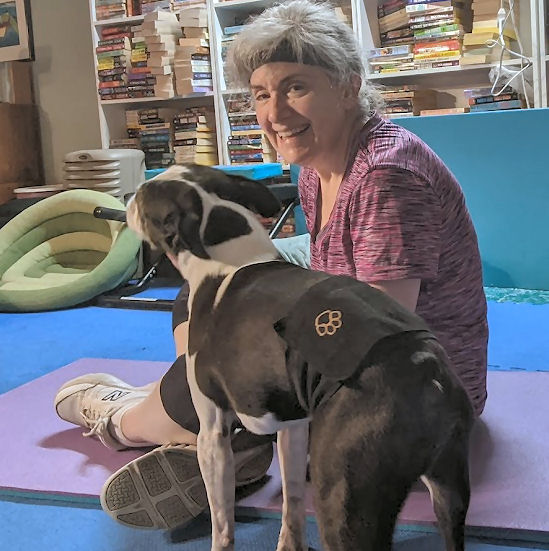
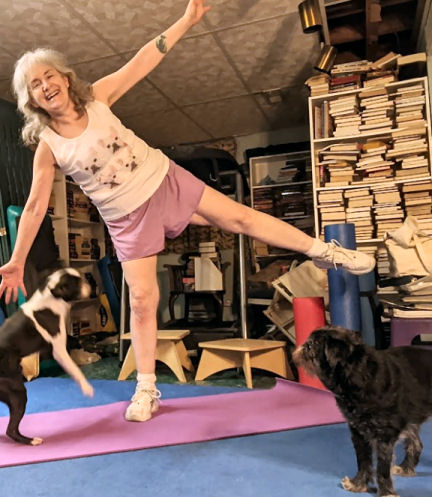
#1 on the list of How to Maintain Positivity: Smile! After a workout, I have a big smile on my face.
  1. Smile. That’s it. Just take a breath and show some teeth. Even if you don’t feel like smiling. When we smile, our brain releases the hormones dopamine and serotonin, associated with happiness and reducing stress. Believe it or not, a study performed by a group at the University of Cardiff at Wales found that people who could not frown due to botox injections were happier on average than those who could frown. So, that’s the “fake it until it comes true” path.
  2. Journal your gratitude or express it in some other way. Say, “Thank you” to more people for even the smallest of favors. There is no place for unhappiness in you when you’re feeling grateful to others. Even having others in your life is something to be happy about.
  3. Take a walk. Increase your oxygen intake. When you breathe more deeply, your body is doing something positive. If you exercise regularly, that “exercise high” you feel lasts longer, plus you’re sleeping better.
  4. Listen to a favorite tune. I keep a playlist of songs that make me feel happy. Listening to one usually does the trick when I’m feeling down. Almost anything by the Zac Brown Band puts a smile on my face and gets my toes tapping.
  5. Meditate. Thinking of absolutely nothing for a few minutes helps me maintain positivity. Just breathe. If that’s hard for you, a short guided meditation will also help clear the cobwebs and help you maintain your positivity. If you’d like to try meditating but don’t know where to start, download the Garden Walk Guided Meditation.

These days, it’s important to grab happiness and optimism wherever you can. Practicing one or more of these techniques will help you maintain your positivity.

Figure this out before you work out

So you’ve been told you should exercise. It’s not just me who’s telling you that… It’s the Mayo Clinic – did you know that you’ll sleep better if you exercise? And Harvard Medical School – did you know that exercise can help prevent cancer? And yet so many people tend to avoid exercise. It’s easy to not exercise if, for example, your parents were not especially active. And it’s easy to keep on watching TV or reading when a show or book is engrossing. So, what will get you out of the chair? Before you work out, you have to figure out your motivator.

Figure out your motivator

In order to keep on exercising – because exercise is not a “one and done” thing – you have to have a really good reason to keep coming back to it. You’re not going to keep on exercising several days a week if you hadn’t been exercising before, unless you have a particularly strong reason to do it. Because, let’s face it, exercise is not the most fun thing on the planet.

I hate to exercise

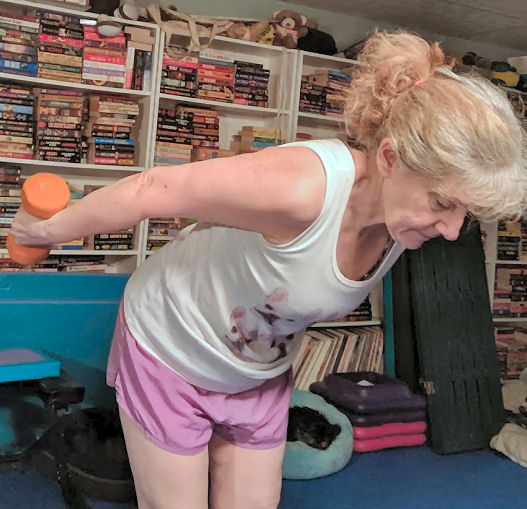
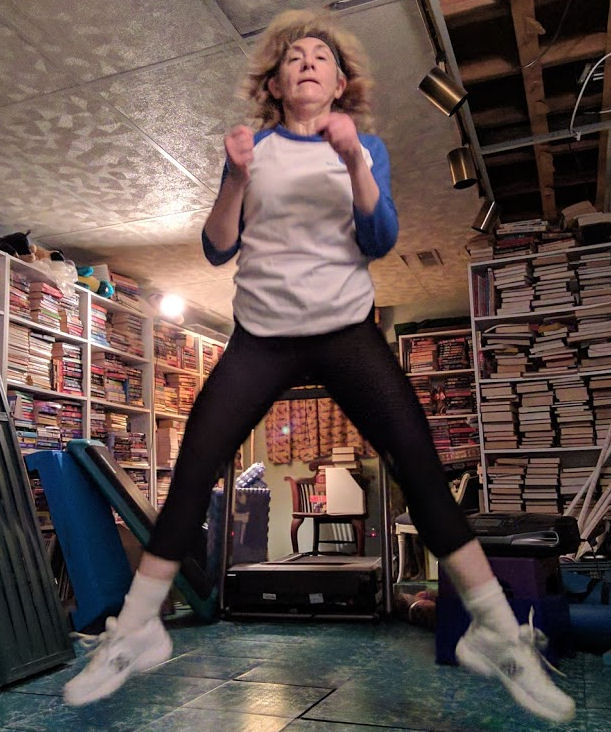
A great workout eliminates stress.
I do not like getting sweaty… And yet…

I’ve said it before, I do not like to exercise. Not one little bit. And yet, I’m on my exercise mat or on the treadmill 4 or 5 days every single week. Even after all the years that I’ve been exercising, I despise it. The best part of exercising to me is when I’m done for the day. I do not like getting sweaty and out of breath. And the promise of fighting off cancer or getting better sleep are not good enough reasons to work out. So why do I do it?

My 3 big reasons

  1. I get to eat what I like
  2. I’ll be in shape to run my dog in agility
  3. I’ll be more able to face life’s challenges. I’m a big scaredy-cat. I figure if I have the discipline to do what I don’t like to do, I’ll be better able to face anything life throws at me.

What will make you lace up those sneakers day after day?

Those are my reasons. Everyone does different things for different reasons. The prospect of 7 or 8 uninterrupted hours of sleep might very well be your big motivator.

Or playing with the grandkids in the backyard. Or even having a backyard with a beautiful garden is your reason. Last week’s article was about how gardening can relieve stress. But in order to have a garden you have to do the work. Are you able to dig your garden, to kneel down and get those weeds? Perhaps you’ve figured out your motivator and that garden is it.

The key to getting the benefits of exercise is consistency. You have to keep on exercising to get anything out of it. So, you have to think about what will make you lace up your sneakers and get on that exercise mat. You have to figure out your motivator that will keep you working out six months from now, a year from now, for your best life.

Dig in the dirt to ease your stress

I’m watching the snow fly out my window as I’m writing this. It’s kind of strange to think about gardening when it’s snowing, but now is the perfect time. I’ve described ways to ease your anxiety in the past, and digging in the dirt can ease your stress too. 

Gardening promotes health

Dig in the dirt to ease stress.
Digging in the dirt helps to ease stress.

“There are a lot of studies that show how being outside and gardening promotes health. It provides relaxation, enhances mood, and puts our bodies in a state to better handle stresses,” says Dr. Lori Walsh a pediatrician at Advocate Children’s Medical Group. “Our nervous systems are in a hyper state of overdrive, which, if not turned off, puts our bodies in a state of inflammation that contributes to diseases, such as diabetes and heart disease,” Dr. Walsh says. “Gardening helps to take your mind off stresses and starts to focus us on what is happening in the moment, shifting us from overdrive to using your senses and being mindful.”

Planning comes first

But in order to have your garden, your place of refuge, things have to start growing first. Now is the time to plan your garden. If you have a yard, a corner of it is perfect for your garden. Start to research the kinds of things you want to plant – do you want to grow vegetables? Or perhaps a beautiful flower garden. Keep in mind if your planned garden has many hours of sun, or if it will just have a few hours of sun a day. Different plants have different sunlight requirements.

Is your soil optimal for the kind of garden you want? Keep your garden’s soil and fertilizer requirements in mind as well. Know the soil supplements you’ll need to add. And, many of us beginning gardeners overbuy seeds. Your little plants have space requirements too. Research is supremely easy these days – just Google the kind of plants that do well in your area, with the sunlight you get. 

Containers?

Container gardening is another option, if you don’t have a yard or don’t want to plant in your yard. My dogs would certainly make short work of little plants unless I invested in sturdy barriers. Planting in pots could mean different fertilizers and soil additives.

You can certainly start seeds indoors now so they’ll be ready to plant outside when there’s no danger of frost. Or keep doing your research and visit a garden center when you’re ready to plant. 

Just thinking about your garden, your refuge to escape from the world, can’t you feel yourself getting calmer? Plan to dig in the dirt to ease your stress this spring and summer. And you’ll be able to enjoy the fruits of your labor too – whether it’s good stuff to eat or food for the eyes.

Choose happiness

I choose happiness almost every day. I say almost because, sometimes, reality is too much to bear. Some days the crushing weight of all the bad news in the world combined with bad news closer to home make ear-to-ear grinning happiness impossible.

Day-to-day irritations don’t matter

But most days I can let the day-to-day irritations fade into the background and choose to be happy. Yes, the dog ate something in the yard that didn’t agree with him – all over the rug. And gas went up another dime a gallon. And we had to deal with another unhappy customer wondering why the supply chain issues affected her order.

But those things aren’t enough to make me choose anything other than happiness. 

Think of your happiness as a muscle

Happiness is like a muscle. Use it or lose it. Now, I don’t mean the chocolate cake type of happiness. I mean the deep-down, central to my soul kind of happiness. Yes, chocolate cake will make my taste buds very happy while I’m eating it, but a half hour later it’s a memory. But the happiness I feel when I think of my family, my dogs, my health, the little plants starting to grow outside – that doesn’t go away.

You’re probably laughing to yourself, thinking, “This Fran is a nut. I can’t choose happiness like I would choose a pair of shoes!”

To which I say, “Why not?”

Take responsibility for your own happiness

Deepak Chopra, one of the leading voices in well-being, says that we should take responsibility for our own happiness. It is in our power to be happy. If we leave it to others to make us happy, we can never be happy if we’re alone. That is unacceptable to me. I’m an introvert and I like being by myself much of the time. I like to be happy, so I choose happiness for myself.

I choose happiness.
Work your happiness!

I’ve written about how that happiness comes about in the past. And many times it’s not simply, “OK. I’m happy now.” Sometimes that works, but not very often. What usually does work for me is just closing my eyes and thinking about all the great stuff I have now in my life. I disregard the not-great stuff, because some of that will always be there and there’s not a whole lot I can do about it. 

Or I put on my workout clothes and move. Exercise is a great mood-lifter. After exercise I always feel better than I did before. I not only feel happier but I feel less stressed. And after a shower I feel better still.

If you’re feeling blue, you can do something about it. Choose happiness.

Friends can help us navigate tough times

Sometimes watching the news or scrolling through our social media feeds it seems like we’re alone. Bad news everywhere, rising prices, rising interest rates, long lines, supply shortages (still!) It’s easy to get frightened, anxious and stressed and keep ruminating about all the bad things that might happen. That’s the moment you take a deep breath and call your best friend! Our friends can help us deal with the stress as well as lift us up and make us feel better. We know that friends can help us through tough workouts, but friends can help us navigate tough times too.

Friends lift us up

Our best friends lift us up by being near, and friends can help us navigate tough times.
Our best friends lift us up just by being near.

We all have a friend, or if we’re lucky more than one, friend who lights up a room and just makes us feel better by being near. That’s the friend to count on when we’re thinking those dark thoughts. That friend lifts us up emotionally just by being herself. And spending more time with that friend can help us get healthier too.

Dr. Vanessa Chang at Aurora Behavior Health Center says that friends can help us live longer. It’s been shown that people with strong relationships tend to be healthier than people without those relationships. 

Friends help us deal with stress

Friends help us deal with stress. Turning to best friends during tough times can make it easier to cope with life’s knuckleballs. “Knowing people we can count on during difficult times can lessen the burden and even make some events seem not stressful at all,” says Dr. Chang.

And having a friend we can count on can also help keep our mind sharp. A study found that lonely people are 40% more likely to develop dementia than those with solid friendships.

Time to reconnect

So, now is the time to reconnect with friends. During the pandemic you may have grown apart from friends, but now is the time to get back in touch. And despite how in-depth some conversations may seem on social media, the people you’ve “friended” on Facebook may not be the ones who will stick by you through thick and thin. If you still don’t feel comfortable meeting in person with friends, Zoom is still a great way to meet “face to face” without masks. And a free account gives you 45 minutes of uninterrupted chatting. I still “get together” with a few good friends every week over Zoom. Friends can help us navigate tough times, and these days we need all the friends we can get.

Coping with anxiety in the real world

Like it or not, these are anxious times. We’re all dealing with anxiety. From millennials to Gen-Xers to us Baby Boomers. We all have to develop our own ways of coping with anxiety in the real world – our world. Your world is different than mine, so you have to find your own way of coping with your stress and anxiety.

Techniques for coping with anxiety

But, there are techniques that we can all use to cope with our separate anxieties. 

Experts tell us to be more mindful and that will help us cope with stress. But, what does that really mean?

Be mindful

Coping with anxiety in the real world means being mindful of the things around you.
Be mindful of the things around you.

Being mindful to me is to pay attention to the things around me. Inside – to my work, my family, my dogs. And outside – to traffic and sounds, of course, but also to the trees, the birds, the people walking.

Experts will tell you about meditation, breathing exercises and other techniques as they relate to mindfulness. But, for me, if I just take a breath, and try to remember all the joy in my own life, the anxieties of the real world kind of fade. They don’t go away altogether, which is OK – after all, we do live in the real world so it has to have a presence in my life – but the stress is manageable. I’ve also talked about how exercise helps me conquer my anxiety.

What can I really do

If I’m stressing about the situation in Ukraine, then taking a moment to focus on what’s really going around me will make me realize that I can’t stop the Russian forces on my own. That moment allows me to take a step back and focus on the steps I can actually take to help the Ukrainian people.

Coping with anxiety in my real world

If I’m stressing about something closer to home, then taking that moment lets me focus on the steps I can take to solve the problem. And if I can’t solve the problem myself, that moment lets me figure out who to ask to help me.

If you’re anxious and stressed, and if you can’t tune out the world for a moment, definitely try those techniques the experts recommend. But try to just … be … for a little while.

Use your fitness routine to conquer your anxiety

I spent much of Wednesday driving to and from various errands. Driving itself is not fun these days, what with the price of gas and having more people on the streets with the better weather. I had the NewsRadio station on in between stops because there wasn’t enough time to become engrossed in a podcast or audiobook. And the news is not good. Anywhere. Rising prices, escalating war, politicians increasing the nasty factor. My anxiety certainly rose yesterday afternoon with all of that. When you’re feeling more anxious, how do you deal with it? My answer: use your fitness routine to conquer your anxiety.

Calming techniques and beyond

I’ve written about various calming techniques for stress and anxiety, and exercise has always been one method. But, let’s go a little deeper into what exactly happens when you use your fitness routine to conquer your anxiety.

Increasing my endorphins with aerobic exercise. I use my fitness routine to conquer anxiety.

Exercise, especially aerobic exercise, increases your endorphins. I am always in a better mood after my workout, and my family thanks me for that! (These days, with my anxiety soaring, if I don’t exercise I can be particularly moody and snappish.) You don’t have to run to get that “runner’s high.” 

Exercise as a stress-reliever

Experts at the Mayo Clinic also promote exercise as a stress-reliever: “Regular exercise can increase self-confidence, improve your mood, help you relax, and lower symptoms of mild depression and anxiety. Exercise can also improve your sleep, which is often disrupted by stress, depression and anxiety.” Exercise can not only ease your current stress but give you a feeling of command over your body and your life. Note that It’s not a “one-and-done” thing for exercise. “Regular exercise” is key. Those experts at the Mayo agree that any form of movement will do you good – by increasing your fitness level while decreasing your stress level. But they also agree that scheduling your workouts help. I wrote about the importance of making “dates” with yourself a while ago.

Simulating “fight or flight”

When you feel stress, you may feel that “fight or flight” syndrome occurring in your own body. Exercise simulates that effect. If you’re walking or running, that’s the “flight” part. If you’re doing strength training, that simulates the “fight” part by putting your muscles under tension.

Walking meditation

Many people walk for their exercise and that’s great. Walking alone is a good form of physical exercise, but combining walking with meditation can really lower your stress. Of course, that doesn’t mean that you close your eyes and chant while you’re walking. Just be mindful of what’s happening with your body as well as being aware of your surroundings. “Practicing walking meditation regularly can help one be more connected to their body and surroundings while simultaneously making them happier and healthier,” said Dr. Jennifer Dragonette, Executive Director at Newport Institute.

You can be less stressed and anxious, if you use your fitness routine to conquer your anxiety.

Modify anything to reach your goals

You know I’m a fan of goal-setting. And I’m also a fan of setting big goals. So, chances are those goals I set will not be achievable with the equipment I have right now. If I want to do a full push-up but just don’t have the arm strength, I’ll work at it until I can do it. I’ll start on my knees or on my toes and leaning on a low table. The key is to modify anything to reach your goals.

A modification for anything

If I want to do a side plank with leg left, I'll modify it to start on a knee.
Modifying the Side Plank star means beginning on a knee.

As I’ve said before, there’s a modification for everything. That modification may not be immediately apparent, but it’s there. If you want to come along with me and try that full push-up, starting out leaning on a low table may help you to increase your arm strength more than starting on your knees. Once you’re successful with push-ups using that coffee table, you can “graduate” to an ottoman. And then to a stool – going lower and lower. Eventually you’ll be ready to do a full push-up on the floor. And if I want to do a Side Plank Star but don’t have the arm strength now, I’ll start on a knee.

If you’ve set your goal for 10 push-ups, don’t give up after 2. If you’ve reached the floor but your arms give out after 2, don’t give up. Get that stool and finish your set. You’re still building your arm strength on the stool. By the way – even one push-up on the floor is amazing. Time to celebrate! Rewards are an essential part of goal-setting. Make sure that your reward is fitting – save the big reward for doing 10. Now, perhaps, a 15-minute break is appropo. 

After doing the modified exercise, I've built up enough arm strength to do a full Side Plank Star.
After doing the modified exercise, I’ve built up enough arm strength for the full Side Plank Star.

For non-exercise goals

The same step-by-step system works for other, non-exercise, goals. If you want to lose weight – say, 30 pounds, you’re not going to lose all 30 at once. And even thinking about losing 30 pounds is a daunting prospect. But 5 pounds is achievable.

Modify your goal

So, the key to reaching that lofty goal of 30 pounds is to break it up. Modify your big goal to set intermediate goals. And reward yourself every step of the way!

Why start a fitness program?

Last week I was completely winded after a practice agility run with my dog. I was huffing and puffing and thought to myself, “If I want to do more of this (which I do), then I’ve got to figure out a way to build my endurance and stamina.”

Do you huff and puff on the stairs?

Now, you may not want to run agility with your dog. But you may want to get fit for any number of other reasons. Do you have to pause on the stairs? Or do you look for a parking spot closer to a store’s entrance? You may wish you were in better shape, but thought it was impossible to succeed because your metabolism just isn’t what it used to be. So to start a fitness program would be futile.

The truth about your metabolism, even after “a certain age”

According to Dr. Nick Pryomski of the Advocate Aurora group, that’s nonsense. Your metabolism is the same as it always was. But you may find it more difficult to find the motivation to get out of your chair and do something about it. Dr. Pryomski says, “Metabolism doesn’t necessarily slow as you age. It only does if you are less active.” Likewise, “slender people don’t necessarily have a higher metabolism than larger people.” That’s good news for most of us.

So, it is scientifically possible to get fit at any age. But you may be completely overwhelmed by the prospect of losing weight or starting an exercise program. 

Make your reason a no-brainer

Why start a fitness program? I started a running program for my dog.
Why start a fitness program? I started for my dog…

The secret? Be really honest with yourself. Know why you want to get in shape. If your reason is just to look good or age gracefully, that’s probably not good enough. But, if you want to be able to play with the grandkids as much as they want to? If you want to go for walks in the park (when the weather improves), or travel and be able to see the sights you’ve always wanted to see, then you’ve got a pretty good reason to start a new healthy aging program. 

I certainly would not be pushing myself on the treadmill, up to 6 miles per hour so far, so that I have a prayer of directing my off-leash dog on an agility course, if I didn’t want to succeed in the sport. 

Start small

The way to start your new program is small. Make small changes to your routine. Like walking for 2 minutes after breakfast. Get used to those little changes first before you make bigger changes. Then you can start to determine the bigger changes you need to make. 

If you want to start a new eating plan with the goal of losing weight, same thing: start making small changes. Perhaps cut down on your starch and dessert portions. Don’t eliminate them – you know that I’m a believer in not depriving yourself! – just make those portions smaller for now.

Small goals lead to big results

No matter if you’re starting an exercise or an eating program, set goals for yourself. (See “Set goals – big and little.”) First set short-term goals – something for the next two weeks or a month, perhaps. Those goals should be doable but challenging. For example, if you start with walking 2 minutes a day, work up to a half hour in the next 2 weeks. Or lose 4 pounds in the next 4. And when you reach those goals, be sure to reward yourself with something that’s meaningful to you. Download that book you’ve wanted to read.

If you need an accountability partner to keep you “honest,” enlist a friend. I started out by scheduling my workouts on my calendar – my “date” with myself. You may find a step tracker a useful tool for motivation.

The key is to never give up. If your reason to get healthy is important enough, you’ll find the motivation and the tools to help you.

It’s all about your middle

Your weak core could be the culprit behind your bad back. If you know you have a weak core but you’ve been reluctant to do anything about it because you hate crunches, relax. There are plenty of ways to strengthen your core without doing crunches. Different exercises focus on the different muscle groups that make up your core.

As we get older, we’re more concerned about healthy aging. We want to be able to do what we want, when we want to do it! And back pain puts a serious crimp in doing what we want to do.

Focus on your core

The basic crunch is quite effective - focus on your core!
The basic crunch is effective for strengthening the abdominal muscles.

And if you focus on your core, you will not only help your bad back, your posture will improve and so will your balance. That’s good news, because we all want to avoid the slips and falls that come from faulty balance. It all comes down to your middle.

In addition to your abdominal and oblique muscles, your glutes, diaphragm, pelvic floor and back muscles also contribute to your core strength. Strengthening all your core muscles help to hold you up and also make other exercises easier. 

Don’t just go through the motions

It takes time and focused effort to strengthen your core. Going through the motions is counter-productive. It wastes time and doesn’t do a thing for your core. By focusing while you’re doing the exercise, you get the most benefit. 

The plank fad has come and gone, but there’s a good reason this exercise was so popular. It works just about all of your core muscles. And if you really focus on your core while you’re performing the exercise – that is, hold your stomach and your glutes in, the plank is truly effective. 

The crunch – effective but unpopular

And while the crunch is definitely not popular, it is quite effective if done properly. Follow these directives and you’ll get the most from the crunch in the least amount of time: Lift from your chest, hands behind your head and elbows wide, hold your stomach in, make sure your back stays flat on the floor, and don’t pull on your neck.

Save your back – focus on your core

A few years ago, I was seriously concerned that I would have lower back problems for the rest of my life. But I read something at the time (and I wish I had saved the article or link) that made me start to focus on my core, and it worked. Today I have very little back pain. So, focus on your core. You’ll be glad (like me) that you did.