Get it done – with a friend

I believe in getting stuff done. If you want something, I say, figure out a way and get it done. Many times, though, it’s not so simple. Sometimes there are natural impediments to what you want. Other times the thing that you want is so nebulous you can’t clarify it in your own mind. And still other times, you get stuck doing other stuff or procrastinate doing that first thing. But here’s a thought, you can get it done – with a friend.

Friends give you a nudge

That’s right, enlist friends to give you that nudge to get stuff done. Here’s an example. Every time you open your closet, you cringe. It’s over-stuffed. Shoes are everywhere. You can’t hang another thing on the rack. And you know that there’s lots of stuff in there that you haven’t worn in years and will never wear. “I’ve got to clean out my closet,” you say on an almost-daily basis. And say you’ve been talking to a friend and mention your packed closet. She says, “Yeah, mine is a mess, too.”

Schedule a time when she can come to your house for half a day so that you can get your closet organized. And another time when you can go to her house. You’ll both get organized closets and feel great.

It turns out that working with a friend to get stuff done is a real thing, and has been in practice for years to help those with ADHD focus and stay motivated. Folks now call this Body Doubling, and according to Michael Manos, PhD., a behavioral health specialist at the Cleveland Clinic, “Essentially it’s external executive functioning, like having an administrative assistant follow you around all day.” 

Mom was a body double

Remember when you did your homework at the kitchen table while your mom made dinner? That, in essence, was a form of body doubling. Mom may not have been actively helping you, but her presence provided focus and helped keep you on track.

So, enlist a friend to help you get stuff done. You can do each other a good turn. Closets will get clean and organized, and then you can treat each other to lunch. If your closet is in good shape, but you have other things that are bugging you and you want done, see if a friend can sit with you on a Zoom call for an hour. They might have stuff they want to get done as well. Body doubling doesn’t have to be in-person. 

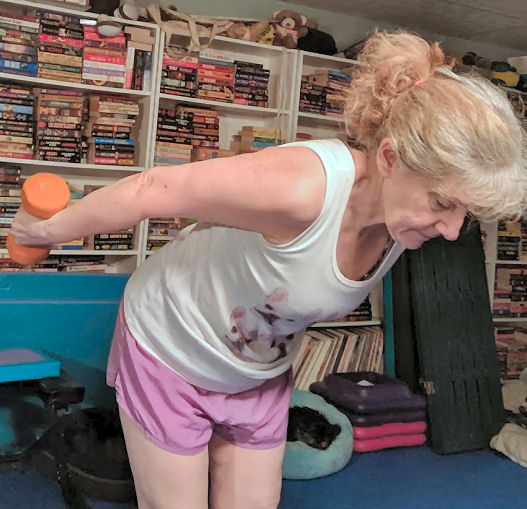
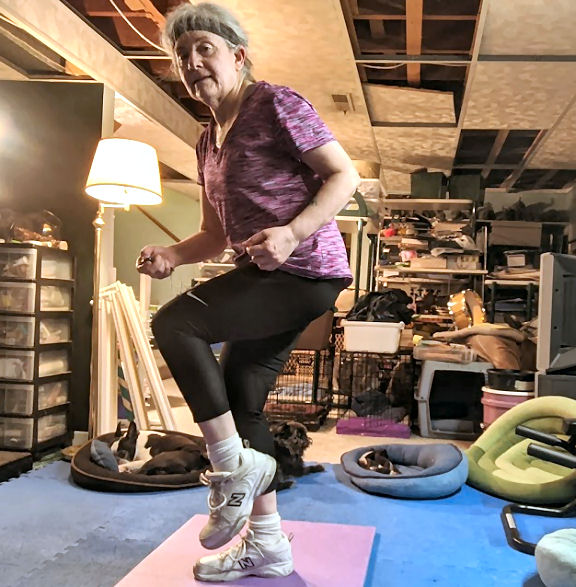
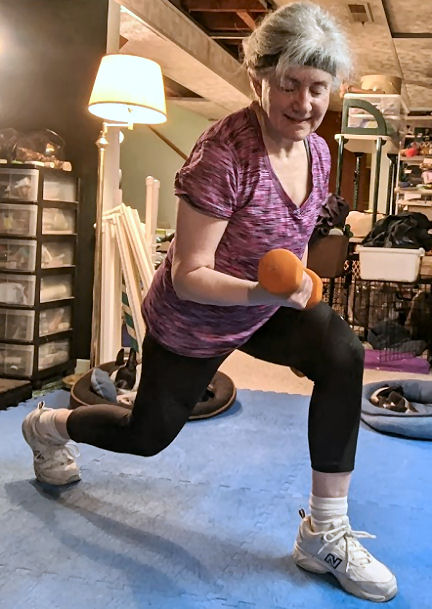
This works for exercise, too. If, like me, you don’t want to go to a gym, but can’t muster the fortitude to lace up your sneakers on your own, see if a friend wants to work out virtually with you. Or, hire a personal trainer online. They’ll make sure you get your workout done.

No matter what it is, you can get it done – with a friend.

Stack your wins

Every time you show up for something important, it’s a win. And when you stack your wins, you can’t help but show up again and again. That’s better than external motivation, because it feeds your soul. When you can nudge that pointer a little more to where you want it to be – whether it’s your scale, your bank account, your sense of purpose – you keep on doing, and you keep on succeeding.

Let’s say you want to lose 10 pounds by the end of the year. It’s the beginning (sort of) of October, so that’s totally doable. Every day that you meet your dietary goals, that you eat enough protein and short the carbs is a win. Every day that you eat the vegetables, especially those dark leafy ones, that your body needs to feel full, is a win. And every day that you don’t eat a second piece of chocolate is a win.

And when you track what you eat every day, you’ll know when you win. The FO50 Fitness Journal and Tracker has a dedicated page for writing down what you eat every day. There are also little water droplets you can fill in so you can track your hydration, which is also crucial for your health.

Exercise shouldn't hurt, but if the reward for doing it isn't motivating, make it hurt not to.

Of course, every day you exercise and move your body is also a win. You know that your diet is most important, but following a close second is exercise for your healthy aging. 

When you show up every day to the fitness party and track your nutrition and exercise, every day is a gold medal performance. 

To top that, track your outlook. When you’re feeling optimistic, you’re more likely to go outside yourself and not devolve into negativity. You’ll start thinking about others, your gratitude for them, and things you can do to help them.

Every day that you take a step toward your goal is a win. Stack your wins, and you’ll be unbeatable.

That virtuous feeling

When you really don’t want to do something that you know you should, it weighs on you. Like cleaning out that junk drawer or your closet. Or exercising. Nothing earth-shattering, just something that’s on your list for today but you really don’t want to do it. I can waste lots of time doing things other than the thing I’m supposed to do, until there’s no more time. Did you ever feel that way? And then I feel guilty the rest of the day. But when I do that thing, afterwards I get that virtuous feeling. 

You know, that “I did it! I exercised. And I’ll bet you didn’t!” kind of feeling. And that deserves a celebration. One of those mini-rewards I’ve talked about that keeps you doing the things you should be doing.

I know – if it’s stuff we should be doing anyway, why reward it?

A little push

User comments

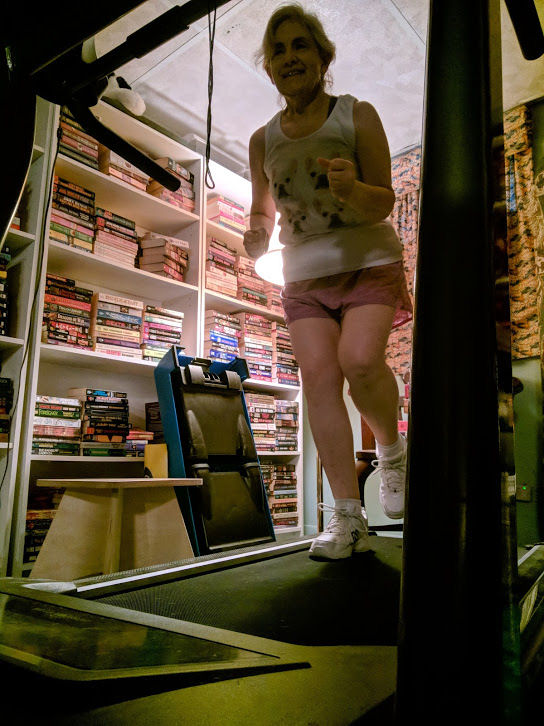
Knowing that a celebration is coming can give us the little push we need to start. I’ve talked about this before, but knowing that I get to listen to an exciting audiobook helps to get me on the treadmill. I am not a fan of running, but I don’t actively despise it like I used to. That’s mostly because of the audiobooks. It takes a while to finish a book, but listening to them keeps me coming back.

But why do we put off doing things

Most of us have a tendency to procrastinate doing things we should do. But why? Psychology Today has identified a few factors that lead to putting things off. A lack of motivation is one. I remain completely unmotivated to clean off my desk, despite numerous attempts at it. I just don’t feel the need. No one has to look at it but me. And as long as I can find the things I’m looking for, and don’t spill my water, I can’t see that it matters. If someone can persuade me otherwise, I’ll be happy to listen to them. 

On the other hand, for people who are unmotivated to exercise, there are plenty of reasons for them to do so. But if they don’t see the benefits of exercise, nothing anyone can say will persuade them. It could be that they’ll need a bigger push to lace up their sneakers.

The rumination spiral

Another reason people put off doing things is that they’re caught in the rumination spiral. If they believe they need to lose weight but have been unsuccessful in the past, they’ll be stuck in that dark spiral of “I can’t stick with a diet.” “I had a piece of chocolate. I’m done.” If they’re caught in the web of negative thoughts, of course it’s awful, and the only way out is for that person to change things up.

One small change can make a big difference

It’s easy to say, of course, but very difficult to accomplish. But just one small change of thought can make a big difference. Smile at yourself in the mirror in the morning. You made it to your feet! It’s a good thing. And that can spark more changes. Just a little optimism can put a different spin on your day. Plus, it can boost your happiness and resilience. 

Go ahead and do something positive. Something small. Throw out a scrap of paper I don’t need. Smile in the mirror. Take a walk. And you’ll get that virtuous feeling.

Take that first step

Take that first step. That’s the hard part. But it’s at the heart of every person’s journey to achieving big goals. It’s scary, taking the first step on the road to the unknown. Because even though you’ve thought about that big goal, wrote it down, thought some more, and wrote down the steps you believe can get you to that goal, you don’t really know for sure how the process will turn out. And taking that first step is like climbing a flight of stairs and then stepping off the top one into a void. 

Still thinking about it

So, if you’re like a lot of people, you think about the goal some more and decide you want to refine some of the variables a little and think some more. And then, before you know it, weeks have passed. Because you’re still thinking and refining.

But this is the road to exactly nowhere. And that’s why a lot of people’s dreams are never realized. Because they never take that first step.

Achieve goals for happiness

If you’re like me, then, you refuse to sink into that cycle of nothingness. You need to achieve goals for your happiness. Work on something that makes you fulfilled for your healthy aging.

Here’s the step-by-step method that actually works to achieve any goal.

Decide on your specific goals

Decide on the goal. Write down all of the specifics you can think of. Picture it. If it’s a house, design every room. The outside, too. And the yards. 

If your goal is a novel, decide on the storyline and the tone you want to take with it. Name the characters. Identify the location. Even design your main character’s home or office, or both.

If your goal is a vacation, decide on the location, what you want to do there, and what you need to be able to do the things you want to do. If you want to walk all over Rome, for example, make sure you have a couple pairs of super-comfortable walking shoes. And if you need to work on your endurance, add that to the plan.

Break it down and identify intermediate steps

Now that you’ve identified your goal, break it down. For our vacation example, there are a few intermediate steps – location, itinerary, and ability. 

For each intermediate step, break it down further. What parts of Rome do you want to focus on? Do some research there. What museums, historic attractions and restaurants do you want to visit? Do you need to make reservations for anything now? (There are vacation planners online that can help you.)

And if you need to increase your endurance, how can you proceed to be in the best shape by the time your trip comes around? First, assess your current fitness level and compare that to what you need to tramp all around Rome. And figure out what it will take to get you to that level. Start walking 1500 yards today, 2000 tomorrow, maybe a mile by next week. If you have a smart phone, there are apps that can count your steps if you put it in your pocket. If you like the walking shoes you’re wearing now, perhaps buy a couple more pair and break them in before your trip.

Take that first step

Now, you’ve identified the progression. You’ve achieved the mindset to make your dream happen. You know what to do. And you know what that first step is. It’s no longer so scary. So, go ahead and take it.

Get ready for the dark months with the Great Lock In

One of the latest fads on TikTok these days is the Winter Arc or Great Lock-in. You’re thinking, “Didn’t we do that last year?” Because we did the Winter Arc challenge last year. But this year, it’s a different way to get ready for the dark months of winter. The Winter Arc was all about focusing on the mental and physical side of your health and well-being. The goal was to become calm and really dialed into exactly what was needed for that.

A different way to get ready for the dark months

This year, there’s a fresh approach. The Great Lock-in, embraced by Gen Z (born between around 1997 to 2012), but is actually good for everyone, is about getting yourself ready to achieve those big goals you have for yourself by the end of this year.

The viral TikTok post from @kadieglenn centers around self-trust. Because you’re not going to be able to achieve the big things you want if you can’t trust yourself to actually get there. You’ll recognize her points, but she’s finding a new audience with her post. So, be true to yourself and let’s get ready for the dark months of winter when we’ll crush our big goals.

Start small

Kadie Glenn, a London-based influencer, says to first start small so that consistency is easy. I’ve recommended that you break all your goals into little pieces so you’re not looking at that big, overwhelming one. Glenn gives the example of not saying you’re going to hit the gym five days a week when you havn’t been there all year. Start with two days. And if you’re successful with that, then you can scale up to more.

Track your wins – doing it is a win

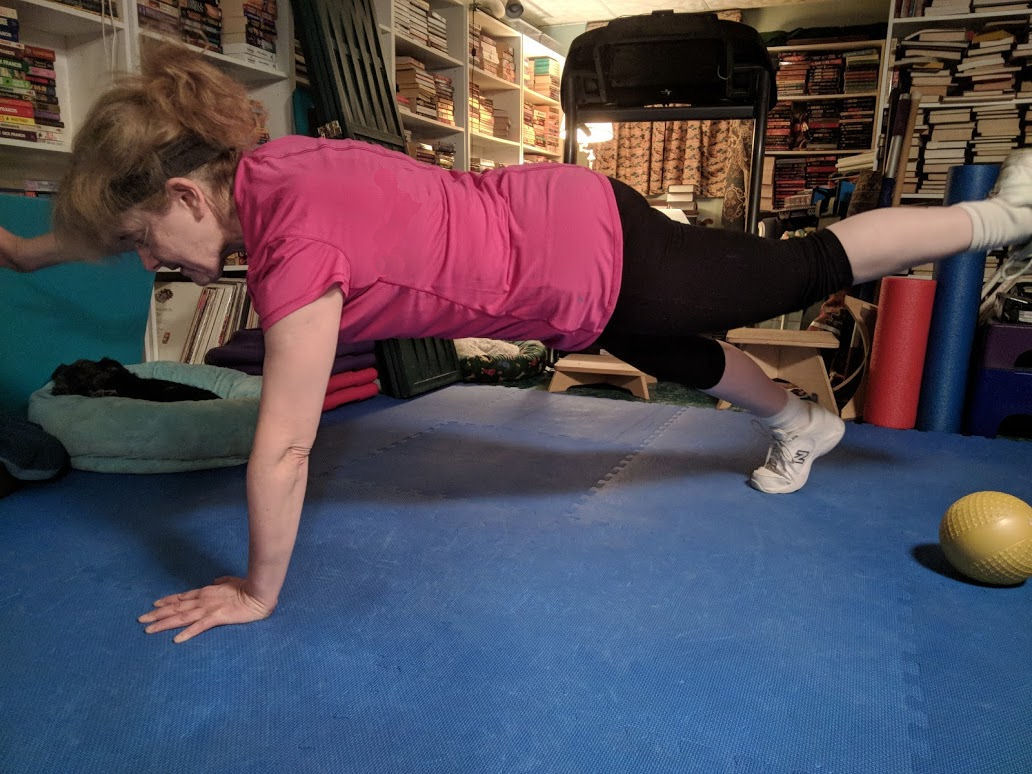
I tracked every second as a win, working on the Balance Plank pose.

Next, track your wins. Glenn says one way is to use a habit tracker so you show “proof of progress.” Progress is a definite win. When my arms were shaking, practicing the Balance Plank, before my face hit the mat, I was counting the seconds. From one to three, then five and ultimately ten seconds. Those incremental seconds were wins for me. 

Once is okay, but twice?

Third, Glenn’s rule of “Never Miss Twice.” Sure, things happen. You can go off the wagon for one day. Eat the pizza. Miss a workout. But not two days. This gives you permission to take a mental health day. There have been days when I just couldn’t face that treadmill. I’m human. And even though I committed to my treadmill two days a week, there have been times when I just couldn’t. If you miss a day, it had been all too easy to give in to the shame and self-disparagement. You say, “I’ll never get it. I’ll never be able to resist the cheesecake.” But the “Never Miss Twice” rule acknowledges that we’re only human and have flaws. Get right back on the wagon and continue. There will be bumps in the road. Acknowledge them and move on.

Drop what doesn’t serve

And finally, “Create fiction and flow.” Create friction with those bad habits. Drop the habits that no longer serve you. If you need to delete apps off your phone, do it. If you need to delete so-called friends from your social media feed, do it. And the same for real people. This is more difficult, but probably more necessary. Drop those toxic influences from your life. Eliminate the annoyances where you can. Acquire a problem-solving mindset.

Here’s a personal example. You know that my sister and I live together. Sometimes she washes her hair in my bathroom – no big deal. The sink is nice and deep and has a goose-neck faucet. I used to keep a cup near the hot water lever. It wasn’t in the way, but my sister insisted on moving it every time. The problem was that she moved it to a spot where I consistently knocked it to the floor. It’s a small thing, but it annoyed me. So now I keep my cup in a spot that’s out of the way, not on the sink. Problem solved.

Create flow with systems

And at the same time, create the flow you need to become the person you want to be. Glenn gives the example of being frustrated every morning, rushing to find your gym clothes. So, make going to the gym easy by setting your clothes out, including shoes, the night before. That works for career dressing, too. Or creating a task list for the next day in the late afternoon, when you know what’s not going to get done today.

Glenn’s post ended with a saying that makes perfect sense. “We do not rise to the level of our goals, we fall to the level of our systems.” So if we create systems that work to advance us toward achieving our goals, we’re bound to be successful. Let’s get ready for the dark months so that we crush those big goals at the start of the new year.

Introverts fail at this

We’ve seen lots of discussions lately about emotional intelligence. But many introverts fail at this. I’m an introvert. I’d much rather send an email than talk to someone. I’m writing this the day after Labor Day – and yesterday was absolutely fantastic. I spent most of the day with my dogs just relaxing. I read a good book for hours. No contact with the outside world. And it was great. So today (and most days, actually) I’m a little on edge because I do have to interact with other people. Most people’s worlds depend on successful interactions with others. And many introverts fail at this.

Imperative for success?

Many experts believe that emotional intelligence is imperative for success – for getting ahead, and even being happy. But introverts have a hard time with at least one, probably more, of the key skills that emotional intelligence requires.

We hear the term “emotional intelligence” being kicked around a lot lately, but what does it entail? 

The keys to emotional intelligence

Self-awareness – this means that we are able to recognize our own emotions, choices and actions and how they may affect others. Introverts usually don’t have a problem with self-awareness. If anything, we’re too self-aware.

I'm an introvert. I'd rather play with my dogs than interact with people.

Self-regulation – the “ability to process and express emotions constructively, adapt to changes flexibly, and manage conflict effectively,” according to Psychologist Daniel Goleman. Sometimes I do have a problem expressing my emotions clearly and in a way that others understand without having to take action.

But here’s the big one – social skills. Goleman defines this as being an active listener and a strong communicator who can form “high-trust relationships.” This an introvert does with only a very few people. It takes a lot for us to really trust others.

Empathy and motivation are the last two emotional intelligence skills that Goleman identifies. Again, we don’t have a problem understanding and feeling for others. We can usually respond to others’ emotions in a careful and caring way. And we introverts can have a highly developed drive to seek out learning experiences and get things done.

How does this impact introverts?

So how does the lack of social skills impact us introverts? By not forming those “high-trust relationships” with others, we risk not having the camaraderie of others. Successful teams form relationships seemingly forever. And having those relationships adds a richness and fulfillment to life. Different people can add different perspectives to our own lives. They’ll bring up ideas that we may never have. Others have different backgrounds that can only add color and variety to our own lives. So, as much as it’s difficult, we introverts have to push and open ourselves to others for our own health and resilience.

The simplest can be the best

Why walking is a game changer for your healthy aging

Aging is different for us than for our parents. It seemed like our parents and grandparents welcomed the aging process. I remember my grandmother being terribly vain about her appearance, but not really doing much for her physical well-being other than visiting the doctor regularly. Exercise was not a priority for that generation. I think my grandmother would have laughed me into next week if I suggested she just take a walk with me. Walking is a game changer, though. The simplest exercise can be the best.

Movement of any kind is good

Movement of any kind can help us live longer and be happier. The World Health Organization says that inactivity can lead to an increased risk of chronic diseases such as diabetes, cardiovascular disease and certain cancers. And adding walking to your day is as easy as lacing up your sneakers. Park a little further away from the grocery store. You’ve got a cart for the groceries you buy, so walk the extra distance. And if it’s one of those deals where you rent the cart for a quarter, you’re getting double the benefit when you have to walk it back for your quarter. 

The simplest exercise can be the best

Walking is easy. You don’t have to think about it – walking is just something we’ve done since babyhood. But it turns out that the simplest exercise can be the best – because you’re doing it.

walking, the simplest exercise, can be the best

Walking adds “repeated resistance” to our leg muscles and bones, making them stronger. Our hip, knee, and ankle joints’ mobility benefit from walking, too. And walking increases our endurance, too. If we want to continue participating in activities, then endurance is crucial. We want to be able to outlast those dogs or grandkids.

The number of steps you take can be a fun number to track, and that’s important, but the time and intensity of your exercise is the thing that matters most. If you’re taking a leisurely stroll, then you’ll have to do it for longer. But if you’re power-walking, then you’re working those legs at a higher intensity and the minimum 20 to 30 minutes three days a week should be sufficient. The latest guidance is that participants in a study who walked 8,000 steps twice a week had lower mortality from any cause than those who were sedentary.

So, go ahead. Lace up your sneakers and take a walk.

If you don’t try you can’t fail

Failure happens. Get used to it.

We’ve talked about failure before. We have high hopes, set lofty goals, take some steps toward that goal, and then … it’s not working. Or you know steps that you need to take if something’s going to happen (like making a call that could possibly open doors for you), but you don’t do it. Why? You think the person on the other end will say no. No one wants to fail. We’ll do pretty much anything we can to avoid it. But the more we can recognize the fact that failure happens, the better our chances are that we can move past it.

Our minds skip over the possibility

We don’t want to think about failure. Our minds just kind of skip over the fact that failure is a possibility in our endeavors. So not thinking about failure can be a way to avoid failure itself. The problem with that is that if we don’t try, we’re not successful in our endeavors, either.

A paper a few years ago showed that even motivated people don’t try out their ideas because they’re afraid of failing. Fear of failure does hold us back. Society has told us to stay positive, so we do – and don’t even think of failure as an option. But it’s always there, niggling in the back of our minds. We’re afraid to fail, so we don’t try.

On the other hand, if we accept the fact that failure is an option, it might happen, then we’ll put ourselves out there. Sure, once we do, we can still fail. And another study says that the fear of failure may return.

That’s why we have to rehearse failure. Prepare for the contingencies. Josh Davis, Ph.D., says that just a few shifts in our mindset can have us trying the things we used to wait on. Instead of justifying not doing something – it’s not ready, or I’m not ready for people to say no – prepare reasons for doing it anyway. 

And if it’s something inherently personal, like starting an exercise program, if you’re scared of what people will say, the same shift helps as well. Expect your family to give you resistance and pooh-pooh the idea. They may say, “Oh, you look great as you are!” And you can say, “Thank you, but I expect I’ll feel even better doing it.”

Feel exhilaration in the process

Instead of feeling let down, prepare to feel exhilaration in the process.

And instead of fearing the “no’s,” prepare to hear “no” and find out the “why’s” so that you can make it better. The more you put yourself out there, the more you can change with the new information you learn. You’re more resilient. And you’re learning. All that contributes to your healthy aging process.

So the sooner that you realize that failure happens, the sooner you can get on the road to success.

Positivity is overrated

Don’t develop a positive mindset, develop a belief mindset

Positivity is overrated. It’s really not a good thing to be a Pollyanna. It’s not enough to be positive. Pollyanna was just a book (also the main character. Pollyanna is a novel by Eleanor H. Porter, published in 1913). These days, a “Pollyanna” is someone who finds the positive in everything and finds something in every situation to be glad about. The last few weeks I’ve been talking about mindset, and how you can change your own to help you become more resilient and even achieve your goals. So you might think that all you need is a positive mindset and you’re on your way to rainbows and unicorns.

No unicorns yet

But getting to the finish line takes more. Yes, you need a positive mindset, but you also need a deep-seated belief in yourself and in what you’re attempting to achieve. Your mindset is more than stating that you’re being positive. Or even that you believe in what you’re doing. It’s your taking action every day toward your goal, in keeping with that mindset.

If you have a goal to be active every day, then saying to yourself, “I know I can move every day!” doesn’t really accomplish a whole lot. But, if every morning you wake up and walk for 20 minutes, that’s not a huge investment in time, but it lays a solid foundation for success in achieving your goal. It also goes a long way toward your healthy aging – putting your health first – and toward improving your resilience. You’re demonstrating that you do what’s needed every day to achieve your goal.

Positivity had no place when Tango was young.

My dog Tango started out as a reactive, biting, snarling, shark of a puppy. He was 11 months old and hostile to everyone and everything except me. Tango let me do anything to him. When I first met Tango at his breeder’s home, I had no idea of his real personality. It was a controlled environment and so I didn’t realize until I brought him home what a challenge he would be. I had plans for Tango – we would train and compete in Agility and he would be fantastic. 

So I brought Tango home, full of positivity and dreams. And then reality hit. No Agility training for Tango – at least not until he was able to go out in public without trying to lunge at and bite everything in sight. I had to shift my beliefs. Tone down that positivity.

Deep-seated belief leads to work

I still believed that I could turn Tango around. So we trained. And trained. For months. I went out with him, getting him used to the world, or my corner of it. I shifted my mindset from blind optimism and positivity to belief that it was in my little dog to be a great partner. I paired that belief with a realistic plan of individual training and then group classes. That plan was ever-changing, depending on what Tango and I needed for the next few weeks.

And with that shift came new challenges. I was able to try new things and introduce new places to Tango. The group classes were always challenging since I had to be ever-watchful. But I believed that we could still be successful and so we persisted.

Reality now.

Positivity is overrated, but belief and working at it every day brought the goals to fruition.

Flash forward to today. Tango competed in both Agility and Rally (a slightly slower dog sport) through the Master Classes. The photo is of Tango competing in Agility. He got more ribbons than I want to count, and more titles than any other dog I’ve owned. He’s sixteen now, and spends most of his days snoozing in a comfy bed.

But if I hadn’t had the deep-down belief that we could actually do it, Tango might not have made it past his first year.

Positivity is overrated on its own. But pair positivity and belief, and a willingness to work at the goal every day, and there’s no telling what you can achieve. It worked for Tango’s reactivity and it will work for your fitness goals.

Worry is a waste of time

Worry is a waste of time. And yet we can’t help ourselves. I’ll include myself in this group. I’m a worrier. Most of the worry is nebulous and not about anything specific. Some worry is about whether or not a certain event will occur. Sometimes I even worry about the weather. None of this worry is productive. The worry is omnipresent. And it’s not good for us.

I worry about storms

Worry causes our anxiety to spike. And we know that anxiety is not healthy. An article in Harvard Health Publishing states that when we’re under stress, we’re prone to headaches, nausea, muscle pain, and other ailments. There is nothing actually physically wrong with us, but we’re manifesting these symptoms. And stress over the long term can cause your blood pressure to rise and loss of sleep.

My favorite method to relieve stress

Focus on fitness to relieve stress.

I’ve written about various methods that can calm stress and address anxiety. My favorite is still my fitness routine. When I’m exercising, I have a half hour or forty minutes that I have to pay attention and focus. I can’t let my mind wander.

Let them … what?

A new trend on addressing stress comes from best-selling author Mel Robbins. Her “Let Them” theory, which is not new, helps us believe that we have no power over others. They’re going to do whatever it is they’re going to do and we can’t influence their actions. We only have power over our own actions. How we react to others is the only thing we can influence. 

The more we let others do their own thing, the healthier it is for us. Worrying about what the other guy is going to do is not going to persuade them in any way, and the only result of that is to make us sick. Worry is a waste of time. This is a powerful mindset. Accepting that you can’t do anything about what others do can help you make room for a more positive mindset.

If there’s something to do, do it. Otherwise be like Elsa.

When we start thinking about the world situation, or the weather, or what your crazy neighbor will do (we’ve been lucky enough to not have too many crazy neighbors), just ask yourself what you can actually do about it. If it’s nothing, then ask yourself how you can prepare for whatever outcome you’re most anxious about. And do that. Or, be like Elsa in Frozen and let it go. Your blood pressure will thank you. You might sleep better. And you’re doing more for your healthy aging and your resilience than sitting and worrying about what might never come to pass.