Creaky on rainy days?

3 ways to ease your aching joints

Even without arthritis (thank goodness), I’m noticing that I get creakier on rainy, damp days than I used to. If I’m sitting for even a half hour and get up, my knees and hips let me know that they exist and are not happy with the current state of affairs. Even my shoulders are stiffer. The first couple of shuffling steps involve gradual straightening and shoulder-rolling. A hand to the lower back is also sometimes required to straighten up. The next couple of steps are better, and before I’m halfway across the room everything is back to normal. All this is probably normal, but it still gives me a knock on the head that I’m getting older.

Now, before you suggest moving to the desert where it’s hot and dry, there are things we can do to keep our aging selves limber.

Stay hydrated
Stretch!

I know it sounds weird – recommending water to alleviate stiffness. But, a paper from the T.H. Chan School of Public Health at Harvard says that drinking enough water each day is crucial to regulate body temperature, keep joints lubricated, prevent infections, deliver nutrients to cells, and keep organs functioning properly. Being well-hydrated also improves sleep quality, cognition, and mood. So, drinking water keeps us moving in more ways than one!

Get up!

You know Newton’s First Law? A body at rest stays at rest. And atrophies. It’s a good idea to get up and move around periodically to keep the lubricants in our joints swirling around. If you tend to get involved in activities and lose track of time, set a timer for every hour to remind you to get up and move around.

Stretch

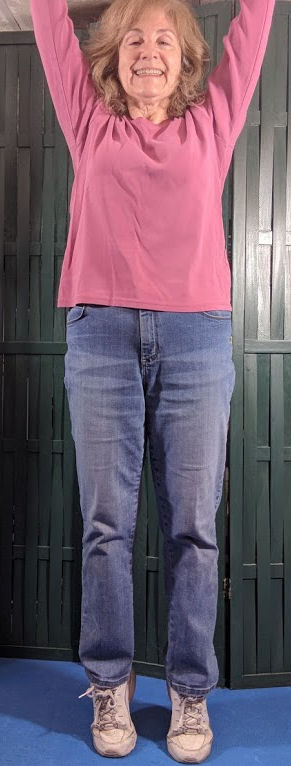
Another great way to feel less joint stiffness is to do some stretching. Stretching increases joint flexibility and can reduce stiffness. Another benefit is that some stretching exercises will also increase your balance and coordination, preventing falls.
Multitasking can be dangerous

We’ve already established that as we get older, our balance diminishes unless we actively do something about it. But what does that mean in real life?

Walking and talking

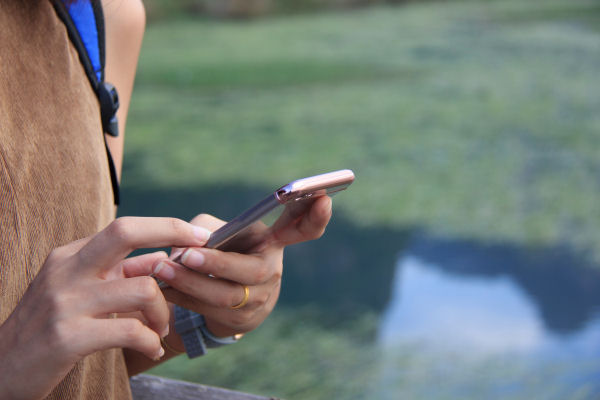
Walking and scrolling may be dangerous

If we’re taking a walk outside when the weather is nice, we may be looking at the trees or noticing the flowers. If we add something to the mix, like talking on our phone – we may not notice the uneven pavement. Talking with friends is great, but we get so involved in the conversation – agreeing with or arguing about a topic with the friend – that we get distracted. If we’re distracted, we’re not paying attention to where we’re going. While we probably won’t run into the walker ahead of us, we may not notice the huge crack until it’s too late. So we may want to wait until we get home to call our friends. Listening to a podcast or an audiobook is different. We’re not actively engaged in that second pursuit, so we can focus on our steps. If you’re in a safe area, by all means, plug in those earphones (or airphones, whichever…)

Overload!

Carrying the groceries into the house from the car can be another dangerous pursuit. Don’t overload. And don’t try to carry too much at one time. If you overload the bags, they may be too heavy for you. Don’t hurt yourself by trying to lift too much weight. And if you try to take too many bags at once, you won’t be able to see the ground in front of you and could trip over something in your way that you don’t see.

Multitasking – dangerous for your health

Cooking while watching TV and scrolling your newsfeed or checking your email? You may want to cut one of those activities. I know – you have to put dinner on the table and that’s not the most exciting thing. By all means listen to the news on TV or on your phone, but don’t watch an adorable cat video at the same time. You don’t want anything to get burned – especially your dinner.

And multitasking could reduce your productivity – read more.

The moral? Pay attention. Multitasking can be dangerous.

Add aerobics and improve your balance

I frequently stress the importance of improving balance, especially as we age. The aging process naturally diminishes our balance since our senses tend to deteriorate. Vision and depth perception diminish, as well as the vestibular system of the inner ear. Even our sense of touch, especially the ability to feel the floor when our foot touches down, tends to diminish as we get older. All of these contribute to decreasing our balance. Strength, coordination and reaction time also diminish as we age, contributing to loss of balance. Pretty depressing, but it’s better than the alternative.

Adding aerobics to your balance exercises can increase stamina and endurance.

In addition to the balance exercises that I include in the Week of Balance download, aerobic exercise can improve your balance. Of course, movement of any kind can help with balance, but it’s very easy to just sit down and not think about moving. So a planned exercise session most days is an easy way to get our movement in if there’s nothing else on the schedule.

Increasing stamina and endurance

Personal trainer Sabrena Jo who is certified in working with seniors and is the American Council of Exercise director of research content says, “one reason people tend to trip or fall is that they have low stamina or endurance.” By adding aerobic activity we increase both cardiovascular stamina and endurance. Plus, it’s usually done to music which enhances our optimism. An added bonus is that an aerobics class can burn a lot of calories!

Aerobics also burns fat and calories

Aerobics has always been a favorite to burn fat and calories. It reduces the risk of heart disease, can help lower blood pressure, stroke and certain types of cancer. It can also improve cognition. And aerobics is a weight-bearing exercises so it can lower your risk of osteoporosis.

Of course, if you’re going to add aerobics to your exercise regimen, be sure to check with your doctor. And choose your aerobics wisely. If you have bad knees, take that into consideration.

One final note: be sure to add an aerobics exercise that you will do regularly. Once and done will do absolutely nothing for your balance, your heart, your weight or your bones. Choose an aerobic activity that you’ll look forward to doing.

A solemn anniversary – be good to yourself

Today is the 19th anniversary of the day our safe little world ended. September 11, 2001 – the day terrorists took over 3 planes and did so much damage the world changed forever.

The world came together

Be good to yourself

In the days following 9/11, people the world over came together to deal with their stress and grief. We honored the first responders. We grieved with the families of the fallen. We tried to come to terms with the events of that horrible day.

My sister and I had reservations for a vacation just a few weeks after 9/11 – a hiking tour around parts of Quebec. The trip went on, and even though friends said that to be prepared for French Canadian haughtiness, the predominant feeling I got from the people we met there was camaraderie and friendship. The world did, indeed come together.

Another crisis today

These days, we’re in the midst of another crisis – the global COVID-19 pandemic. Everyone is dealing with the same crisis, dealing with stress and uncertainty about the future – even uncertainty about the present.

Similarities

Rev. Kevin Massey, who worked as a Chaplain at Ground Zero in New York City after 9/11, sees similarities between the two events. “These days are very similar to those,” Massey told WGN radio. “At that time, we felt uncertain about what was next. We feel that now, too. We were afraid and anxious. We feel that now too. At the same time, was there not a spirit of unity that drew people together?” he says. “I see that happening now all over the place as well.” Massey talks with health care workers, helping them get through times of stress.

Importance of Resiliency

And Rev. Massey talks about the importance of resiliency – the ability to bounce back from tough times. “To be deeply affected does not mean that we are defeated,” he said. “And it turns out that resilience can be bolstered through practices of self-care and self-nurture and seeking human connectivity.”

So, be good to yourself! Give yourself a break. If you don’t get everything done that was on your to-do list and you worked hard, so what. Take a little extra time to breathe air. Enjoy some nature – even if it’s just pictures. Share a favorite video.

And reach out to friends. Start a Zoom call. Or just send a message that says you’re thinking about them.

Learn more about how you can become more resilient in the free ebook.

Practice your balance

Balance is key.

Your balance is not going to fix itself.

Yes, I harp on balance a lot. Because it’s necessary. Yes, it’s the summer. No, you’re not going to slip on the ice tomorrow and fall and break your hip. I know there are still months of warmer weather before the first snowflake falls.

Use those weeks wisely.

As I learned, balance is something we lose as we age unless we do something about it. My article in “Scary Symptoms” describes my introduction to this sad fact.

As we age, we lose our balance. It may not be noticeable when you go about your daily lives. But, that first patch of ice in the fall is a rude awakening.

I see so many stories in the winter of people my age, and even younger, who fall on the ice and break bones that are already brittle – another result of aging. Kathleen Cameron, a Senior Director at the National Council on Aging, told me just how big a problem falls and loss of balance is for older Americans: https://fitness-over-50.com/2017/07/prevent-falls-my-interview-with-kathleen-cameron/

Of course I’d rather age than die, but it certainly becomes almost a full-time job to counteract the effects of aging. As they say, though, “Use it or lose it!” That applies to muscles, bones, eyes, ears and balance. We exercise and eat right to maintain our muscles and bones. We try to take in the right nutrients to help our vision and hearing. And we have to practice our balance to keep from losing that too.

Practicing balance is easy. It just takes a couple of minutes a day. Go grab my “Week of Balance” download – just click the link on the right side of this page. It’s got a week’s worth of balance exercises plus a bonus or two. If you do one of these every day, your balance will improve. You won’t need to grab the counter when you try to stand on one foot. You’ll climb that step stool without even thinking about it. I’ve said it before – I multi-task and stand on one foot while I brush my teeth in the evening.

So – Read the article. Grab the download. Practice your balance. No fancy equipment needed.

Fix these 5 mistakes to help your back pain

Even a modified plank works the core, which will help your back.

As we age, we seem to be more susceptible to certain kinds of pain. For me, it’s my back. I’m sure that some of you are experiencing more back pain too. I’m working away, then get up from my desk to check on stock and … POW!!! … that unmistakable twinge in my lower back that tells me that I’m going to have pain for the next few days.

I try to sit properly – not hunched, both feet on the floor, not twisted. I don’t know why I’m prone to back pain. It was never an issue when I was younger. But I am now and have to deal with it.

In my research, I found 5 mistakes to fix to try to alleviate or eliminate back pain. I’m not sure that all of these apply to me, but some do. And they may apply to your situation.

  1. Performing repetitive physical activities the same way every time. Take a different approach when doing things you do often. For example, if you frequently carry a heavy bag on one shoulder, try switching sides regularly to change the load on your spine.
  2. Don’t bend from the hips and lift. I’m certainly guilty of this. I frequently just bend at the hips to pick up something. When I empty the dishwasher, I frequently just bend over to get to the bottom rack. Experts recommend that you squat with your back straight and chest up to take pressure off the spine and not push out the disks in your lower back.
  3. Don’t sit or stand all the time. I try to get up frequently, but sometimes get caught up. Experts say you should move around or take a walk at least once an hour. This will boost your productivity as well. Give you a change of scenery and spark creativity.
  4. Don’t neglect your core. I’ve said it before – a strong core promotes a strong back. I’d hate to think what my back would be like if I did neglect my core. Experts say we should strengthen the key muscles that support the back – the multifidus which runs along the spine, and the transversus abdominis which wraps around the abdomen. Planks have gotten some bad press, but they’re great for the core.
  5. Don’t move in ways that feel wrong. Avoid twisting and lifting at the same time. I’m guilty of this at times. That old dishwasher – I bend to stack the plates and then pick them up, twisting to get to the cabinet. Note to self: be more conscious of this! And ask for help with heavy or awkward objects.

And, in general – listen to your body. You know it best, so if something strikes you as wrong, go with that instinct. Otherwise you may pay for your bad judgement later. 

Increase optimism, grow resilience

Yoga helped me regain my balance and increase my optimism today. That will help to grow my resilience.

In these uncertain times, we’re scared, we feel lost. The only way we’re going to get through this is to grow our resilience. One sure way to do that is to increase our optimism.

Most of the country is sheltering in place now, to try to “flatten the curve” of the COVID-19 virus. There’s no cure, it spreads like wildfire, and it’s dangerous to many who catch it.

The economy has come to a standstill, since many businesses are closed. Restaurants and theaters are closed. People aren’t buying anything (except, perhaps toilet paper and hand sanitizer). We’re told to maintain “social distancing” – stay at least 6 feet away from others.

It’s scary and we don’t know when it will end.

But it will end. One day, hopefully soon. And to get beyond this time with anything approaching normalcy, it’s crucial to grow our resilience. To come out stronger and happier.

How do we grow our resilience? One sure-fire way is to increase our optimism. When we’re optimistic, we feel happier and more able to look forward.

So, how do we increase our optimism? One sure-fire way is to exercise. The endorphins that are released help, and the increased oxygen and blood-flow are supporters too. I know, personally, that I always feel better after a workout.

Today I did a Yoga practice. Nothing too strenuous because it had been a while since I did Yoga, and I didn’t want to feel it for days afterward. But it sure felt great today.

Another way to feel happier and more optimistic is to put on some favorite tunes and move. Just get moving. The music and the movement all contribute to feelings of optimism and well-being.

Go for a walk. Pet your dog. Read a good book. Make your favorite meal (not too calorie-laden, though!). You’ll feel better.

And every time you do, you’ll increase your optimism that much more and grow your resilience.

Yoga Day

Happy International Yoga Day!

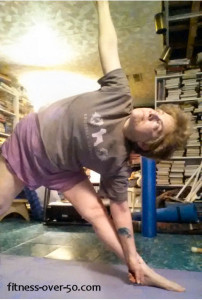
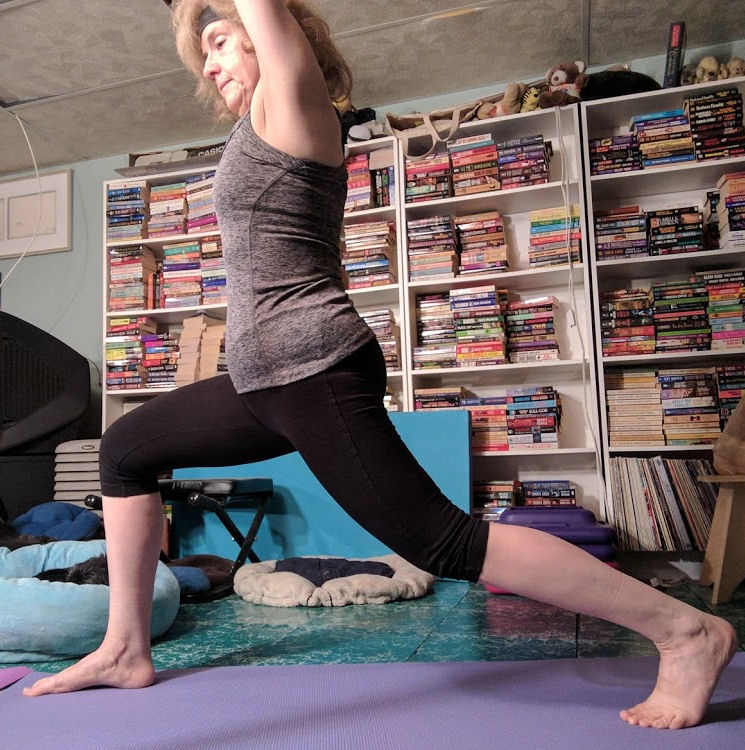
Crescent pose for International Yoga DayThere are millions of yogis around the world celebrating International Yoga Day today. Are you one of them?
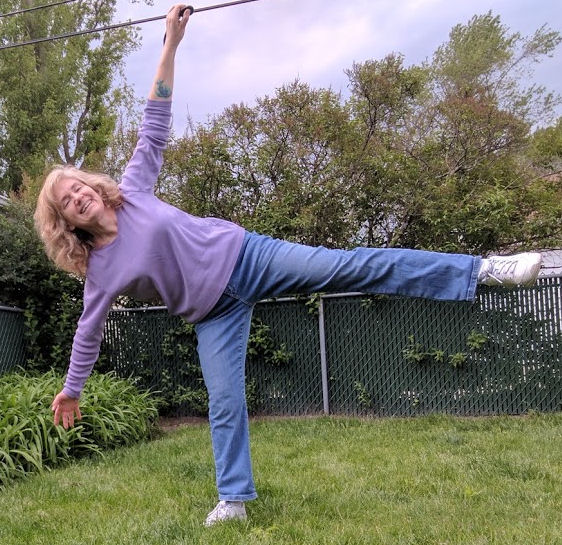

I am. I’m not a consistent practitioner, but from time to time I enjoy an hour of yoga. Chances are, I’d creak less if I practiced more, but I have to admit I prefer other workouts most of the time.

Why so many?

So, why do so many people practice yoga? For some, it just makes them feel better. They say it centers them and are more present and in tune with their body.

A few health benefits of yoga

Others appreciate the health benefits without delving deeply into the mind-body connection. With a consistent practice, yoga will improve your flexibility, strength and posture. Every pose emphasizes these. A focus on breathing is instrumental in improving all-around fitness.

Flexibility

Practicing yoga – just the Sun Salutation for just 15 minutes a few times a week will improve flexibility. And you’ll be breathing deeply, increasing your energy level.

And you don’t have to be flexible to start with. Every pose has modifications. No one is perfect. Everyone is improving.

Cardiovascular

A Flow practice improves cardiovascular health too. My favorite yoga instructor taught an incredible Flow class – different every week – that left us breathless and flopped on the floor like a rag doll after the final Shavasana.

Stress reducer

Many yoga poses are designed to reduce stress and increase calm. It’s been shown that a regular yoga practice can reduce stress and even promote better sleep.

Increase energy

On the flip side, many yoga poses, especially when combined, increase energy and leave you raring to move more. Even without caffeine, that Flow class left me energized and ready to tackle chores.

I’m convinced

I think tomorrow I’ll practice yoga instead of do a cardio workout. I’ve convinced myself!

Many aspects of fitness

The aspects of fitness are more than physical

Fitness is not just physical – there are many aspects of fitness.

We’ll be focusing on each of these aspects in more depth soon, but an overview might be helpful here. Because it’s the most obvious, let’s talk about the aspects of physical fitness. Health, balance, strength, cardio fitness are all elements of physical fitness. What you do to increase one aspect of physical fitness helps another.

Balance is one aspect of physical fitness

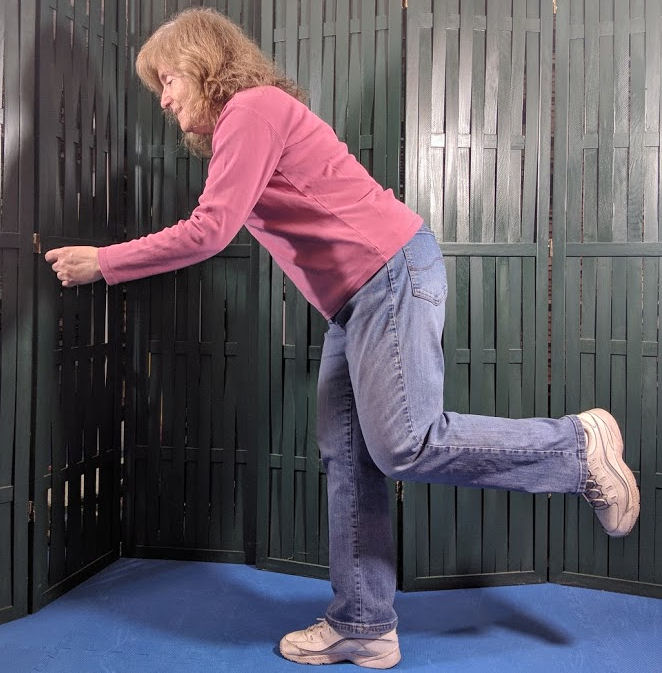
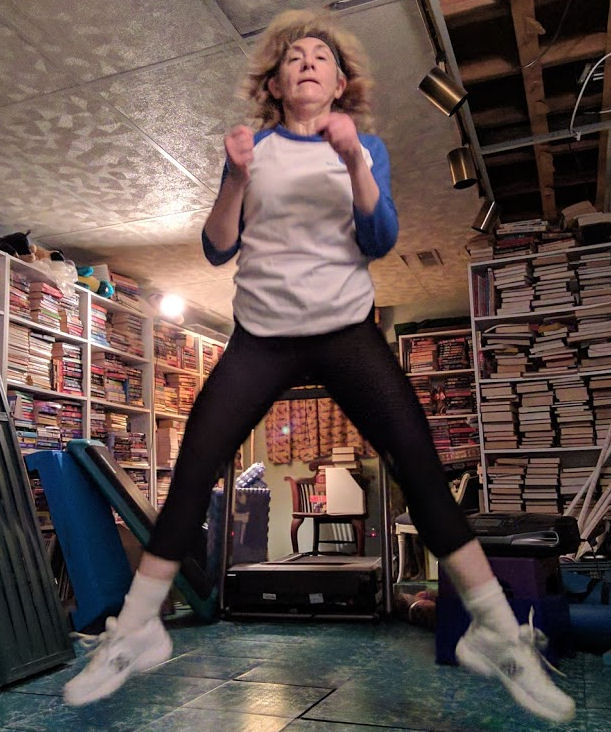
Balance moves like this one also improve strength.

As an example, by practicing your balance (and you can get a free Week of Balance by subscribing to my newsletter!) will increase your strength. By doing a cardio workout, you can also increase your strength and balance – think of hops and side-to-side leaps. Even jumping in place can improve your balance.

If you focus on improving your strength, you’ll probably also improve your balance. Those one-legged squats will definitely challenge your balance while at the same time increase your strength. Add a pair of dumbbells and you’re working upper body as well as lower body strength. (Talk about multi-tasking!)

Eating clean will also improve fitness

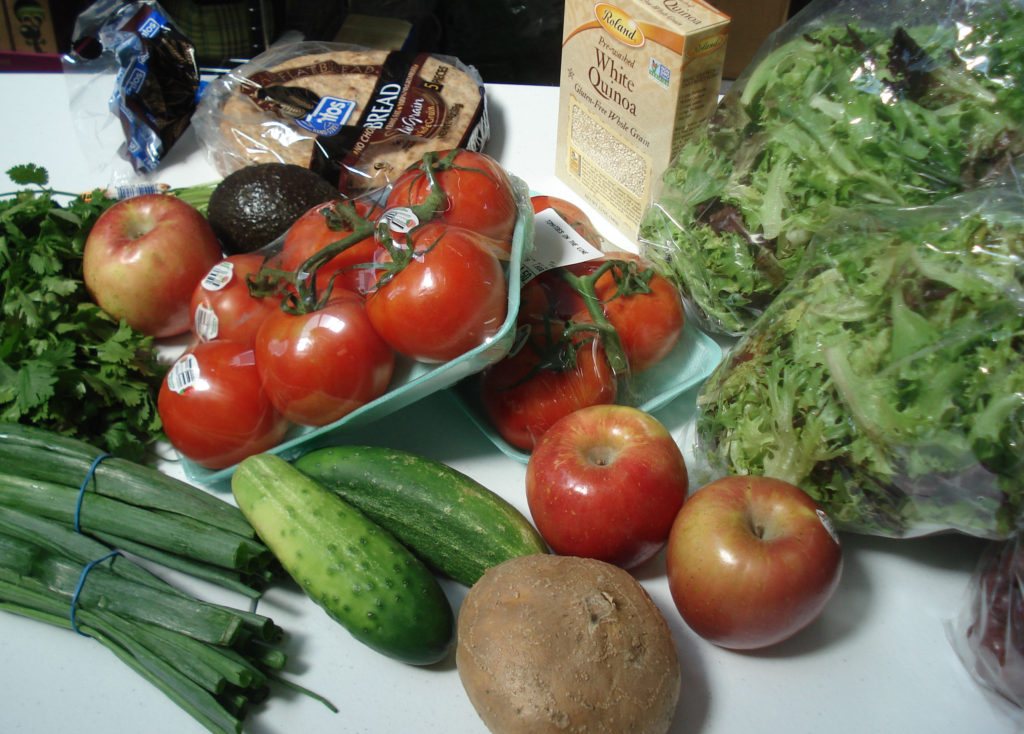
Eating clean helps your overall fitness.

We can’t talk solely about physical fitness, because so many aspects of your life can affect it! If you focus on eating clean, you’ll improve your overall health, you’ll feel more like exercising and thereby improve your strength and cardio fitness!

And by attempting to eat a cleaner diet, you’ll not only probably lose a little weight, you’ll be cleaning out your system. More fiber in your vegetables and fewer processed foods will tend to move things along in your digestive system.

Mental fitness may be more difficult

Mental fitness is like a dresser. Here's an organized drawer. An achievement to strive for.

More complex is the aspect of mental fitness. I like to think of this as a bureau, or dresser. Currently mine is a mess. Socks are mashed in with underwear, t-shirts and pajamas. There are even swim goggles and pantyhose in there. There’s no order in those drawers. Too many ideas, problems, chores, and other things to do are running around in my head. How’s yours?

First off, a plan is probably needed. I need to figure out what to do with all those items. How best to organize them? I really should start to write everything down. Then categorize them. This is called a “brain dump.” I should really do this every month or so.

If all the aspects of fitness work together – body and mind, happiness ensues. I’ll have to try it. Let’s start together!

It’s impossible

Balancing everything in your life is impossible. Prioritization and scheduling are key.

It’s impossible to do it all and achieve balance

It’s literally impossible to do it all. You’re trying to balance all aspects of your life, and there’s just too much. Work and family. Chores and friends. Clean out the closet. Read that book. Train the dog. Go grocery shopping. Sleep and everything else. Something’s got to give.

What gives is you …

There just are not enough hours in the day to complete everything. Usually when that happens the things that don’t get done are the things most important to you.

Should other things come before you?

You put family first. Your home. Your job. All those things are important, certainly, but without you, your health, your sanity, you won’t have those things.

Balance is the key

The only way to keep your sanity and stay happy and healthy is to have balance in your life. Balance work and family. Balance your chores with your friends. Don’t spend an hour a week training the dog when just a few minutes every day will give you immeasurable progress! Get the family involved! A shared load is an easier one. And if everyone helps, they’ll all have an investment in the outcome, ensuring its success!

How to get balance?

So, how do you achieve this balance? Prioritization is paramount. Write everything down that needs to get done. This will probably take the longest! Prioritize tasks. Make notes on who can help you with them. Call a family meeting and let everyone know that you’re feeling overwhelmed but that they can help you! You may be surprised at your family members’ willingness to chip in. Especially if you break jobs down into very small, specific tasks. If something seems like it won’t take a long time, it’ll get done!

A calendar will help

Now that you have your tasks, schedule their completion! A big wall calendar will keep the whole family on task. And if everyone writes in their jobs, their investment will continue and things will actually get done!