The good stress

When I think of “stress,” my brain starts whirring, my heart starts pounding, I start to sweat, and I’m not happy. Most people, I think, react the same way to most stress. In fact, the World Health Organization defines stress as “any type of change that causes physical, emotional or psychological strain.” And when this type of stress continues, it can become “distress” which leads to anxiety and overwhelm. But there is a “good” stress – called “eustress.” 

Stress can be beneficial

Eustress can be a beneficial emotion, leading to “positive emotional arousal, leading to activation and engagement” with the world around us, according to a paper in the National Library of Medicine. 
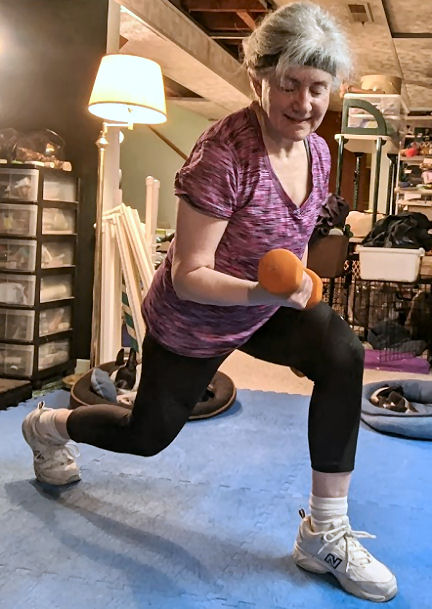
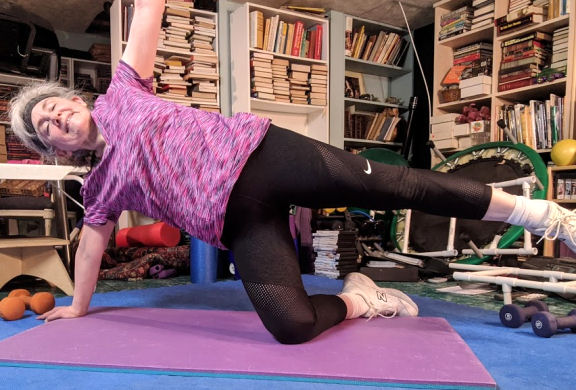
Exercise is stressful, but "good" stress.
Exercise is “good” stress

So, eustress is “manageable, acute, and short-term.” Think of exercise as an example. We’re placing stress on our bodies when we exercise. But exercise by definition is short-term, and the stress we put our bodies in is acute – we voluntarily raise our heart rates or work our muscles in a way that’s different from their normal state. And the reason that we exercise is to become more fit, release endorphins and improve our mental well-being.

Nurtures our well-being

“Eustress is the physical, mental, and/or emotional tension that is placed on the mind and body when we engage in activities that actually nurture our well-being and foster growth,” says Andra Brown, a NY-based licensed mental health counselor who specializes in anxiety, racial identity, and stress. Brown says that eustress can make us excited and motivated. When we feel eustress, we feel compelled to act in a positive manner. Our mindset improves when we’re under eustress. And when we act positively, our resilience grows.

If I get an idea for an article, and I know it’s a good one, I’m fired up. I open a new Google Document and write rapid-fire until that idea is down in black and white. 

Stress and exercise

I’m not excited to exercise, as you know. But, once I push “Play,” the music comes on and the instructor gives the first direction, I start moving and can forget about everything else. Good stress indeed!

Public speaking can even be eustressful

Brown emphasizes that eustress triggers can increase productivity. Think about the last time you spoke in front of a small group of friends about a subject you’re passionate about. Even though public speaking may usually terrify you, when it’s about a topic that’s near and dear to your heart, you probably spoke eloquently and far more succinctly than you believed you could.

As you’ve seen in previous articles, exercise generates energy. Even if I’m tired before a workout, I feel energized afterward! Exercise, therefore, is positive stress. It feeds our body and mind.

I try to combine distress and eustress

Listening to the news, on the other hand, is “distress.” It brings on feelings of anxiety and is practically debilitating. I do like to know what’s going on in the world, though, so I pair watching the national news every day with a calming Sudoku puzzle. On one hand, I’m anxious, but on the other, I’m solving a puzzle. I’m hoping that the eustress outweighs the distress. Indeed, Brown says that during moments of eustress, we are able to perceive certain challenges as less threatening.

So, there’s no need to fear stress – just do everything you can to make it good stress.
Make it painful to not exercise

Exercise shouldn't hurt, but if the reward for doing it isn't motivating, make it hurt not to.
The exercise shouldn’t hurt, but not exercising should have consequences.

Cue the finger wag! I’ve suggested some ways to help motivate yourself to exercise, including a reward for a good sweat-soaked session. But when you really, really don’t feel like putting down the remote and getting off the nice comfy couch, and changing into your workout gear, something more drastic may be what’s needed. Sometimes you have to make it painful to not exercise.

Reward yourself to exercise

Promise yourself a real, tangible reward for getting in that exercise session today. (I’m a big fan of rewards!) Like a yummy strawberry smoothie with maybe a couple of shavings of dark chocolate, or a quiet place to read a chapter in the book you’re into, or an episode of that series you’re streaming on Netflix. Every day that you exercise, that reward will kick in. It’s OK to do nice things for yourself. Be mindful of that smoothie, though. Be sure that it fits into your eating program for the day. Remember that a smoothie is not a milkshake, although sometimes it can taste like one! 

Over time, with enough rewards, you’ll actually look forward to exercising. Exercising becomes a habit, and one that you would miss if you don’t do it. And exercising is such a great habit for our healthy aging. Your brain actually equates the act of exercising with the ensuing reward – and over time you don’t even need the reward. Things become easy when they’re habits.

When the reward isn’t motivation enough

But some days, not even those tempting treats will prompt you to get up. On days like that, you need the other part of the equation.

If I don’t do X, then I have to Y

Here’s where it becomes painful to not exercise. Not physical pain, of course. How about pain in the pocketbook. Make a contract with yourself. For every day you don’t exercise and there’s no good excuse, you have to pay your favorite charity $20. These days, that’s real pain. Or, if you’ve told your friends and family that you’ve started an exercise program, then you have to tell them that you didn’t exercise. That embarrassment is also real pain.

Make it hurt in your wallet or hurt your pride. Even if you don’t actually tell your friends that you haven’t exercised, you’ll feel the guilt. That hurts too.

Make it painful not to exercise. So go do it.

Exercise intensity after menopause

Exercise is for everyone.
Exercise is for everyone

Here’s something we can all agree on: no one is getting younger. It’s also a fact that women go through menopause at some time mid-life. The CDC has emphasized the importance of exercise for everyone, at every age. So, even though women’s bodies are changing, does that mean that our exercise should change? If we’re used to intense exercise, can we continue with that intensity? Or, if we need to start doing something, what’s the right intensity level? What’s the proper exercise intensity after menopause?

The short answer

Everyone is different. You know your own body, so do what feels right.You still should challenge yourself, but you might want to be creative about the challenge. 

Former First Lady Michelle Obama is quite open about her menopause experience. If you recall, when she lived in the White House she famously led “fitness boot camps” for friends and came to be known as the “Drillmaster.” Everyone wanted Michelle Obama’s beautifully toned arms. Mrs. Obama still exercises, but she admits that she’s toned down the intensity. She has found that she cannot push herself as hard as she used to. Obama and her friends turn more to flexibility rather than cardio workouts. Not only that, Obama no longer leads all the workouts, but her group of friends keeps everyone fit and healthy.

The answer for me

As you know, if you’ve been reading my articles, I work out regularly. I’ve challenged myself and as a consequence can run faster now than I ever could before – because I committed to it. I still don’t enjoy it and probably never will, but that’s not why I run. 

The answer for everyone

Listen to your body. If you’re feeling good, perhaps push yourself a little harder. If an exercise is especially tough, ease up. Perhaps focus a little more on lower intensity moves or work in an extra Yoga or Pilates program.

Watch the “slow weight creep”

Mrs. Obama admitted to the “slow weight creep” of menopause. As she wasn’t able to maintain the intensity, she wasn’t burning the calories that she used to. And so had to be mindful of her intake. “I have to be more mindful, not obsessive, but more mindful,” she said.

The Mayo Clinic agrees with Michelle Obama’s assessment: “Women tend to lose muscle mass and gain abdominal fat around menopause. Regular physical activity can help prevent weight gain.”

Now’s the time to improve your balance too

The Mayo Clinic also recommends working on your balance to improve stability and prevent falls. “Try simple exercises, such as standing on one leg while brushing your teeth. Activities such as tai chi also can be helpful.” Please note, though, that while tai chi improves balance over time, the improvement is cumulative. Tai Chi practice over a period of time will help your balance. The simple exercises found in the Week of Core-Centered Balance Moves can start helping you in just a couple of minutes a day.

Never stop

I’ve known many people who view retirement and aging as an excuse to quit their exercise programs. But, now is the time to get fit and strong and live our best lives – actually do the things we worked for, for all those years. Listen to your body. If you’re feeling good and things don’t hurt, your exercise intensity after menopause does not have to decrease. Take the time your body needs to recover, but don’t stop.

Challenge yourself to exercise

Has your exercise routine gotten kind of flat? Are you doing the moves but feel like you’re just going through the motions? Try a challenge to give your workouts a spark. That’s right: Challenge yourself to exercise.

You’ve probably seen groups, pages and influencers on Facebook run 5- or 7-day challenges to drink more water, or use your Instant Pot every week. It’s the same idea, but with this, you challenge yourself. You’ll change your mindset and look forward to exercise because you’re getting closer to the prize you will set for yourself. Set your challenge and a time limit – for example, exercise for 30 minutes every day for 30 days. And be sure to set a prize for succeeding in your challenge! Say, download Taylor Swift’s new album.

Kelly Froelich, an NASM- and ACE-certified trainer and cofounder of the digital fitness platform Balanced, finds that self-challenges are a great way to self-motivate. “Intrinsic motivation, such as an internal desire to do something, is great to stick to something in the long run, but sometimes you need a bit of extrinsic motivation, such as a prize, to start you off,” she says. So, make that prize something you really want. And don’t get it before you complete your Challenge! That’s cheating!

Challenge ideas

Try a Plank Challenge!

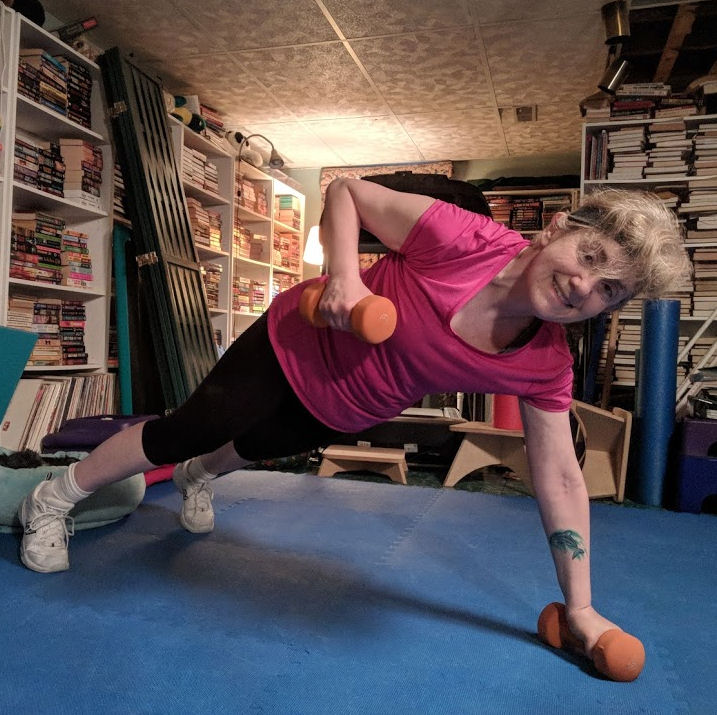
If you need ideas for your Challenge, or if you need a theme, try a step challenge for walking. Be sure to increase the number of steps you have to take each day, week-by-week. Or if you’re a runner, increase the miles you run! Or try a plank challenge. Increasing the time you’re in plank position. If the plank is old hat, then try a plank variation a day! To increase strength, do a weight challenge – but you might have to buy heavier weights by the end of your challenge time. Or try a Body-Weight Strength Challenge! This article describes some of your options for this.

Be mindful of the exercises you do

Exercise is great, but we must be mindful of the exercises we do every day and the toll they take on our bodies.

Yes, exercise makes us happier. And expending energy gives us more energy, as surprising as that sounds. Exercise is a natural way to fight depression, and it also helps us sleep better. Exercise has a zillion benefits. But we have to remember that our bodies need rest and recovery too. 

Build rest days into your challenge

I’m not advocating exercising at full impact and intensity every day. Especially if you’re doing a weight challenge, build lower intensity or non-lifting days into your challenge. Take a speed-walk a couple days a week and a stroll or a yoga practice on Sundays. Be sure to do the work to meet your challenge goals, but be mindful of what your body needs. Schedule your workouts, including the exercises you plan on so you don’t lose track of your intense days and your rest days.

Challenge yourself to exercise. Don’t forget that you’ll get two prizes at the end: your Challenge prize and the prize of being more fit!

No time to exercise?

Even short workouts can be effective.

You’ve heard the arguments about the benefits of exercise for your healthy aging. And you … sort of … believe them. But – who has the time? If you’re saying, “I have no time to exercise!” you owe it to yourself to squeeze in a short but effective workout.

Everyone has 22 minutes

150 minutes a week. That’s all the CDC recommends for exercise. So if you have 22 minutes to get your heart pumping while you climb some stairs, take the dog for a walk, ride the stationary bike, you’ve met the guidelines!

Short workouts will keep you on track

If I’ve only got a half hour, I can still get in my workout and have time to clean up. Because that clean-up is important. I don’t have to worry about being late to an appointment and I will still feel virtuous that I exercised. But you’re saying, “How can I choose a workout, do it and get cleaned up in a half hour? That’s ridiculous!” Planning. Plan a week’s worth of exercise in advance. If you have a calendar for your appointments and commitment, schedule your workouts on the same calendar. I use Google’s free calendar so that I can color code my different appointments. 

But are short workouts effective?

Now you’re probably saying, “I love the idea of short workouts, but will they work for me?” The short answer is, “Yes!” If those 22 minutes of your workout are intense and heart-pumping, it will get your blood and oxygen moving. You’ll get the memory-boosting benefits of a good workout, and you’ll release some endorphins and feel great after you towel off. So, never say you have no time to exercise. 

In fact, exercise physiologist Jenna Gillen at the University of Toronto, and her team showed in a study that just one minute of very intense exercise in a workout lasting 10 minutes total can improve fitness and health. Notice the words “very intense.” This is beyond maximum level – something I’m not really up for most days.

Plus, shorter, more energetic workouts can help you stay motivated to exercise. They’re done in no time, and you may actually look forward to your next workout. You won’t be bored with the workout, so won’t be tempted to procrastinate and then run out of the short amount of time you have to exercise.

I can’t do an intense, vigorous workout every time

I hear you. At my age, I just can’t face the treadmill and running for every workout. And that’s OK. Dr. Jennette Berry, family medicine physician at Advocate South Suburban Hospital, believes that fitting in movement throughout your day, no matter the length, is important for your health. “Exercise can help control your blood pressure and can help prevent future heart disease.” 

The next time you find yourself thinking, “I have no time to exercise,” remember that no matter how much time you give it, exercise is always good. 

But I’m too tired to exercise

Have you said that you’re too tired to exercise recently? No surprise there. In this “post-pandemic” time we have more going on than ever. We’re racing here, there, and everywhere. Errands taking us in different directions trying to find things like contact lens solution (yes, it happened to me) or traveling an extra mile for cheaper gas (yes, that too). And worry about the world, the weather, and the economy is depriving us of sleep. It’s no wonder we’re too tired to move. Even though we know that exercise is important to our healthy aging – our brains, muscles, heart, bones, and general well-being. It’s tough to get up the energy to get off the couch.

Exercise gives us energy

Too tired to exercise? If you expend a little energy, you'll get even more.
Too tired to exercise? If you expend a little energy, you’ll get even more.

The thing is, though, if we expend a little energy on exercise, we’ll get even more back. I know – it seems counter-intuitive, but it’s true. When we exercise, we breathe more, and take in more oxygen. That oxygen helps the mitochondria in your cells create fuel for you to use and that means energy that you can expend. The experts at Harvard Medical School also say that exercising helps your body use energy more efficiently! Another benefit of exercise, according to Harvard Medical School, is that it helps us sleep better.

Motivation to exercise

But knowing that exercise will give me energy is not enough to get me off the couch. All I want to do right now is fall asleep on that couch. How to get that motivation to exercise? Guilt is one factor. When you know that you’ll feel better and have more energy after you work out, and then you don’t … you’ll feel guilty for not having exercised. And you’ll feel guilty about those extra calories at dinner. And about falling asleep (again) on the couch.

Promise yourself a little (teeny, tiny) reward for getting off the couch and changing into your workout clothes. 5 almonds! Or a half square of dark chocolate. Or half an apple with a teaspoon of peanut butter. Your little reward could also be listening to your favorite song. Or reading a chapter after you exercise. 

So take a deep breath and stand up. Change your mindset and your clothes. You can do this. Then push “Play.” Or whatever your device does. After your workout and shower, you’ll probably feel amazing!

Queen Elizabeth’s habits for healthy aging

Queen Elizabeth practiced many habits for healthy aging during her long life.

The world has been mourning the loss of Queen Elizabeth II of Britain, but also celebrating her healthy long life. The Queen was in the spotlight for most of her 96 years, and was working until almost the end. How did she do it? Did she just have good genes? Or did she practice habits for healthy aging?

The answer to the question is probably a mixture of both good genes and good habits! The Queen’s mother lived to be 101 years old, but Queen Elizabeth did have great habits for healthy aging!

Habits for healthy aging from an expert

Dr. Kevin Koo, family medicine physician at Advocate Medical group, says, “As someone who cares for many people in their 80s, 90s and even 100’s, the patients who are the healthiest are those who are on top of their health and well-being. They go to doctors’ appointments. These patients socialize often.” They read, travel, volunteer and exercise.

Eat right

First off – Dr. Koo says to eat a healthy, balanced diet. Queen Elizabeth typically ate small meals throughout the day, and her meals included grilled lean meats and lots of vegetables. But she also indulged occasionally in dark chocolate and biscuits. There’s nothing off-limits in a healthy diet. As I always say, “Everything in moderation!” And Dr. Koo agrees: “balance and not overindulging in anything are important when it comes to your diet.”

Social interaction

The queen met with lots of people on a daily basis. For the rest of us, feeling connected to others is important for our physical and mental well-being – from increased brain function to decreased depression. The pandemic isolated many people, and we’re only now realizing how detrimental that isolation has been – especially to seniors, many of whom were unable to interact with others. 

Exercise

We know the Queen walked the castle grounds and she walked her dogs. In her early years, Queen Elizabeth also enjoyed swimming.

Spend time outside

Fresh air and sunshine can boost not only your spirits but your health as well. We may not have castle grounds to wander, but we can walk through our neighborhoods and get the benefits.

Pray or meditate

Prayer or meditation can reduce stress and improve your outlook. Meditation was one way I mentioned that naturally fights depression. And Queen Elizabeth frequently mentioned prayer in her televised comments. 

Engage in your passion projects

Whether it’s volunteering for a charity or engaging in a hobby, this is another way to find a productive outlet and have more social interaction. 

Never too late

Dr. Koo reminds us that there’s no time limit on healthy aging. It’s never too late to start eating right, start an exercise program, or start volunteering for a worthy cause.

6 Ways to fight depression naturally

Mental illness is no joke. It affects many people every year. There’s no age limit, and it affects people of every ethnic group and wage bracket. If you’ve tried everything but nothing seems to work, it could be time to seek professional help. But if you’re feeling down and are starting to think that maybe you should address the issue, there are ways to fight depression naturally without drugs or a psychiatrist. Here are 6 of them:

Exercise is one way to fight depression naturally.
Exercise fights depression naturally.
  1. Exercise to ease the jitters of anxiety. There are lots of other benefits of exercising too: https://fitness-over-50.com/2015/09/why-exercise/ Remember that the “runner’s high” is not just from running. Whenever you exercise, your brain produces those valuable endorphins. Not only that, but studies also suggest that exercise promotes the production of dopamine, which plays a role in how we feel pleasure.
  2. Start a new hobby or spend time with a favorite one for distraction. No negative thoughts when you’re painting your next masterpiece. Or when you’re trying to fit together a 1,000 piece jigsaw puzzle.
  3. Take 15 minutes a day just for you. Take a walk and enjoy nature. Or dive into a novel – you can’t worry about the world when you’re deep into fighting the Civil War with the hero in the historical novel you’re reading.
  4. Listen to your favorite tune. That’s sure to brighten your day. In fact, there are scientific studies that prove it: https://fitness-over-50.com/2022/05/set-your-happiness-to-music/
  5. Spend time with friends and family. Take your mind off of the world and put it into helping your network. Your friends and family are your support, and you are theirs. https://fitness-over-50.com/2021/06/you-are-not-alone-on-your-fitness-journey/
  6. Meditate – it really does reduce stress and will minimize negative thoughts. Meditation is not just for yogis or sitting in the lotus position. And meditation does not have to take long. A short guided meditation (https://fitness-over-50.com/try-a-guided-meditation-for-calm/) also will work to clear your mind and lead you to more productive thinking. Meditation also assists in maintaining your positivity.

We all feel “down” on occasion. It’s natural. And, unfortunately as we age it becomes more common. So, as part of your healthy aging, the next time you feel blue try the exercise route first to help your mindset. It’s a quick fix, and one that usually works for me.

Manage stress to boost your immunity

A big part of healthy aging has to be managing stress. As we get older, our immune system doesn’t work as well as it used to. Along with our senses of balance, hearing and eyesight. It turns out that stress plays a big part in compromising our immunity. We don’t need added pressures on our immune system, so it’s even more important to manage our stress as we get older. And it stands to reason that if we can manage our stress, we boost our immunity.

Stress affects immune system aging

Recently, a large study researched how stress affects the premature aging of the immune system. Almost 6 thousand people age 50 and up were surveyed about stress in their lives – the questions involved family, job, finances and social discrimination issues. Scientists also measure their T-cell levels. T-cells, or lymphocytes, protect against bacteria, viruses, cancer and other harmful cells that promote age-related harmful conditions (like osteoporosis, heart disease and Alzheimer’s disease).

“The researchers concluded that chronic stress, stressful life events and higher lifetime exposure to social stressors may contribute to accelerating immune aging.” 

Molly Ireland, nurse practitioner at Aurora Health Center, says that while everyone experiences stress, the ways that we manage it can reduce its negative effects. I identified ways to reduce stress some time ago, and some are recapped here.

Manage stress to boost your immunity

So, how can we manage stress to boost our immunity?

Exercise plays a big part in how I manage stress.
You know how I manage stress – exercise plays a big part.

First off – make sure you prioritize you. Eat well and get plenty of sleep. And when you “eat well,” make sure you get plenty of vegetables and fruit, cut down on processed carbohydrates and sugars, and eat as much protein as you need. Eat more fiber and less fat, according to Ireland.

If your doctor wants you to lose weight, take this recommendation to heart. Being at a healthy weight will boost your immune system too. 

Exercise. Yes. Your doctor thinks it’s a great idea, too. Here’s how to start: https://fitness-over-50.com/2021/07/how-do-you-start-to-exercise/

Take time for you. Pursue hobbies you love. Sometimes, just being alone can help you manage your stress. But see friends and family too, because social interaction is important.

Break goals down into smaller, more manageable chunks so you don’t feel overwhelmed.

Get help when you need it.

Live Longer with Balance

What would you say if someone told you that you could live longer by doing something simple for two minutes a day? There’s a new study by the British Journal of Sports Medicine that indicates that we can live longer if we can balance on one foot for at least 10 seconds. Live longer with balance. Seems like a no-brainer.

Years balancing

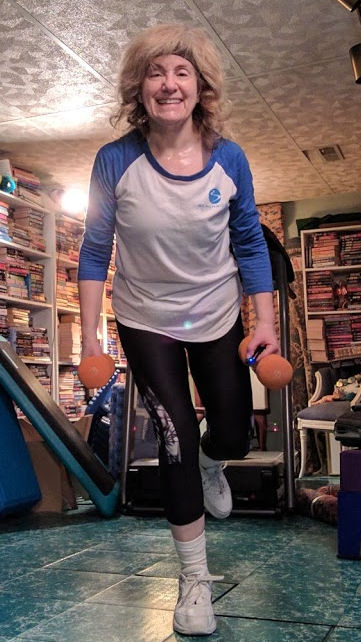
I balance on one foot every day.

I’ve written for years about balance. My interview with Kathleen Cameron, Senior Director of the Center for Healthy Aging, part of the National Council on Aging (ncoa.org), about balance, falls, and health as we age was back in 2017. I learned about the importance of balance after a fall which injured my knees and triggered hip bursitis a few years ago. Balance in everyone deteriorates after 50, but as I’ve discovered, we can actually improve our balance. Most people don’t know that their balance gets worse over time until it’s too late, and they suffer a fall. 

Longevity correlates to fitness level

According to the study, “the inability to balance on one foot is associated with an 84 percent higher risk of death over the next seven years.” The study indicates that those able to balance had less history of heart disease, high blood pressure, diabetes, high cholesterol and obesity. The study also contends that people who are able to balance on one foot for 10 seconds are stronger and more fit. Also, people who can balance might be more agile and move more than people who can’t balance. 

Dr. Lakshpaul Chauhan, geriatric medicine physician at Aurora Sinai Medical Center, says that lack of physical activity can be linked to weakness and frailty. Dr Chauhan encourages seniors to take action now.

Healthy aging upward spiral

Instead of a downward spiral, the ability to balance may lead to an upward spiral: you can balance on one foot, so you want to test yourself and balance more. 

This leads to wanting to go for walks with the dog or a partner. You can balance longer, so what else can you do?

Those walks may inspire you to do more for your fitness like learning to dance. 

You’re feeling stronger so you pick up that set of weights that you saw on sale. 

You have more energy from all that exercise so you get the ingredients to cook that meal that looked so good in the magazine you looked at. 

And before you know it, you may have lost a couple of pounds, you’re sleeping better and are feeling great.

All of which leads to a longer, healthier life. Healthy aging knows no bounds.