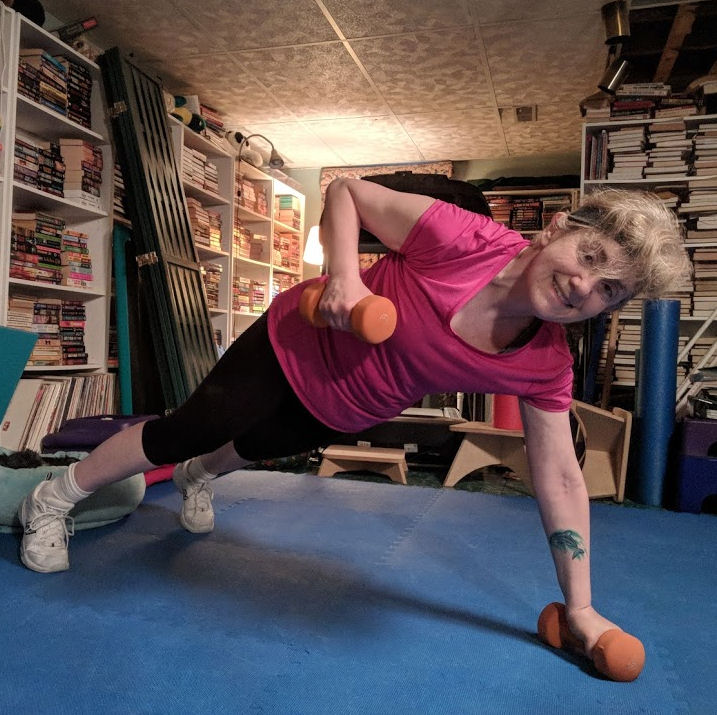
I started the New Year with kindness to myself and ignored the calendar.
The New Year started for me with an unwelcome guest: food poisoning. I think it was from a bag of organic spring mix. It looked beautiful, tasted great, and we used it well before the “best by” date, but… You never know. New Year’s Day is usually a day for planning, goal-setting, scheduling with different colored pens. It makes my want-to-be-organized soul happy to see my little planner book all marked up. But that didn’t happen this year. I just didn’t have the energy. Instead of feeling guilty about not doing what I normally would do, I actively decided to start with kindness. Kindness to myself.
Sense of freedom
And by not going crazy with my colored pens, I felt a sense of freedom, despite feeling physically terrible. Obviously there were still things that had to get done, like caring for the dogs, but aside from that, I just relaxed, read my book, and drank water and ginger ale.
Starting the year with kindness, making that conscious effort to be kind, has done wonders for my mindset. More peace, looking both outward and inward. And knowing that everything that has to get done will get done. I’ll make time for important things and try to let go of other, less crucial items.
Healthy aging depends on a positive mindset.
Generally happier people live longer than unhappy people or those who look on the negative side of things. Happy people have greater resilience and are more able to bounce back from hardship. So, perhaps, my conscious decision to start with kindness this year will increase my resilience!
Get the important stuff done
Starting with kindness, though, does not mean that important activities will be left undone, though. Exercise is important to my physical and mental well-being, and makes me a better person to be with, so my regular workouts will certainly continue. I’ll still prepare my lessons and craft my articles with care.
By starting with kindness, perhaps I’ll be less focused on getting things done and be happier on the journey.
Many struggle with New Year’s Resolutions. To make some and then have them fall by the wayside is disappointing. I don’t make resolutions for just that reason. How about not making resolutions but taking action on improving something we all could use more of? Here are 4 steps to improve your confidence in the new year.
Grow and expand your mindset
Confident people are always learning. Learning new ways to do things, learning more about the world. Also, they’re learning more about themselves. Confident people are curious about pretty much everything, so want to learn. By learning more about the world, we open ourselves to different cultures and different values. People in other parts of the world do commonplace things differently than we do. And this can be completely unexpected – things that, once we’re exposed to them, we think that it makes perfect sense.
Exercise (friend optional) fuels your mind and your body. It also improves your self-worth and confidence.
Angeli Gianchandani, professor of marketing at the University of New Haven says that confident people are “avid readers and focus on self-care, making time to meditate and exercise to fuel their minds,” she says. “It is the power of their ideas and imagination to think beyond the ordinary that sets them apart.”
And confident people are unafraid of trying new things. They’re not afraid to fail. Confident people see projects that don’t go quite right as experiments. Try again and succeed! “Those who invite discomfort are able to achieve more, take more significant risks and break through barriers, and are open to facing new challenges,” says Gianchandani. “Discomfort is a form of self-growth, pushing yourself mentally to overcome fear.”
Accepting discomfort helps to eliminate the “what-if” mindset. All those bad case scenarios we’re so used to running through in our heads.
Be vulnerable
The next step to improve your confidence is to ask for advice and admit that you’re wrong (when you are!) Don’t be afraid of making mistakes. We all make mistakes. You’re only human, after all.
“Having courage means forgetting about being perfect,” says Jonathan Alpert, author of Be Fearless: Change Your Life in 28 Days. “So often people don’t pursue things because they feel it has to be just right. They ruminate over how to approach things, conduct themselves, or say something to the point of getting filled with anxiety and either not taking any action at all or doing so in a way that lacks confidence.”
Don’t be so afraid of making a mistake or worry about doing something wrong that you’re paralyzed into inaction.
Be kind to yourself
Another step to improve your self-confidence is to just be kind to yourself. No negative talk! “Recent research has shown self-compassion was associated with self-worth,” says Michele Patterson Ford, Ph.D., a psychologist and senior lecturer in psychology at Dickinson College.. “Knowing your value is an important component of feeling confident in oneself. Self-compassion, however, may actually provide the benefits of high self-esteem without the potential problems associated with high self-esteem, like being egotistical. The compassionate side tames the potential to be self-absorbed.”
You know you’re worth it, but you don’t rub it in others’ faces! We know that compassionate resilience is the way to healthy aging and happiness in the future.
Speak up!
The last step to improve your confidence is to speak up. This is the hardest thing for us introverts. Know that what you say is right and can help others. Jonathan Alpert says there will always be people who doubt you, but don’t let that stop you from speaking up, taking a chance, and doing what you believe in. “Criticism just means you got people thinking,” he says. “Many who have taken confident and bold steps have faced resistance. Stay focused on what you believe in and forge ahead.” No one can take your beliefs away from you. If you’re firm in them, stick with them going forward.
Yup – we’ve all been so worried over the last couple of years about severe COVID – the kind that puts us in the hospital or even kills us. But we exercisers have had a secret weapon all along. Since the beginning of the pandemic, doctors have said that exercising reduces the risk of severe COVID outcomes, but there hadn’t been data to support how much exercise is actually needed.
How much exercise do we need?
Do you have to work out like a maniac for an hour every day? Is a stroll after dinner enough? Or somewhere in between, for exercise to reduce the severe COVID risk? A study released just last week studied almost 200,000 adult patients at Kaiser Permanente in California who were diagnosed with COVID-19 between early 2020 and mid-2021. Participants were asked to evaluate their own level of activity prior to their COVID diagnosis. Increments ranged from always inactive (10 minutes or less exercise per week) to always active (300 minutes of exercise per week). We want to do everything we can for our healthy aging, and the CDC’s recommendation is 150 minutes per week.
Researchers found that the more active a patient was before infection, the less their risk of hospitalization or death within 90 days of their diagnosis. “Always inactive patients were 191 percent more likely to be hospitalized and 391 percent more likely to die than those who were always active.”
The more exercise, the lower the risk
The risk of serious infection was reduced for every increment of activity. People who were “consistently active” – 150 minutes or more per week – were 125 percent more likely to be hospitalized and 155 percent more likely to die than the “always active” group. That is a huge decrease from the “always inactive” group!
Everyone benefits from exercise
The researchers also found that the results were consistent across all demographics. No matter the age, gender or ethnic group, people who were more active were less likely to be hospitalized or die from COVID. In fact, researchers even supported the notion that exercise should be promoted as a way to avoid severe COVID.
One thing to note – this research does not make the distinction between people who were vaccinated or not. But, I always want to boost my chances of a good outcome. So I’m going to keep exercising.
For fitness contributor Elizabeth Enochs, sticking with workouts she actually enjoys is the key to staying motivated to exercise on a regular basis. “I used to work out nearly daily, spending hours in the gym each week. I looked forward to intense cardio and strength training — but for the last couple of years, I’ve only been interested in exercising outdoors and stretching in my house. Hikes, long walks, bike rides, and kayaking trips are my workouts of choice these days. Currently, I’m working out less than I did for most of my 20s and my workouts are easier, but I wouldn’t be exercising at all if I only allowed myself to do HIIT.”
A struggle to stay motivated
Such great advice. It’s a struggle to stay motivated to exercise, day in and day out. I’ve written that it’s not one and done. I wish it were, but you can’t exercise once and say, “I’m good for life. Never have to do that again.” Nope. as one of my workout instructors says, “Fitness is a journey, not a destination.” And especially now, as we get older, exercise is crucial for our healthy aging.
In it for the long haul
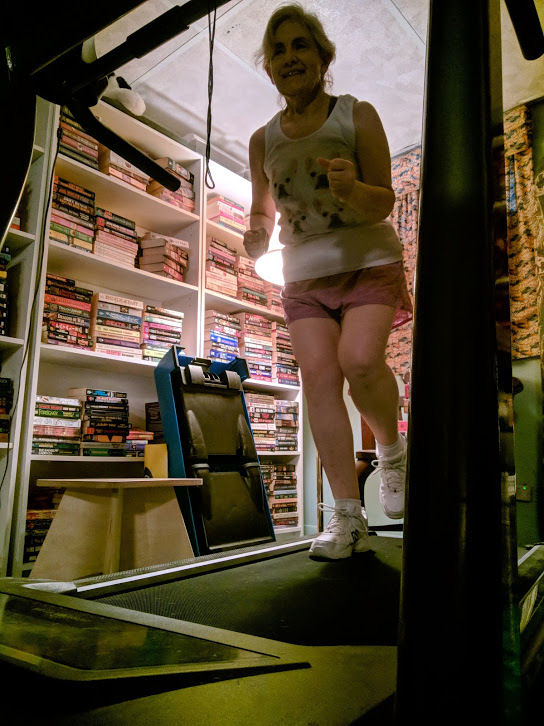
I enjoy the books I listen to while running.
We’re in it for the long haul, so you have to stick with workouts you actually enjoy. Because if you don’t enjoy your workout, you’re not going to do it again. As simple as that. I don’t enjoy the act of running, but I do it a couple of times a week. Why do I do it if I don’t enjoy it? Because I enjoy the books I listen to. I see the benefits of running in my improved stamina and endurance, but I wouldn’t keep at it if it weren’t for the audiobooks I listen to on the treadmill.
CDC recommendations
Of course, the CDC recommends 150 minutes of moderate physical activity per week for adults, so I need more than the 40 minutes of running I do a week. On Tuesdays I usually do Pilates to give my knees a rest. Why Pilates? I enjoy the muscle-lengthening feeling I get, plus it’s a terrific core workout. That half hour goes by quickly.
And a couple of other days every week I do combined aerobics and strength training workouts. I have a library of workout DVDs that I … kind of … enjoy. Combining the aerobics with weights gives me a double bang for my buck.
Do workouts YOU enjoy
But that’s what I do. You have to do the workouts that you enjoy … or sort of enjoy … or don’t mind doing … otherwise you won’t do it at all. So, go for hikes or bike rides. Or dance up a storm and get your heart rate up and the sweat running down your face (and other parts). Do yoga or pilates and get flexible. Because if you don’t exercise, you don’t get the benefits. And you can’t eat that extra half-serving of pasta.
The exercise shouldn’t hurt, but not exercising should have consequences.
Cue the finger wag! I’ve suggested some ways to help motivate yourself to exercise, including a reward for a good sweat-soaked session. But when you really, really don’t feel like putting down the remote and getting off the nice comfy couch, and changing into your workout gear, something more drastic may be what’s needed. Sometimes you have to make it painful to not exercise.
Reward yourself to exercise
Promise yourself a real, tangible reward for getting in that exercise session today. (I’m a big fan of rewards!) Like a yummy strawberry smoothie with maybe a couple of shavings of dark chocolate, or a quiet place to read a chapter in the book you’re into, or an episode of that series you’re streaming on Netflix. Every day that you exercise, that reward will kick in. It’s OK to do nice things for yourself. Be mindful of that smoothie, though. Be sure that it fits into your eating program for the day. Remember that a smoothie is not a milkshake, although sometimes it can taste like one!
Over time, with enough rewards, you’ll actually look forward to exercising. Exercising becomes a habit, and one that you would miss if you don’t do it. And exercising is such a great habit for our healthy aging. Your brain actually equates the act of exercising with the ensuing reward – and over time you don’t even need the reward. Things become easy when they’re habits.
When the reward isn’t motivation enough
But some days, not even those tempting treats will prompt you to get up. On days like that, you need the other part of the equation.
If I don’t do X, then I have to Y
Here’s where it becomes painful to not exercise. Not physical pain, of course. How about pain in the pocketbook. Make a contract with yourself. For every day you don’t exercise and there’s no good excuse, you have to pay your favorite charity $20. These days, that’s real pain. Or, if you’ve told your friends and family that you’ve started an exercise program, then you have to tell them that you didn’t exercise. That embarrassment is also real pain.
Make it hurt in your wallet or hurt your pride. Even if you don’t actually tell your friends that you haven’t exercised, you’ll feel the guilt. That hurts too.
Here’s something we can all agree on: no one is getting younger. It’s also a fact that women go through menopause at some time mid-life. The CDC has emphasized the importance of exercise for everyone, at every age. So, even though women’s bodies are changing, does that mean that our exercise should change? If we’re used to intense exercise, can we continue with that intensity? Or, if we need to start doing something, what’s the right intensity level? What’s the proper exercise intensity after menopause?
The short answer
Everyone is different. You know your own body, so do what feels right.You still should challenge yourself, but you might want to be creative about the challenge.
Former First Lady Michelle Obama is quite open about her menopause experience. If you recall, when she lived in the White House she famously led “fitness boot camps” for friends and came to be known as the “Drillmaster.” Everyone wanted Michelle Obama’s beautifully toned arms. Mrs. Obama still exercises, but she admits that she’s toned down the intensity. She has found that she cannot push herself as hard as she used to. Obama and her friends turn more to flexibility rather than cardio workouts. Not only that, Obama no longer leads all the workouts, but her group of friends keeps everyone fit and healthy.
The answer for me
As you know, if you’ve been reading my articles, I work out regularly. I’ve challenged myself and as a consequence can run faster now than I ever could before – because I committed to it. I still don’t enjoy it and probably never will, but that’s not why I run.
The answer for everyone
Listen to your body. If you’re feeling good, perhaps push yourself a little harder. If an exercise is especially tough, ease up. Perhaps focus a little more on lower intensity moves or work in an extra Yoga or Pilates program.
Watch the “slow weight creep”
Mrs. Obama admitted to the “slow weight creep” of menopause. As she wasn’t able to maintain the intensity, she wasn’t burning the calories that she used to. And so had to be mindful of her intake. “I have to be more mindful, not obsessive, but more mindful,” she said.
The Mayo Clinic agrees with Michelle Obama’s assessment: “Women tend to lose muscle mass and gain abdominal fat around menopause. Regular physical activity can help prevent weight gain.”
Now’s the time to improve your balance too
The Mayo Clinic also recommends working on your balance to improve stability and prevent falls. “Try simple exercises, such as standing on one leg while brushing your teeth. Activities such as tai chi also can be helpful.” Please note, though, that while tai chi improves balance over time, the improvement is cumulative. Tai Chi practice over a period of time will help your balance. The simple exercises found in the Week of Core-Centered Balance Moves can start helping you in just a couple of minutes a day.
Never stop
I’ve known many people who view retirement and aging as an excuse to quit their exercise programs. But, now is the time to get fit and strong and live our best lives – actually do the things we worked for, for all those years. Listen to your body. If you’re feeling good and things don’t hurt, your exercise intensity after menopause does not have to decrease. Take the time your body needs to recover, but don’t stop.
I’m crazy, and I know it. Don’t be like me on those two days a week that I consciously engage in something that I’m telling you not to do. I run two days a week, but I’m telling you to keep your exercise low impact. Save your knees, your back and your hips. Keep a foot on the floor when you exercise.
First I’ll tell you why I do it.
Running Agility with Booker.
I run twice a week to increase my speed and my stamina so that I can run my dog in Agility and be where he needs me to be. My dog will always be faster than I am. I know that. But I can be in the right place to give him his cue for the next obstacle he has to do. So I need to be faster than I am now. And, perhaps more importantly, not run out of breath when I get there. This is why I keep getting on that treadmill, even though I don’t enjoy it. I’m building my speed with run / walk intervals, and going easy on my old knees. It’s taking a while, but I’m getting there. Some days are definitely easier than others, but the overall trend is faster.
High impact is not for everyone
Yes, you can burn more calories faster with a high impact workout, but low impact can be just as effective for your fitness and your healthy aging! Even though it’s easier on the joints, low impact exercise is not necessarily less stressful on the body. CITYROW founding instructor Annie Mulgrew says, “We want the body to be able to respond to stress effectively — that’s one reason why we exercise.”
Low impact exercise means that one foot is always on the floor during exercise – at least when you’re upright. Seated exercises and mat-work are different animals altogether, but they’re definitely low impact as well.
Low impact does not mean low intensity
For maximum benefit, we want our exercise to be high intensity – we’re challenging ourselves and raising our heart rate. Low impact, high intensity workouts can include speed walking with arm pumps, weight training, rowing, or cycling.
So, put a little less stress on your joints but still make it tough for yourself with your workouts.
Has your exercise routine gotten kind of flat? Are you doing the moves but feel like you’re just going through the motions? Try a challenge to give your workouts a spark. That’s right: Challenge yourself to exercise.
You’ve probably seen groups, pages and influencers on Facebook run 5- or 7-day challenges to drink more water, or use your Instant Pot every week. It’s the same idea, but with this, you challenge yourself. You’ll change your mindset and look forward to exercise because you’re getting closer to the prize you will set for yourself. Set your challenge and a time limit – for example, exercise for 30 minutes every day for 30 days. And be sure to set a prize for succeeding in your challenge! Say, download Taylor Swift’s new album.
Kelly Froelich, an NASM- and ACE-certified trainer and cofounder of the digital fitness platform Balanced, finds that self-challenges are a great way to self-motivate. “Intrinsic motivation, such as an internal desire to do something, is great to stick to something in the long run, but sometimes you need a bit of extrinsic motivation, such as a prize, to start you off,” she says. So, make that prize something you really want. And don’t get it before you complete your Challenge! That’s cheating!
Challenge ideas
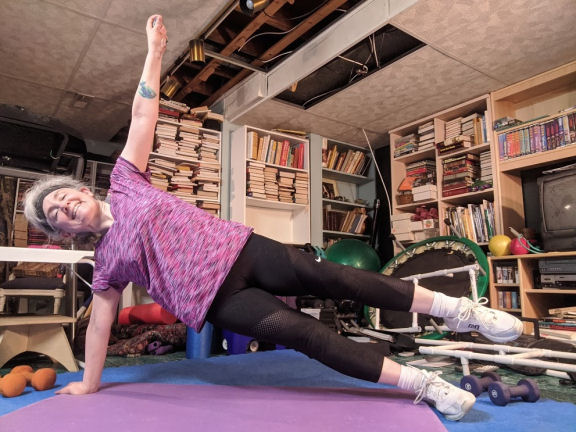
Try a Plank Challenge!
If you need ideas for your Challenge, or if you need a theme, try a step challenge for walking. Be sure to increase the number of steps you have to take each day, week-by-week. Or if you’re a runner, increase the miles you run! Or try a plank challenge. Increasing the time you’re in plank position. If the plank is old hat, then try a plank variation a day! To increase strength, do a weight challenge – but you might have to buy heavier weights by the end of your challenge time. Or try a Body-Weight Strength Challenge! This article describes some of your options for this.
Be mindful of the exercises you do
Exercise is great, but we must be mindful of the exercises we do every day and the toll they take on our bodies.
Yes, exercise makes us happier. And expending energy gives us more energy, as surprising as that sounds. Exercise is a natural way to fight depression, and it also helps us sleep better. Exercise has a zillion benefits. But we have to remember that our bodies need rest and recovery too.
Build rest days into your challenge
I’m not advocating exercising at full impact and intensity every day. Especially if you’re doing a weight challenge, build lower intensity or non-lifting days into your challenge. Take a speed-walk a couple days a week and a stroll or a yoga practice on Sundays. Be sure to do the work to meet your challenge goals, but be mindful of what your body needs. Schedule your workouts, including the exercises you plan on so you don’t lose track of your intense days and your rest days.
Challenge yourself to exercise. Don’t forget that you’ll get two prizes at the end: your Challenge prize and the prize of being more fit!
Changing how you remember things is one exercise to improve memory
We all forget stuff. And most of the time there’s nothing to worry about. We probably didn’t pay attention when storing that information in our brains the first time. But, of course, as we get older, one of the biggest concerns most of us have is not being able to remember things. Here are exercises to improve our memories, as part of our healthy aging regimen.
Change how you remember things
When you want to remember something, really focus on it. Here’s a brain exercise to improve your memory: focus on the environment – sounds, sights, smells surrounding the thing you want to remember. Remember those things as well as the thing itself. Don’t try to do more than remember this new thing while you’re doing the focus exercise.
Dr. Darren Gitelman, senior medical director of the Advocate Memory Center at Lutheran General Hospital, says, “It is thought that, in a way, you don’t remember the same memory over time, but rather, you remember the memory that is reinforced over time. If the context shifts what you recall, and this modified memory gets strengthened over time, then eventually, what you may recall may be a memory that has been shifted by the context, rather than the original memory itself.” So the context may shift and your memory can change. But if you remember everything surrounding the memory, these stronger context clues will help us remember the memory more accurately.
Connect new information to things you already know
Dr. Gitelman says that connecting new information to familiar images and thoughts will help you remember the new stuff. Say, for example, I learned something new about Boston Terriers. If I connect that information with a specific mental image of my Simon, it will help me remember it.
Rehearse new information
When I played piano years ago, I memorized each piece in multiple ways. From the beginning, of course, but also from the end. Phrase by phrase, or however it made sense. When you memorize and rehearse, new information becomes a memory.
Take care of your brain
Eat right, get enough sleep and exercise to improve your memory.
Other ways you can improve your memory: Eat right, exercise, get enough sleep. Yes – exercise to improve your memory. Dr. Scott McGinnis, an instructor in neurology at Harvard Medical School, says that studies have suggested that the parts of the brain that control thinking and memory are larger in volume in people who exercise than in people who don’t. “Even more exciting,” McGinnis says, “is the finding that engaging in a program of regular exercise of moderate intensity over six months or a year is associated with an increase in the volume of selected brain regions.” If you exercise, your brain can grow!
Exercise also can boost muscle memory. That complicated piece of choreography in an aerobics routine will get easier, not just because we practice it, but also because the fact that we’re exercising helps our memory.
We want that big brain for our memory! So, I’m going to keep on exercising.
You’ve heard the arguments about the benefits of exercise for your healthy aging. And you … sort of … believe them. But – who has the time? If you’re saying, “I have no time to exercise!” you owe it to yourself to squeeze in a short but effective workout.
Everyone has 22 minutes
150 minutes a week. That’s all the CDC recommends for exercise. So if you have 22 minutes to get your heart pumping while you climb some stairs, take the dog for a walk, ride the stationary bike, you’ve met the guidelines!
Short workouts will keep you on track
If I’ve only got a half hour, I can still get in my workout and have time to clean up. Because that clean-up is important. I don’t have to worry about being late to an appointment and I will still feel virtuous that I exercised. But you’re saying, “How can I choose a workout, do it and get cleaned up in a half hour? That’s ridiculous!” Planning. Plan a week’s worth of exercise in advance. If you have a calendar for your appointments and commitment, schedule your workouts on the same calendar. I use Google’s free calendar so that I can color code my different appointments.
But are short workouts effective?
Now you’re probably saying, “I love the idea of short workouts, but will they work for me?” The short answer is, “Yes!” If those 22 minutes of your workout are intense and heart-pumping, it will get your blood and oxygen moving. You’ll get the memory-boosting benefits of a good workout, and you’ll release some endorphins and feel great after you towel off. So, never say you have no time to exercise.
In fact, exercise physiologist Jenna Gillen at the University of Toronto, and her team showed in a study that just one minute of very intense exercise in a workout lasting 10 minutes total can improve fitness and health. Notice the words “very intense.” This is beyond maximum level – something I’m not really up for most days.
Plus, shorter, more energetic workouts can help you stay motivated to exercise. They’re done in no time, and you may actually look forward to your next workout. You won’t be bored with the workout, so won’t be tempted to procrastinate and then run out of the short amount of time you have to exercise.
I can’t do an intense, vigorous workout every time
I hear you. At my age, I just can’t face the treadmill and running for every workout. And that’s OK. Dr. Jennette Berry, family medicine physician at Advocate South Suburban Hospital, believes that fitting in movement throughout your day, no matter the length, is important for your health. “Exercise can help control your blood pressure and can help prevent future heart disease.”
The next time you find yourself thinking, “I have no time to exercise,” remember that no matter how much time you give it, exercise is always good.